
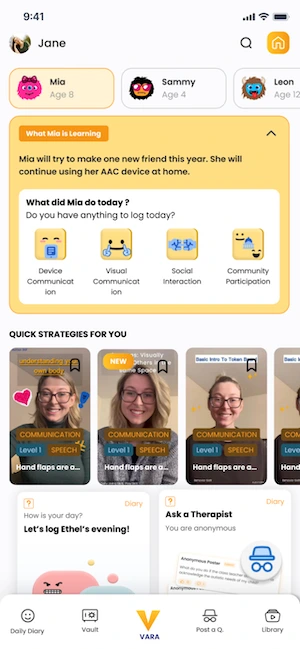
** Explore a glimpse of our insightful webinar on Transforming Homework Struggles Into Success. Dive into the full webinar experience through the Autism 360 app here.
Homework can be hard for many children, but for autistic children it can be even harder, because of differences in executive functioning, sensory sensitivities and how they process information.
Many parents find homework becomes a daily battle, often leading to frustration, meltdowns and stress for both child and parent. Understanding why homework is hard, and knowing how to support autistic kids with homework, can make it more manageable and less stressful for everyone.
Why Do Autistic Children Struggle with Homework?
Autistic children often face particular challenges with homework. One of the main ones is executive functioning, which includes skills like organization, time management and getting started on a task. Many autistic children find it hard to start tasks, remember instructions and break assignments into smaller steps. This can look like procrastination or avoidance, but it’s usually a sign of feeling overwhelmed.
Sensory sensitivities also play a big role. A child who is sensitive to light, sound or touch may find it hard to concentrate in a typical home environment. The hum of a fridge, the brightness of a lamp or the feel of a pencil on paper can be enough to cause discomfort or distraction.
Another common issue is the transition from school to home. School takes a lot of energy and effort for autistic children, and by the time they get home, they may be mentally and physically exhausted, especially if they have been masking all day. Expecting them to jump straight into more structured work can be overwhelming.
Learning differences, such as challenges with reading comprehension, written expression or processing speed, can also make homework harder. A child who finds reading hard may take much longer to finish assignments, which can lead to frustration and a sense of failure.
How to Support Autistic Kids with Homework: 12 Strategies
1. Create a Homework Friendly Environment
A quiet, low-stimulation workspace can make a big difference. Choose a consistent place for homework with as few distractions as possible. Consider using noise-canceling headphones, soft lighting or fidget tools to help your child focus.
2. Establish a Routine
Predictability is key for many autistic children. A homework routine with a set time and structure can help reduce anxiety. Whether it’s straight after school, after a snack and some downtime, or before dinner, a consistent schedule helps your child prepare for the task.
MUST READ :
How Routine Visuals Help Build Daily Living Skills?
Do I Need to Worry About Autism Fixation in My Child?
3. Use Visual Supports
Visual schedules, checklists and timers can help break homework into manageable steps. A timer gives a clear end point, so the work doesn’t feel endless. Visual checklists let children see what they need to do and track their progress.
4. Break Tasks into Small Steps
Large assignments can feel overwhelming. Help your child by breaking tasks into smaller steps. Instead of saying, “Write your essay,” break it into steps like brainstorming ideas, making a plan, writing one paragraph at a time, and checking it over.
5. Provide Clear and Concise Instructions
Many autistic children find vague or multi-step instructions hard to follow. Be clear and concise, using simple language or written instructions. If needed, show what to do rather than just explaining it.
6. Incorporate Interests and Strengths
Many autistic children have strong interests or special talents. Whenever possible, bring these into homework. If a child loves dinosaurs, math problems featuring dinosaurs or writing tasks about prehistoric creatures can make homework more engaging and less stressful.
7. Allow for Movement Breaks
Sitting still for long periods can be hard. Allow movement breaks every 10 to 15 minutes to help maintain focus. A quick walk, stretching or jumping on a trampoline can help reset energy levels and reduce frustration.
8. Use Alternative Learning Methods
If writing is hard, allow dictation or typing instead of handwriting. If reading is difficult, use audiobooks or text-to-speech programs. Finding other ways for your child to complete assignments can reduce frustration and make learning more accessible.
9. Work on Emotional Regulation
Homework can trigger stress and anxiety. Emotional regulation strategies, such as deep breathing, sensory breaks or a feelings chart, can help your child manage frustration. A calm-down corner with sensory tools may also help. And if your child is already overwhelmed, it’s okay to stop and try again later.
10. Communicate with Teachers
Working with teachers is essential. If homework is regularly causing distress, discuss adjustments such as less homework, extended deadlines or alternative assignments. Many teachers are willing to make adjustments to support your child’s needs, and knowing what good support for autism in the classroom looks like helps you ask for the right things. If those conversations feel hard, our home to school transitions masterclass covers home-to-school communication strategies and how to prepare for planning meetings.
At an Autism 360 parent workshop on making homework work, Autism 360 coach and educator Kim Alexander encouraged parents to be direct with the school: “say to them that homework is causing a big problem in your home if it is, and how can they help you to fix that situation.” She suggested asking about options such as a study period or doing homework at lunchtime, and having any agreed changes written into your child’s learning plan.
How can you show your child’s teacher what homework is really like at home?
Teachers often see a calm, compliant child at school and have no idea homework ends in tears. Bring specifics to the conversation instead of a general “it’s not going well”: how long homework took, what set off the distress, and which adjustments helped. Two or three weeks of short notes make the request for changes much easier to agree on.
VARA’s Insight Reports turn your diary entries into patterns and progress over time that you can share with your child’s clinician, school or a new provider. They document patterns; they do not diagnose. A report showing that homework goes better after a break, or on shorter task days, gives the teacher something concrete to plan around and is useful to bring to an IEP or learning plan meeting.
 Insight Reports
11. Encourage Self Advocacy
As children get older, learning to express their needs and ask for support becomes really important. Encouraging your child to say what helps them, and what makes homework hard, can lead to better adjustments and more independence in managing their workload.
12. Celebrate Progress, Not Perfection
Instead of focusing on perfect completion, celebrate small successes. Finishing part of an assignment, trying a difficult task or staying focused a little longer are all achievements worth acknowledging. Encouragement builds confidence and motivation.
Must Read : Autism Spectrum Chart: Key Insights for Understanding
What to Do About Autism Homework Refusal
Autism homework refusal is usually a sign that your child is overwhelmed, exhausted after school or unsure how to start, not that they don’t care. Start by looking for the reason: is the task too long, too vague, too noisy, or straight after a hard day? Then lower the demand. Offer a choice of which task to do first, do the first step together, set a short timer, and let the school know if homework is regularly ending in distress. Many families find that less homework, done calmly, works far better than a nightly battle. If refusal is spreading from homework to the school day itself, read our guide on school refusal in autistic children.
Kim Alexander also reminded parents that homework stretches the school day into the one place your child expects to rest, so it is fine to step out of the teacher role and ask your child how they want you to help. In her words, “you want the relationship with your child rather than the 10 out of 10 for spelling words.”
How can you find the pattern behind homework refusal?
Refusal rarely comes out of nowhere. For two weeks, jot down a few details each afternoon: how the school day seemed to go, whether your child had a break or snack first, the time homework started, the task, and what happened. Look back at the end of each week. Many parents notice the same triggers again and again, such as starting straight after pickup, writing-heavy tasks or a noisy room, and can then change one thing at a time. A paper notebook works for this.
If you would rather keep notes on your phone, VARA’s Daily Diary is built for quick daily notes on what you practiced, what happened, and the wins and challenges. Short, messy entries are fine, so you can log a hard homework moment in under a minute and still see the whole afternoon later.
Daily DiaryAccommodations vs. Modifications: Understanding the Difference
When supporting a child with learning challenges, it helps to understand the difference between accommodations and modifications. Accommodations help a child access the same content with support, while modifications change the expectations or outcome of a task.
Here’s a simple way to think about it. Imagine a child learning to ride a bike 20 meters. A modification would be asking them to ride only 10 meters: the amount has changed. An accommodation would be riding the whole 20 meters, but with training wheels to help them get there. The difference is what happens at the end. Here are a few examples of how you could accommodate or modify homework for your child.
Understanding the Importance of Accommodations and Modifications
Both accommodations and modifications play an essential role in creating an inclusive learning environment. They help children with diverse needs take part in education meaningfully, reducing frustration and increasing their sense of achievement.
Some parents worry that accommodations or modifications mean their child isn’t learning at the same level as their peers. But these supports don’t lower expectations; they provide access. With accommodations, the child is still expected to meet the same standards, with extra tools or strategies. Modifications adjust the level of difficulty to match the child’s current skills, so they are still challenged but not overwhelmed.
Practical Applications
Let’s look at how these strategies work in everyday homework situations.
Example 1: Math Homework
A student has 10 subtraction problems and two word problems to solve. When he sees the assignment, he puts his head down and says, “Math’s not my thing.”
Modification: Reduce the workload to five subtraction problems and one word problem. This can be adjusted further as needed, perhaps doing part now and the rest later.
Accommodation: The student completes all 10 problems but has a break after the subtraction problems before moving on to the word problems. Extra support can also help, such as a number line, a calculator, or hands-on materials to help visualize the problems.
Many neurodivergent students find executive functioning skills, such as getting started and sustaining attention, hard. Breaking the assignment into smaller chunks and offering support tools can make a huge difference and reduce stress.
Example 2: Spelling Practice
A child is asked to read 10 sight words and then write each word without looking.
Modification: Instead of writing, the student spells the words out loud, focusing on the listening and speaking skill rather than the fine motor part.
Accommodation: The student traces over a highlighted model of each word, so they can complete the task with extra support. They could also use letter tiles, typing instead of handwriting, or voice-to-text software.
Handwriting difficulties are common in children with fine motor delays, dysgraphia or dyspraxia. Offering other ways to practice spelling words helps the child keep building literacy skills without unnecessary frustration.
Example 3: Writing a Poem
The student has an assignment to write a rhyming poem.
Modification: The student provides a list of rhyming words, and the parent or teacher helps form sentences, rather than requiring the full poem.
Accommodation: The student is given a poem template, like a Mad Lib, where they fill in the blanks with rhyming words. They might also record their poem by voice before writing it down.
Many children with autism and ADHD find open-ended assignments overwhelming. Structured templates or step-by-step scaffolding let them focus on the creative part instead of getting stuck on how to start.
The Role of Reinforcement in Motivation
Many children find non-preferred tasks like homework hard to start, and reinforcement strategies can help. When a child repeatedly refuses to complete assignments, it’s usually not because they don’t want to learn. It’s because they are overwhelmed, confused or don’t yet have the support they need. Their behavior is communicating that something is too hard.
Understanding Positive and Negative Reinforcement
Reinforcement is a common idea in behavior support.
Positive reinforcement means adding something to encourage a behavior. For example:
- A child earns a sticker for every five minutes they focus on their work.
- After finishing a writing task, they get to play with their best sensory toy.
- They receive praise or high-fives for finishing a task.
Negative reinforcement means removing something unpleasant to encourage a behavior. For example:
- If a child completes half of their worksheet, they don’t have to finish the hardest problem.
- A student who works quietly for 10 minutes gets to listen to music while they finish the rest.
Positive reinforcement is generally preferred, but negative reinforcement can also help when used thoughtfully. The goal is to reduce the stressors that make learning hard, not to create avoidance or pressure.
Using a Token Economy for Motivation
A token economy is a structured reward system where children earn tokens for completing tasks and swap them for rewards. It can help children who find it hard to wait for a reward.
Steps to Implement a Token Economy:
- Decide what earns tokens: Does the child get a token for every completed problem? Every five minutes of focused work?
- Choose rewards together: Tokens can be swapped for extra screen time, a favorite snack, a small prize or a favorite activity. Let your child help choose. (Breaks, food and comfort should always be available when your child needs them, not only as rewards.)
- Start small: Some children may need to start by earning tokens for simply coming to the table and getting started.
- Use visual supports: A chart showing progress can help keep the child engaged.
- Adjust as needed: If your child loses interest, the reward system might need tweaking.
For example, a child who finds writing hard might earn one token for each sentence and five tokens for finishing a paragraph. At the end of the task, they can swap tokens for a favorite activity, like playing outside. Over time, aim to fade the tokens as homework becomes easier and more enjoyable.
Visual Schedules and Checklists
Many children benefit from visual schedules, which show what needs to be done and what happens next. For example:
- First: Complete five math problems.
- Then: Take a five-minute break.
- Next: Finish the remaining problems.
- Finally: Enjoy a special activity, like playing with LEGO.
Timers can also help, as many children focus better when they know a task has a clear end point.
Creating a Learning Environment that Works
Every child is unique, and what works for one may not work for another. Here are some final tips for homework success:
1. Provide a Comfortable Space
Some children need a quiet, distraction-free workspace, while others do better with soft background music or movement. Allow flexibility.
2. Use Interest-Based Learning
Where possible, link assignments to your child’s deep interests. For example, if a child loves dinosaurs, use dinosaur-themed math problems.
3. Celebrate Small Wins
Acknowledge every step of progress. Whether it’s one problem or a whole worksheet, encouragement goes a long way.
4. Communicate with Teachers
Parents and teachers should work together to make sure assignments are reasonable and well supported.
5. Allow Movement Breaks
Some children learn best when they can move. A quick stretch or a few star jumps can reset focus.
By combining accommodations, modifications and motivation strategies, we can create a learning environment that works for neurodivergent children. When children feel supported rather than pressured, they are more likely to engage, learn and build confidence in their abilities.
Conclusion
A supportive learning environment is essential for neurodivergent children. By understanding the difference between accommodations and modifications, parents and educators can use strategies that suit each child’s needs while keeping expectations meaningful.
Reinforcement, used thoughtfully, can help keep children motivated. Tools like token systems, visual schedules and interest-based learning can make learning both enjoyable and effective.
Most importantly, celebrating progress, no matter how small, builds a child’s confidence and love of learning. With the right support in place, every child can grow and achieve in their own way.
** Watch the full webinar on Transforming Homework Struggles Into Success from our app here.

Dr. Jennifer Welker, Ed.D., BCBA, is a Behavior Specialist and Director of Education (USA) at Autism 360, and the clinical reviewer of its schooling, teaching and learning content. She holds a doctorate in special education, is a Board Certified Behavior Analyst, and has spent her entire career, since 2008, inside public school special education.
Jennifer is a senior special education leader in the United States. After more than 15 years in the classroom and in district-wide special services roles, including as lead teacher of a high school autism classroom, she was appointed Special Services Director of Hannibal Public Schools in Missouri in 2024, where she oversees special education across the district. She has also held a leadership role on the district team that designs customized instructional strategies for students from kindergarten through grade 12.
An early intervention specialist by training, Jennifer has led classroom-based curriculums for autistic students for nearly two decades. She completed her doctorate in 2018, and combines the perspective of a teacher, a behavior analyst and a district administrator. That means she knows what works for an individual child in a classroom, what the evidence says, and how school systems actually make decisions about support.
At Autism 360, Jennifer helps parents turn evidence-based teaching strategies into everyday routines at home, and equips them to work with their child’s school. She writes and reviews articles on school transitions, homework, visual supports, teaching new skills with prompts, feeding and IEP-style school supports.