



Hello!
Welcome to our series on 1 Minute Ideas: simple, easy-to-use strategies to help you get on with the rest of the day. I am Ash. Today’s idea is about getting dressed. If your autistic child refuses to get dressed, or your toddler fights every outfit, you’re not alone! Mornings are hard, the rush is stressful, and we really don’t need an added meltdown, even though they can be hard to avoid!
Key takeaways: autistic child refuses to get dressed
- Why it happens: When an autistic child refuses to get dressed, the cause is often sensory discomfort, a hard transition or too many steps.
- Comfort first: Choose sensory friendly clothes such as soft cotton, tagless labels and loose waistbands, and let your child wear favorites.
- Choices and warnings: If your toddler refuses to get dressed, offer two choices and give a short warning before play ends.
- Last step first: Start with the last step, such as pulling up pants, and help with everything before it.
- When to get help: If clothing distress is intense or lasts a long time, an occupational therapist can help you understand your child’s sensory profile.
Children with sensory processing differences often find it hard to explain what feels uncomfortable. On top of that, they may feel discomfort much more strongly than others.
When it comes to clothing, this discomfort often comes from the texture of the fabric and how it feels on their skin.
A safe way to begin is to cut all the tags off clothes and wash new clothes several times before your child wears them.
Look for clothes without too many buttons or zips, and try shoes with Velcro. Getting dressed is often one of the first steps in building independence and life skills, so small wins here really count.
Let your child choose. If it’s the same jacket every day, so be it. It keeps your child happy and you stress-free.
That stress-free part is important. Remember, it’s only the morning, and you still have the whole day ahead! 😊
Why Does My Toddler Refuse to Get Dressed?
If your toddler refuses to get dressed, hates getting dressed or won’t keep clothes on, you’re not alone. This is common in all young children, and especially common in autistic children. Behavior is communication, so it helps to ask what your child might be telling you:
- It feels wrong. Seams, tags, elastic, tight cuffs or scratchy fabric can feel painful, not just annoying, to a sensory-sensitive child.
- It’s a hard transition. Getting dressed means stopping play and moving on to the day, and transitions are tough for many children.
- It’s a lot of steps. Arms, legs, buttons and shoes all need planning and coordination, which can be tiring.
- They want some control. Two and three year olds are learning they can say no, and clothes are an easy place to practice.
- They’re too hot. Some children run warm and genuinely feel better with fewer layers.
Sensory discomfort also uses up a lot of attention. Autism 360 parent coach Stacy Badon, explaining the touch system, puts it this way: “You cannot listen to the teacher when you’re trying to process tactile information that’s not working for you.” The same is true at home. A child who is fighting a scratchy waistband has little left over for buttons, instructions or the rush out the door.
How can you work out which clothes and moments are hardest?
Before you change everything, watch for a week. Each morning, jot down what your child wore, what they refused, the time, and how the rest of the morning went. Note the wins too, like the day socks went on without a fuss. After a few days, patterns often show up: the same fabric, cold mornings, or dressing straight after screen time.
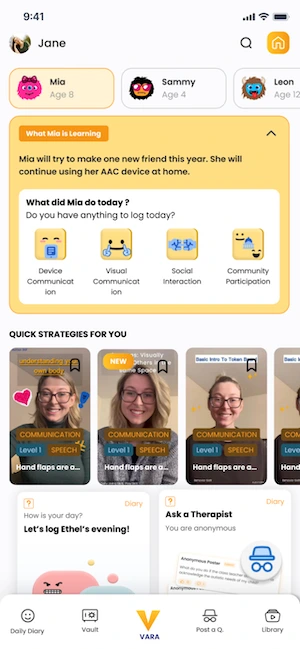
A paper notebook works fine. The VARA app’s Daily Diary lets you make quick daily notes on what you practiced, what happened, and the wins and challenges, and short, messy entries are fine. Insight Reports then turn those entries into patterns and progress over time that you can share with your child’s occupational therapist or clinician, so you arrive with records instead of guesses.
 Insight Reports
Practical Tips When Your Autistic Child Refuses to Get Dressed
- Choose sensory-friendly clothes. Soft cotton, tagless labels, seamless socks and loose waistbands make a big difference. Buy several of the item your child likes.
- Offer two choices. “Red shirt or blue shirt?” gives your child control without making the decision overwhelming.
- Use a visual sequence. Simple pictures of underwear, pants, shirt, socks and shoes show what comes next.
- Lay clothes out the night before. Fewer decisions in the morning means less stress for everyone.
- Warm clothes up in winter. Cold fabric on bare skin can be a big shock for some children.
- Make it a game. Race a song, pretend the shirt is a tunnel, or let a favorite toy “help”.
- Give a warning. “Two more minutes of play, then clothes” helps with the transition.
- Get dressed where they’re comfortable. In front of the heater, on the couch, or in a quiet room away from noise.
Check the setup as well as the skill. Parent support coach Stephanie Collins, who leads program delivery at Autism 360, describes a dressing goal that kept stalling for a simple reason: “Well, why isn’t he dressing himself? Well, he can’t get into the closet or he can’t get to his dresser.” She suggests keeping a few clothes where your child can reach them, so they can practice choosing and dressing, and putting the rest out of reach if they tend to end up on the floor.
If clothing distress is intense, lasts a long time, or comes with other sensory challenges, an occupational therapist can help you understand your child’s sensory profile and suggest more ideas. For a step-by-step way to teach the skill itself, see our dressing tips for kids with autism.
How do you teach dressing one step at a time?
Getting dressed is a chain of small skills, so pick one link to work on rather than the whole outfit. Many families start with the last step, such as pulling up pants or putting on shoes, and help with everything before it, so your child finishes with a success. Keep the same order every day and add the next step only once the first one feels easy.
The VARA app’s AI-guided Goals help you pick one developmental goal to focus on, like getting dressed on their own, so practice has a clear direction instead of trying everything at once. AI parent coaching then gives you guidance between appointments on applying the strategy in everyday moments, such as a rushed school morning, so you feel confident you are doing it right.
AI-guided GoalsCommon Questions from Parents
Why does my 2 year old not want to wear clothes?
Many 2 year olds simply prefer the freedom of being undressed, and some find certain fabrics uncomfortable. If your 2 year old is refusing to get dressed, try softer clothes, fewer layers at home, and choices about what to wear.
My 2 year old screams when getting dressed. What should I do?
Strong distress during dressing often points to sensory discomfort or a hard transition. Slow down, check for tags, seams or tight fits, and try the visual sequence and warning ideas above. If it happens every day, talk to your GP or an occupational therapist.
My 3 year old is refusing to get dressed. Is this a phase?
For many 3 year olds it is a phase linked to wanting independence. Giving choices and letting them do parts themselves usually helps. If it continues, or your child seems very sensitive to how clothes feel, sensory differences may be part of the picture.
My autistic child refuses to get dressed. What helps most?
Start with comfort: the right fabrics, the same favorite outfits, and a predictable routine. Respect your child’s sensory needs rather than pushing through distress, as this builds trust and makes mornings easier over time. A simple getting dressed visual schedule for each step, and getting dressed in a calm, quiet spot, can also help. Many autistic adults describe clothing discomfort as real pain rather than fussiness; hearing that firsthand in our autistic experiences masterclass can change how you approach mornings.
Why does my daughter hate wearing underwear?
Elastic and seams around the legs and waist can be very uncomfortable for sensory-sensitive children. Try seamless or tagless underwear, boxer-style shorts or a larger size, and let your child help choose.

Ash Bhattacharya is the co-founder and CEO of Autism 360, a global autism brand pioneering parent-mediated intervention. Ash is an autistic adult who grew up in the 1980s with an older autistic brother with high support needs, at a time when there was barely any awareness of autism, let alone acceptance. He saw what his parents faced after his brother’s diagnosis, and how little has changed since for families trying to find support they can afford and access.
That lived experience drives his work. Ash built Autism 360 to put parents in the director’s seat, with the tools, strategies and clinical backing to lead their child’s progress at home. Autism 360 is a registered NDIS provider supporting families across Australia, the USA, Canada and the UK, with outcome-focused programs delivered by speech pathologists, occupational therapists, psychologists and behavior analysts. Ash is a leading advocate for parent empowerment and for making effective autism support affordable and accessible to every family.

