Life skills for autism are the everyday abilities that help an autistic person look after themselves, manage a day, get around the community, connect with people and, over time, make their own choices about how they live. They include self-care like dressing and brushing teeth, home skills like laundry and cooking, coping with routines and change, social and relationship skills, and the planning and work skills that matter more in the teen and adult years.
Most autistic children can build these skills, but they often learn them in a different way: through visuals, predictable routines, small steps practiced often, and an environment that respects their sensory needs. This guide to life skills for autism brings together everything Autism 360 has written on daily life, so you can see the whole picture in one place and go deeper into the areas that matter most for your family right now.
What are life skills for autism?
“Life skills” is a broad term. Clinicians often call them adaptive skills or daily living skills, and they cover the practical things everyone needs to manage life, whatever their diagnosis. For autistic children and adults, it helps to group life skills for autism so you can see where your child is strong and where they need more support:
- Self-care: dressing, toileting, bathing, brushing teeth, eating and sleeping.
- Home skills: tidying up, laundry, simple meal preparation and, later, budgeting and paying bills.
- Organization and executive function: following a routine, managing time, planning steps and coping when plans change.
- Community and safety: shopping, using transport, crossing roads, water safety and knowing what to do if lost.
- Social and relationship skills: friendships, turn taking, understanding personal boundaries and, later, dating.
- Work and self-advocacy: finding the right job, asking for adjustments and speaking up about your needs.
Research has consistently found that many autistic people have daily living skills that lag behind their language or learning ability. A child who can read early may still find getting dressed in the right order exhausting. That gap is not laziness or defiance. It usually reflects differences in motor planning, sensory processing and executive function, and it is exactly why life skills deserve their own focus rather than being assumed to “come naturally.”
Support needs also vary widely. Some families are working on a first step like holding a toothbrush, while others are planning for college or a first apartment. Some children also have co-occurring or look-alike conditions that shape what skills look like. For example, Rett syndrome, a rare genetic condition that mostly affects girls, can resemble autism early on but brings a loss of purposeful hand use, so life skills for autism and life skills for Rett syndrome are planned quite differently. Whatever your starting point, the goal is the same: more confidence, more choice and a life that fits the person.

What everyday life with autism can feel like
Before teaching life skills for autism, it helps to understand why ordinary moments can be so demanding. Daily life with autism often involves a nervous system that is working harder than other people realize.
Sensory load. Bright lights, scratchy clothes, the smell of a supermarket or the noise of a busy classroom can all build up across a day. By late afternoon, a child may have little capacity left for a new skill, which is why timing matters.
Executive function. Planning, starting tasks, holding steps in mind and switching between activities rely on executive function. Executive dysfunction in autism explains why a child may know how to make a sandwich but still get stuck on where to begin, and why external supports like checklists help so much.
Deep interests. Many autistic people focus intensely on what they love. Understanding autism fixation and hyperfixation helps you see these interests as a source of calm and motivation rather than something to stamp out. A child who loves trains may happily learn to read a timetable, count money for a ticket or follow a train-themed visual schedule.
Demands and autonomy. For some children, everyday requests trigger intense anxiety and avoidance. If “brush your teeth” reliably leads to a standoff, read our guide to PDA autism, which explains this profile and why low-demand, choice-based approaches tend to work better than firm instructions.
The best way to understand daily life with autism is to listen to autistic people themselves. Our guides to autism masking and autistic burnout explain two experiences many autistic people describe, and knowing the signs makes it much easier to plan support that actually helps.
Routines, predictability and coping with change
Routines are the backbone of daily life for many autistic children. The DSM-5-TR lists insistence on sameness and a strong preference for routines among the core features of autism, and for many children predictability is what makes a day feel safe. A good routine lowers anxiety, frees up energy for learning and gives you a natural framework for teaching life skills for autism one step at a time.
You do not need an hour-by-hour timetable. Many families find it easier to plan the day in predictable chunks. Our guide to block scheduling for an autistic child’s day shows how to organize morning, learning, quiet time, outside time and bedtime into blocks your child can anticipate.
Visuals make routines concrete. Our free structured routines handout walks you through building one picture-based routine step by step, and our guide to making a simple visual schedule shows how a Now, Then, Later board helps a child understand what is coming next.
Of course, life does not always follow the plan. Appointments run late, a favorite teacher is away, the usual cereal is sold out. Our guide to coping with change with an autistic child explains why changed plans can cause so much distress and how to prepare, warn and recover. For the many small transitions in a day, such as switching off a screen or leaving the park, transition cards paired with a timer give a clear, predictable signal.
As children grow, the aim shifts from following an adult’s routine to managing their own. Practical time management tools, including visual planners, alarms and separate weekday and weekend schedules, are worth introducing in the teen years.
How to teach life skills for autism at home
Home is where most life skills are learned, and parents are often the best teachers because you can practice in the real setting, at the real time, many times a week. A few evidence-based principles make the biggest difference.
Use visuals
Many autistic children process pictures more easily than spoken instructions, which disappear as soon as they are said. Our article on why visual training helps children with autism gives a seven-step method for introducing picture steps for dressing, toileting and getting out the door. Our guide to visuals for autism brings together free printable schedules, cards and task analyses.
Break skills into small steps
Task analysis means breaking a skill into its individual steps and teaching them one at a time. Our laundry task analysis visual is a good example: what looks like one job becomes six to ten clear picture steps a child can follow and eventually do alone.
Prompt, then fade
Start with as much help as your child needs to succeed, such as hand-over-hand guidance, pointing or a verbal cue, then gradually step back. Fading support slowly builds independence without frustration. Some skills also work well with backward chaining, where you do all the steps except the last one, let your child finish and feel successful, and then hand over one more step at a time.
Make it motivating and give choices
Link practice to things your child enjoys, celebrate effort as well as results, and offer real choices (“blue shirt or green shirt?”) so your child has some control. Choice reduces demand pressure and builds decision-making, which is itself a key life skill.
Practice in more than one place
A skill learned only at home may not transfer to Grandma’s bathroom or a school camp. Once a skill is steady, try it in new settings with the same visual supports, then gradually reduce them.
Sleep, health and self-care routines
Self-care is where many families start with life skills for autism, because it shapes every day. It is also where sensory differences show up most clearly: the taste of toothpaste, the feel of a toothbrush, the sound of clippers or the brightness of a bathroom light.
Sleep sits underneath almost every other life skill. A tired child has less patience, less flexibility and less capacity to learn. Our guide to sleep problems in children with autism or ADHD explains why sleep is so often harder for these children, from arousal levels to melatonin, and what helps. For a broader look at insomnia, night waking and other sleep disorders, see our complete guide to autism and sleep issues. A predictable bedtime routine with visuals is itself a life skill your child can gradually own.
Brushing teeth is a common battleground. Our step-by-step guide to helping kids with autism brush their teeth covers sensory-friendly toothpaste, gagging and how to build tolerance slowly. When it is time for a check-up, our guide to preparing for a first dental visit explains how to find an autism-friendly dentist and use a familiarization visit so the appointment is not a shock.
Health routines become part of independence later on. Teens can gradually learn to describe how they feel, book appointments with support and manage their own medication with a checklist or phone reminders.
Out in the community: travel, driving and safety
Community skills are some of the most freeing life skills for autism because they open up a child’s world, but outings can also be where sensory overload, unexpected changes and safety risks come together. Preparation and a safety plan make a big difference.
Travel is a good example. Our autism travel guide covers choosing a destination, sensory-friendly hotels, what to pack and how to manage stress during the journey. The same principles of previewing, visuals and planned breaks apply to the supermarket, the hairdresser or a birthday party.
Safety is a life skill in its own right. Some autistic children wander or bolt, often toward something interesting or away from something overwhelming. Our guide to preventing autistic children from wandering sets out a layered plan using technology, teaching and supervision. For some families, an assistance animal is part of that plan, and our guide to autism service dogs explains how they help with safety, deep pressure and sensory regulation, and how to decide whether one is right for your child.
As children become teens, getting around independently becomes the goal. Many autistic people drive safely, but learning can raise anxiety because of sensory load and unwritten road rules. Our guide to autism and driving anxiety covers structured lessons, on-road training and strategies for nerves. Public transport, ride-share apps and cycling are also worth practicing as alternatives.
Social skills, friendships and relationships
Social and relationship skills are life skills for autism too, and it is worth approaching them in a neuroaffirming way. The double empathy problem reminds us that communication breakdowns between autistic and non-autistic people run both ways. The aim is not to make a child act less autistic, but to give them tools, confidence and people who understand them.
Play is a natural place to start. Our guide to social skills activities for autism matches activities to specific skills such as turn taking, sharing attention and conversation, and our answer to a parent asking about good games for autistic children suggests games that make turn taking and losing easier to practice.
Friendships change shape as children grow. Our guide to autism and friendship covers starting conversations, keeping friendships going and understanding non-verbal cues, while our guide to navigating social scenarios with autism walks through situations like networking events, job interviews and work socials that many autistic teens and adults find hard to read.
Romantic relationships are part of life for many autistic adults too. Our guide to what to expect when dating with autism is written from the autistic person’s perspective and covers communication, emotional intensity and online dating. If you are the partner, our guide to dating someone with autism explains communication gaps, sensory needs and the real strengths autistic partners bring.
Work, independence and adult life
Independence does not mean doing everything alone. Most adults, autistic or not, rely on others in some way, and many autistic adults thrive with interdependence: living with family, in supported accommodation or on their own with regular check-ins. Our guide to autism independent living explains what independence and interdependence mean, the key skills to build and how to start preparing well before adulthood.
Work is a major part of adult life, and many life skills for autism, such as time management and self-advocacy, come together on the job. The right job often matches a person’s strengths and interests and keeps sensory and social demands manageable. Our guide to jobs for autistic adults covers job ideas by strength, remote and low-stress options and common workplace challenges. Once in a job, knowing your rights matters. Our guide to autism in the workplace explains low-cost adjustments and the legal rights of autistic employees in Australia, the US and the UK, along with strategies for employers and colleagues.
Family life is part of adulthood too. Some autistic adults become parents, and some parents of autistic children wonder whether anything during pregnancy could have been different. Our guide to autism and pregnancy explains that there are no reliable signs of autism during pregnancy, what researchers are studying and where autistic parents can find support.
Life skills for autism by age
Every child develops at their own pace, so treat these stages as a rough guide rather than a checklist. Start where your child is, not where a chart says they should be. For a wider look at how autism shows up at each stage, see our guide to children with autism.

Toddlers and preschoolers
Focus on simple, repeated routines: washing hands, helping to undress, putting toys in a box, sitting for meals and following a short visual sequence like “first shoes, then park.” Early communication, including gestures, pictures or AAC, is the foundation for every other skill.
School-age children
Build independence in dressing, toileting, brushing teeth and packing a school bag. Introduce simple household jobs, safety rules near roads and water, and small amounts of money. This is a good time to teach a child to ask for help and to tell you when something is too loud or uncomfortable.
Teens
Shift toward self-management: using a planner or phone, preparing simple meals, doing laundry, using public transport with support and handling small purchases. Teens also benefit from learning about their own autism, self-advocacy and relationships, including consent and online safety. Transition planning with school and support services should start early in the teen years.
Young adults and adults
Life skills for autistic adults often center on budgeting, cooking, managing appointments, work skills and choosing a living arrangement. Many adults keep using visual supports, reminders and routines throughout life, and that is a strength, not a failure.
Where to start
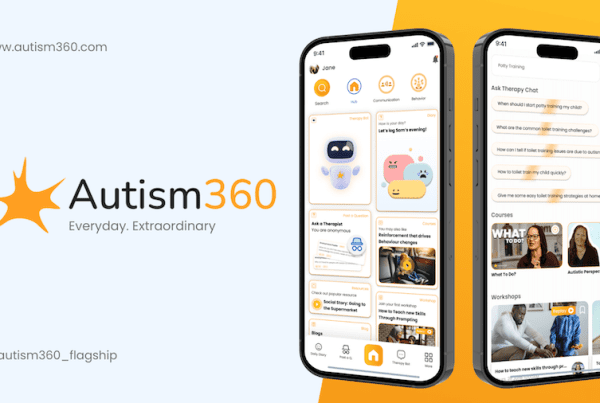
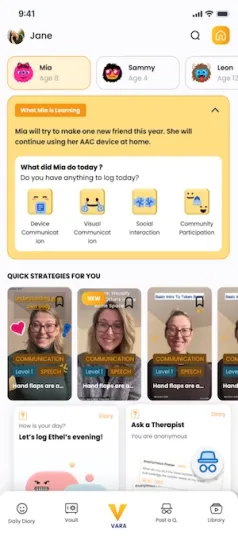
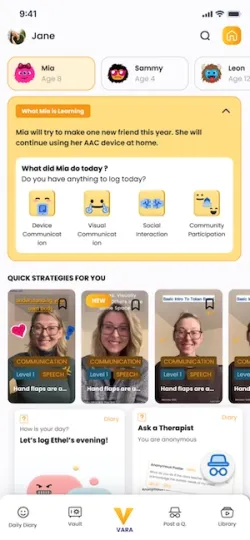
If this feels like a lot, pick one routine that causes daily stress, such as mornings, teeth or bedtime, and make it visual, predictable and a little easier for your child. Small wins build momentum, and life skills for autism grow best from one steady success at a time. For daily support between appointments, the Autism 360 app, VARA, gives you practical, research-led guidance for everyday routines and skills, with step-by-step strategies you can use at home the same day. Download VARA to start building life skills with your child in a way that fits your family.
Frequently asked questions about life skills for autism
Why is routine important for autism?
How does autism affect activities of daily living?
What life skills do autistic adults need?
How do you teach life skills to a teenager with autism?
Can autistic people live independently?
Are there life skills worksheets or visuals for autism?
What is it like living with autism?

I am Ash and I celebrate Neurodiversity! Growing up with an elder brother with severe Autism was tough – but it has also taught me essential life lessons. I don’t believe that people with Autism are necessarily or have any disorder (except in extreme cases). They are just different! And that is something to be proud of! I am passionate about helping other families who may have Autism conditions in their family. So please reach out and drop me a note. I will be glad to help 🙂