Children with autism experience the world differently. Autism is a lifelong neurodevelopmental difference that shapes how a child communicates, connects with people, processes sensory information and handles change. It is not caused by parenting, it is not an illness to be cured, and every autistic child has their own mix of strengths and support needs. What helps most is understanding your child early and building support around how they actually learn.
This guide walks you through the whole picture for parents of children with autism: what autism looks like in childhood, the signs to watch for at different ages, what causes it, who can diagnose it, how early intervention works, and how to support sleep, school and growing up. Each section links to a deeper guide so you can go straight to what matters for your family right now.
What is autism in children?
Autism spectrum disorder (ASD) is diagnosed when a child shows ongoing differences in two areas described in the DSM-5-TR, the diagnostic manual used by clinicians in the US and Australia:
- Social communication and interaction. This can include using less eye contact or gesture, finding back-and-forth conversation hard, responding differently to their name, or playing alongside other children rather than with them.
- Restricted or repetitive behaviors and interests. This covers repeated movements or words, a strong need for sameness and routine, deep focused interests, and sensory differences such as being very sensitive to noise, textures or light, or seeking out certain sensations.
In children with autism, these differences start in early childhood, even if they only become obvious later when social demands increase. The DSM-5-TR also describes three support levels, from Level 1 (needs support) to Level 3 (needs very substantial support). The level describes how much support a child needs at the time of assessment. It is not a fixed label, and support needs often change as children grow and gain skills.
Autism is common. The CDC’s Autism and Developmental Disabilities Monitoring Network estimated that about 1 in 31 eight-year-old children in the US had been identified as autistic in 2022. Boys are diagnosed more often than girls, although many researchers believe autistic girls are under-identified because they are more likely to mask or camouflage their differences.
It also helps to know that “spectrum” does not mean a line from mild to severe. Two children with autism can look completely different. One may talk early and in great detail about trains but struggle with friendships and noisy classrooms. Another may not use spoken words yet but be a skilled visual problem solver. Many children with autism also have co-occurring conditions such as ADHD, anxiety, sleep difficulties, gut problems or epilepsy, which is why a whole-child view matters.
Signs of autism in children at different ages
Signs of autism in children change with age, which is why parents often notice different things at 12 months than at 4 years or 9 years. In babies and toddlers, early signs can include limited babbling or pointing, not responding to their name by around 12 months, little shared attention (looking at what you look at), losing words or skills they had before, and an intense interest in spinning, lining up or watching objects move.
In preschool and school-age children with autism, signs often show up in social settings: difficulty joining play, very literal understanding of language, distress when routines change, big reactions to sensory input, and strong, specific interests. Some children, especially girls and children with fewer support needs (sometimes called high functioning autism), are not identified until elementary school or later, because they copy peers and hold things together at school, then fall apart at home.
For a full breakdown by age band, use our autism symptoms checklist with signs by age. It covers babies, toddlers, preschoolers, school-age children and teens, and helps you note what you are seeing before you speak to a doctor.
A few points to keep in mind when you look at any list of signs:
- One sign on its own does not mean a child is autistic. Clinicians look for a consistent pattern across settings.
- Loss of language or social skills at any age is always worth raising with your doctor promptly.
- You know your child best. If something feels different, it is reasonable to ask for an assessment rather than wait.

What causes autism in children?
“What causes autism in children?” is one of the most searched questions parents ask, and the honest answer is that there is no single cause. Autism develops from a combination of genetic and environmental factors that affect how the brain develops, mostly before birth.
Genetics plays the largest role. Large twin and family studies, including a 2019 study in JAMA Psychiatry covering five countries, estimate that inherited factors explain most of the likelihood of autism. Autism often runs in families, and siblings of autistic children have a higher chance of being autistic themselves. Hundreds of genes have been linked to autism.
Some prenatal and birth factors are associated with a higher likelihood of autism, such as being born very premature, older parental age and certain infections or medications during pregnancy. These are associations, not causes, and most children exposed to them are not autistic.
Just as important is what does not cause autism. Parenting style does not cause autism. Screen time does not cause autism. And vaccines do not cause autism: large population studies, including a Danish study of more than 650,000 children published in the Annals of Internal Medicine in 2019, found no link between the MMR vaccine and autism. Letting go of guilt and blame frees up energy for what actually helps your child.
Who can diagnose autism in a child?
An autism diagnosis is made by a qualified clinician or team after a detailed assessment. In most places, a child’s pathway looks something like this:
- Screening and first concerns. In the US, the American Academy of Pediatrics recommends autism-specific screening at the 18 and 24 month checkups, often using the M-CHAT-R/F questionnaire. In Australia, concerns are usually raised with a GP, maternal and child health nurse or early childhood educator.
- Referral. Your pediatrician or GP refers your child to a specialist for a full developmental assessment.
- Assessment. A developmental pediatrician, child psychiatrist or psychologist gathers your child’s developmental history, observes them (often using tools such as the ADOS-2), and may include input from speech-language pathologists and occupational therapists.
- Feedback and report. You receive a diagnosis or other explanation, a support level, and recommendations for next steps.
Our guide on who can diagnose autism in a child explains each professional’s role, including who diagnoses in Australia under the National Guideline, and what to expect from the appointment. Wait lists for childhood autism diagnosis can be long, so it helps to get a referral in early and start supporting your child at home while you wait.
If you are not sure whether to seek an assessment yet, an online autism test for your child can help you organize your observations and decide on next steps. A screening tool cannot diagnose autism, but it can give you a clear, structured summary to bring to your doctor.
When you prepare for the appointment, bring short notes or videos of the behaviors you have noticed, any reports from childcare or school, and your questions. The age-by-age signs checklist is a useful way to collect these observations in one place.
Early intervention for children with autism
Early intervention means starting supports as early as possible, ideally in the toddler and preschool years. The first few years of life are a time of rapid brain development, and research shows that children with autism who receive well-designed support early often make meaningful gains in communication, play, social connection and daily living skills.
You do not need a formal diagnosis to start. If your child is showing signs, you can begin with strategies at home and request early support services while their childhood autism assessment is underway. Families looking for autism help for 0 to 3 year olds will find many supports are designed for exactly this stage.
Common approaches include:
- Naturalistic developmental behavioral interventions such as the Early Start Denver Model (ESDM), which teach skills through play and everyday routines that follow the child’s interests.
- Speech and language therapy to build understanding and communication, including spoken words, signs, pictures or a speech-generating device.
- Occupational therapy for sensory processing, motor skills and self-care such as dressing, eating and toileting.
- Structured teaching approaches such as TEACCH, which use visual supports and predictable routines.
- Behavioral therapies such as ABA. Approaches vary widely, so ask any provider how they respect your child’s autonomy, comfort and communication.
Our in-depth article on the benefits of early intervention for autism compares these therapy types and explains why the early years matter so much.
One of the strongest findings in autism research is the power of parents. In the PACT trial, a randomized controlled trial published in The Lancet, parents of autistic children aged 2 to 4 learned to notice and respond to their child’s communication cues. Six years later, the children showed lasting improvements in social communication. You can read more in our summary of the parent-led communication study. The takeaway for families is encouraging: everyday interactions at home, done with intention, are a real form of therapy.
How to help an autistic child at home
Parents of children with autism are often told to “get therapy”, but most learning happens in the hours between appointments. These everyday strategies help most autistic children feel safer and learn more easily.

Support communication in every form
Communication is more than speech. Respond to your child’s gestures, sounds, pointing, pictures or leading you by the hand as real communication. Keep your language short and clear, give extra time to respond, and model words for what your child is already interested in. If your child is not yet speaking, visual supports and alternative communication tools do not stop speech from developing; they often support it.
Make the day predictable
Many autistic children find uncertainty stressful. Visual schedules, first-then boards, timers and warnings before transitions make change easier to handle. When a change is coming, such as a new teacher or a vacation, prepare with photos, stories or a visit beforehand.
Understand sensory needs
Sensory differences drive a lot of behavior. A child who covers their ears, refuses certain clothes or foods, or constantly crashes into furniture may be trying to manage overwhelming input or seeking input their body needs. Noise-reducing headphones, a quiet corner, movement breaks and sensory-friendly clothing can make a big difference.
Respond to behavior with curiosity, not punishment
Parents of children with autism often search for how to discipline an autistic child, especially around hitting or meltdowns. Behavior is communication. Before responding, ask what your child might be telling you: are they overwhelmed, in pain, unable to express a need, or stuck in a transition? Meltdowns are not tantrums; they are a stress response, and the priority is safety and calm, not consequences. Afterward, look for patterns and teach a replacement skill, such as asking for a break.
What not to do with an autistic child
- Do not force eye contact or try to stop harmless stimming such as hand flapping or rocking, which often helps a child regulate.
- Do not talk about your child in front of them as if they cannot understand.
- Do not use punishment for sensory overload or meltdowns.
- Do not compare your child’s timeline with other children’s. Progress is real even when it looks different.
Build daily living skills step by step
For many children with autism, skills like toilet training, dressing and brushing teeth take longer and work best when broken into small steps with visual guides, lots of practice and calm praise. Start when your child shows some readiness, and expect progress to come in small jumps rather than a straight line. Our guide to life skills for autism shows how to build everyday independence at each age.
Sleep and autistic children
Sleep is one of the most common challenges for families of children with autism. Research consistently finds that sleep difficulties are far more common in autistic children than in other children, and sleep problems can come and go as children with autism grow. Common problems include taking a long time to fall asleep, waking often in the night, waking very early, and periods where sleep suddenly gets worse after a good stretch, often called sleep regression.
Possible reasons include differences in melatonin (the body’s sleep hormone), anxiety, sensory sensitivities to light, noise or bedding, and co-occurring conditions such as reflux or sleep apnea. Poor sleep affects mood, attention and behavior the next day, for both your child and you.
Helpful first steps include:
- A consistent, visual bedtime routine that runs the same way every night.
- A dark, quiet, cool bedroom with bedding and sleepwear your child finds comfortable.
- No screens for an hour or so before bed, and calming activities instead.
- Regular wake times, daylight in the morning and physical activity during the day.
- Talking to your doctor if your child snores, gasps or has very disrupted sleep. Melatonin may be considered with medical guidance, usually after behavioral strategies have been tried.
Our guide to autism and sleep regression covers the main sleep issues and autism, why they happen, and practical ways to prevent setbacks. If sleep has fallen apart after a change such as starting school, the prevention tips in that guide are a good place to begin.
Growing up with autism: school, friendships and the teen years
As children with autism grow, the challenges change. School brings new social rules, noisy classrooms, group work and homework. Friendships become more complex. Puberty brings physical and emotional changes that can feel confusing, and the teen years add questions about identity, independence and what comes after school.
A few things help children with autism grow up feeling capable and understood:
- Talk openly about autism. Children who understand their own brain are better able to advocate for themselves. Explain autism in positive, honest language that fits their age.
- Work with the school. Ask about individual learning plans, sensory breaks, visual supports, quiet spaces and adjustments to assessments. In the US this may involve an IEP or 504 plan; in Australia, schools make reasonable adjustments under the Disability Standards for Education. Knowing how your child learns best helps you ask for the right adjustments.
- Prepare for change early. Transitions to a new school, puberty and the move to adulthood all go better with plenty of preparation, social stories and practice. Our article on the emotional side of growing up autistic covers how to handle these big changes.
- Protect their mental health. Autistic children and teens experience anxiety more often than their peers. Watch for withdrawal, school avoidance or burnout, and seek support early.
- Celebrate strengths and interests. Deep interests can become a path to friendships, confidence and, later, study or work.
Our guide to growing up with autism and how to ease the process looks at the common stressors, from sensory overload to feeling misunderstood, and gives practical ways to support your child through each stage.
Support for parents and families of children with autism
Raising children with autism is rewarding and demanding at the same time. Parents often become the coordinator, advocate and main teacher all at once. Looking after yourself is part of looking after your child.
- Learn the approaches that work. Parent coaching and parent-led programs give you practical tools you can use every day, not just in a clinic. The evidence from parent-child communication therapy for autism shows how much difference trained, responsive parents make for children with autism.
- Use the funding available. In Australia, families may access early childhood supports through the NDIS, and Autism 360 Guided Support offers structured, parent-led support for eligible families. In the US, early intervention services under IDEA Part C are available for children under 3, and school districts provide services from age 3.
- Connect with other families. Parent groups, online communities and autistic-led organizations can offer practical tips and understanding that professionals sometimes cannot.
- Involve the whole family. Siblings, grandparents and caregivers all do better when they understand autism and know the strategies you are using.
- Ask for help early. Burnout is common among parents. Respite, counseling and shared care are signs of good planning, not failure.
If you are just starting out, a simple order of steps is: note what you are seeing using the signs of autism checklist, talk to your doctor and request a referral to the right child autism doctors and specialists, and begin early support for autism at home while you wait. You do not have to have everything figured out to make a real difference this week.
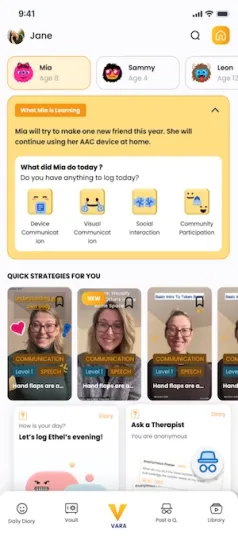
Understanding autism is the first step; turning that understanding into daily progress is the next. The VARA app from Autism 360 gives you parent-led, research-based activities and coaching you can use in everyday routines at home, built around how your child learns. Download VARA to start supporting your child’s communication, behavior and independence today.
Frequently asked questions about children with autism
What causes autism in children?
How is autism diagnosed in children?
How does an autistic child behave?
What should you not do with an autistic child?
How can I help my autistic child sleep?
Can an autistic child start talking after age 5?
How many children are diagnosed with autism?

I am Ash and I celebrate Neurodiversity! Growing up with an elder brother with severe Autism was tough – but it has also taught me essential life lessons. I don’t believe that people with Autism are necessarily or have any disorder (except in extreme cases). They are just different! And that is something to be proud of! I am passionate about helping other families who may have Autism conditions in their family. So please reach out and drop me a note. I will be glad to help 🙂