


Autism elopement (also called wandering or bolting) is when an autistic child leaves a safe place, like home, school or a park, without a trusted adult knowing. It is common, it is frightening for families, and it is usually a child heading towards something they love or away from something that feels overwhelming. This guide explains what elopement means, why it happens, and practical strategies to keep your child safe.
Key takeaways
- Elopement in autism means leaving a supervised or safe space without telling anyone. It is not “running away” in the usual sense.
- Wandering is often communication: a child may be seeking a sound, water or open space, or escaping noise, demands or stress.
- Safety comes from layers: understand the reason, adjust the environment, secure the home, use ID or tracking, and have a plan.
- Water is a major risk. Swimming lessons and constant supervision near water matter a lot.
- You are not failing as a parent if your child wanders. Many families of kids with autism face this.
What is elopement in autism?
In everyday English, “elope” means running off to get married. In autism and disability care, elopement has a different meaning: a person leaving a safe area or the care of a responsible adult without permission or without others knowing. Parents and teachers also call it wandering, bolting or running.
Elopement can look like:
- Goal-directed wandering: heading to a favorite place, like a playground, a neighbor’s pool or a train line.
- Bolting: suddenly darting away, for example in a parking lot or shop.
- Escaping: moving away from something distressing, like a noisy classroom or a crowded party.
- Night wandering: leaving the house while the family is asleep, which is more likely during a period of autism sleep regression.
Why do autistic children wander?
Wandering is usually a form of communication. Asking “what is my child moving towards, or away from?” is the first step to keeping them safe. Common reasons include:
- Seeking something they love. Water, trains, a sound, a favorite shop or a deep interest can be a strong pull.
- Escaping sensory overload. Loud noise, bright lights, crowds or scratchy clothing can make leaving feel like the only option.
- Avoiding a demand or change. An unexpected transition or a task that feels too hard can lead to bolting. If demands are the main trigger, our PDA strategies may help.
- Exploring. Many autistic children are curious, energetic and drawn to open space.
- Not yet understanding danger. Many children don’t yet understand traffic, water or strangers in the way adults do. Safety awareness is one of the daily living skills children build gradually.
The case study of Diallo and his wandering instincts
Diallo Alex Jr, aged 10, is what some people call a “runner”, a term for children who often wander or bolt. Diallo is autistic.

Diallo, age 10, is an autistic child with sensory differences who tends to wander away
Note: this story was first published in 2016.
Like many kids with autism, Diallo experiences sound differently from many other children.
He loves the clicking sound of a pen, or the tinkling of a spoon on cups and plates. He seems to enjoy the thud of the doors, which his mother keeps locked for his safety.
When Diallo hears a sound he likes, he gets excited and wants to explore it, and sometimes goes searching for where it came from.
His curiosity leads him to wander in search of the sound that caught his interest. Many other children with ASD wander for similar reasons.
Some prefer exploring by themselves, away from crowds. Free, open space, away from overwhelming interaction and noise, is what they seek. Autistic adults who wandered as children explain that pull in their own words in our autistic experiences masterclass, and it can change how you read your own child’s behavior.
For parents like Cassandra Burgess-Alex, Diallo’s mother, wandering is a constant worry. Cassandra, a single mom, stays up at night keeping an eye on her son in case he wanders off.
Diallo has language differences and finds it hard to explain what he wants or where he is going.
His wandering has increased as he has grown older. He has left home a number of times and has been brought back by caring neighbors, and at times by the police.
Cassandra has fitted her son with an identification bracelet, added locks that Diallo cannot open, and keeps him under close supervision.
Understandably, Cassandra worries about her son: “it’s a valid fear that I have, that no one can understand. And you live with this fear, constantly.”
Many children like Diallo don’t yet understand the idea of danger. They often focus intensely on one thing. They can be very clever and can spend hours on what interests them, and may have little patience for things that don’t.
For Diallo, that interest is sound, and he is clever enough to unlock the doors.
The thing about “Being Autistic” and a “Wanderer”
Autism is widely discussed now, and help is available in many forms. Still, daily life with an autistic child who wanders can be exhausting and frightening, and it’s something many parents deal with every day.

3 key reasons why children with Autism wander away from home
Wandering is especially dangerous for a child who may not be able to tell others their name or address. More and more parents use electronic tracking bracelets, phone tracking devices and home security devices to keep their children safe.
How common is autism wandering?
Research shared by Autism Speaks found that autistic children are more likely to wander off than non-autistic children of a similar age, and that many start doing so from as early as age 4. They can be gone long enough to cause real concern, and the risk of accidents is noticeably higher, much as it is for ADHD and accidents.
A widely cited 2012 US survey of parents, published in the journal Pediatrics, reported that about half of the autistic children in the study had tried to wander or bolt at least once after age 4. Drowning is one of the most serious risks when a child wanders, which is why water safety comes up again and again in safety advice.
Dave Gaines, director of the Sacramento Autistic Spectrum & Special Needs Alliance, says that many children with ASD do not yet understand the concepts of danger and safety.
If left unsupervised, their curiosity can easily lead them into danger. As Gaines explains, “There isn’t a development of all the skills we take for granted – the fear of strangers, the idea that fire is hot, the idea that leaving the house is not safe.”
Cassandra says that even with extreme vigilance, Diallo still manages to get out and into danger: “If he wants to run, it’s almost impossible to stop him”. It’s a situation many parents of non-autistic children find hard to understand.
Strategies to Prevent Wandering Among Kids with Autism

12 tips to minimize the risk of wandering in kids with Autism
Technology
Lisa Brown is grateful for AngelSense, a tracking app. Both her sons are autistic and tend to wander. AngelSense includes a GPS tracking device that can be followed through the app, along with an audio feature. “You can breathe a lot easier,” she says.
Some police departments also use a tracker called Project Lifesaver, an electronic bracelet that helps police find a child quickly if they go missing. The wristband contains a small radio transmitter. If an enrolled child goes missing, trained first responders use radio receivers to home in on the signal, and teams also learn about each enrolled person’s personality so they can approach calmly. One firefighter involved in the program said teams aim to find a missing person within 30 minutes. Some local services offer the search service free but charge a fee for the band itself, so ask your local police or fire department what applies in your area.
Kim, whose autistic son Derik often slipped out to wade across creeks and watch trains, enrolled him in Project Lifesaver at age 10 after he had wandered about 2 miles from home in heavy snow despite alarms and locks on the house. Stories like hers are a reminder that tracking works best as one layer alongside a secure home and a safety plan.
In the US, Kevin and Avonte’s Law (passed in 2018) supports programs that help find people with autism or dementia who wander, including tracking technology and training for first responders. Tracking devices under the law are voluntary: families request them through local programs, the devices must be non-invasive and non-permanent (no implants or permanent markers), and the person isn’t actively monitored day to day. The device is there to help find someone quickly if they go missing. Families in other countries can ask their local police or disability services what is available nearby. You can also read more about autism ID and GPS tracking bracelets.
Teach
It’s important to understand why your child keeps leaving. Wandering is often a form of communication: your child may be heading towards something they love, or escaping something that feels overwhelming.
As Gaines said, “If the issue is that the child is impulsively wanting to go to that place, the skill the child is missing is a waiting skill. It involves a program of teaching the child to wait and rewarding waiting. The child learns that I’ll get what I want, but it’s even better if I wait.”
Visual tools can help too. A simple social story about staying with a grown-up, a “stop” sign on the door, or a picture card your child can hand you when they want to go somewhere gives them another way to tell you what they need.
A clear, practiced safe spot also helps. In an Autism 360 workshop on preparing children for emergencies, parent coach Stacy Badon suggests choosing one visually obvious place, such as a red chair or a square of tape on the floor, and teaching it through playful practice before you ever need it. The instruction stays short: “go to the red chair, go to the emergency square, go to the kitchen counter and put your hand on the counter.” A spot your child already knows is much easier to reach for than spoken directions in a stressful moment.
How do you practice stopping and waiting at home?
Pick one safety skill and practice it while everyone is calm, such as stopping at the front door, waiting for your “go,” or coming back when you call a special word. Start with very short waits, use your child’s favorite things as the reward, and practice a few times a day in the same spot before you try it somewhere busier.
The VARA app’s AI-guided Goals help you pick one developmental goal to focus on, like waiting at the door, so practice has a clear direction instead of trying everything at once. AI parent coaching gives you guidance between appointments on applying the strategy in everyday moments, so you feel confident you are doing it right.
 AI-guided Goals
Supervision
How to stop elopement in autism: a step-by-step plan
No single autism elopement strategy works for every child. Most families combine several of these steps:
- Track the pattern. For two weeks, jot down when your child leaves, where they head, and what happened just before. Patterns often show the reason.
- Meet the need safely. If your child is drawn to water, plan regular supervised swims. If they bolt from noise, offer headphones and a quiet corner.
- Prepare for transitions. Give warnings, use a visual schedule, and keep busy outings short.
- Secure the home. Add high locks, door and window alarms or chimes, and fencing around pools and dams.
- Use ID. An ID bracelet, shoe tag or card with your phone number helps if your child can’t share their details.
- Teach safety skills at your child’s pace. Practice stopping at doors, waiting, and responding to their name, using their interests and lots of encouragement. These are the same skills that build towards living independently with autism later on.
- Build a safety network. Tell neighbors, school and local police about your child, with a recent photo and what calms them.
How can you spot the pattern behind wandering?
Step 1 of the plan, tracking the pattern, often tells you the most. Each time your child leaves or tries to, note the time, where they were heading, and what happened just before, such as a loud noise, a request, a transition or a favorite place nearby. Note the calm days too. After a couple of weeks, a pattern often shows up, and that points to which need to meet first.
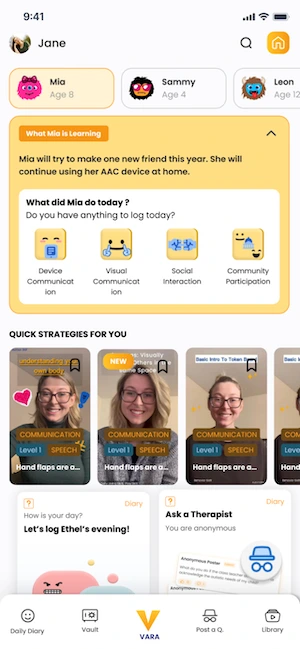
A notebook by the door works. The VARA app’s Daily Diary works like a simple before, behavior, after record: quick daily notes on what happened, and short, messy entries are fine. Insight Reports turn those entries into patterns and progress over time, such as triggers and times of day, that you can share with your child’s clinician or school.
 Insight Reports
Autism Wandering Safety: A Quick Checklist
- Know the triggers. Notice when and where your child tends to leave (noise, transitions, a favorite place nearby) and change the environment where you can.
- Secure the home. Use door and window locks, alarms or chimes, and fence pools and dams.
- Prioritize water safety. Many autistic children are drawn to water, so swimming lessons for kids with autism and constant supervision near water are vital.
- Use ID. An ID bracelet, card or tag with your phone number helps if your child can’t share their details.
- Tell your neighbors and local police about your child, with a recent photo and what calms them.
- Make a plan. Know who searches where if your child goes missing, and check water first.
What to do if your child goes missing
- Search the immediate area quickly, and check nearby water first (pools, ponds, creeks, the beach).
- Call emergency services (000 in Australia, 911 in the US) straight away. Tell them your child is autistic and may not respond to their name.
- Share a recent photo, what your child is wearing, and places they love to go.
- Have one adult stay at home in case your child comes back.
Whatever your plan looks like, rehearse it. Stacy recommends writing a family safety plan, picking a regular day each month to practice, keeping the role play playful, and sharing the plan with neighbors or relatives who can be a point of contact. As she puts it, “you need to practice it like you practice anything else in terms of a sport or a music lesson.”
Good autism wandering prevention combines a safe environment, understanding your child’s reasons, and support for you as a parent. If you are an Australian family on the NDIS, Autism 360 Guided Support can help you build a safety and routine plan that fits your child.
FAQs about autism elopement
What is elopement in autism?
Elopement in autism is when a child or adult leaves a safe place or the care of a trusted adult without others knowing. It includes wandering off, bolting in public and leaving home at night. It is usually purposeful: the person is moving towards something they enjoy or away from something that feels overwhelming, often without understanding the danger.
How do you stop elopement in autism?
Start by working out why your child leaves, then meet that need in a safe way. Combine this with practical layers of safety: secure doors and windows, pool fencing, ID or a GPS tracker, swimming lessons, visual supports for transitions, and a plan with neighbors and school. Teach safety skills gently, using your child’s interests.
Does elopement happen in high functioning autism?
Yes. Elopement can happen at any support level, including in children described as having high functioning autism. A child who speaks well may still bolt when overwhelmed, anxious or focused on something they want. Their reasons may be easier to talk through, but they still need a safety plan.
What autism wandering devices are available?
Options include GPS trackers worn on the wrist, ankle or clothing, smartwatches, ID bracelets and shoe tags, door and window alarms, and programs like Project Lifesaver run with local police in some areas. Choose a device your child can tolerate comfortably, and check battery life, range and privacy settings.

Ash Bhattacharya is the co-founder and CEO of Autism 360, a global autism brand pioneering parent-mediated intervention. Ash is an autistic adult who grew up in the 1980s with an older autistic brother with high support needs, at a time when there was barely any awareness of autism, let alone acceptance. He saw what his parents faced after his brother’s diagnosis, and how little has changed since for families trying to find support they can afford and access.
That lived experience drives his work. Ash built Autism 360 to put parents in the director’s seat, with the tools, strategies and clinical backing to lead their child’s progress at home. Autism 360 is a registered NDIS provider supporting families across Australia, the USA, Canada and the UK, with outcome-focused programs delivered by speech pathologists, occupational therapists, psychologists and behavior analysts. Ash is a leading advocate for parent empowerment and for making effective autism support affordable and accessible to every family.

