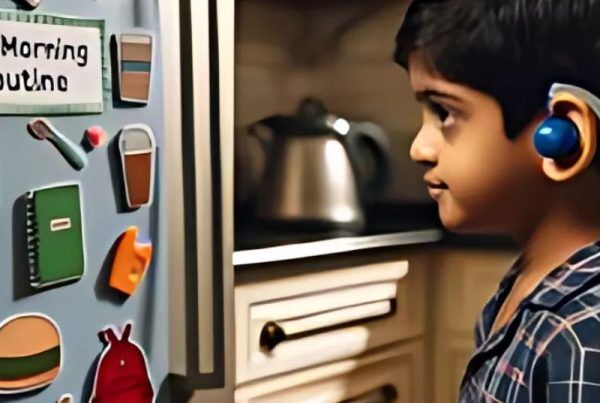
Brushing teeth is one of the hardest parts of the day for many families. This page is for parents of autistic children, from toddlers to older kids, who find toothbrushing stressful. Watch the short video above, then use the step-by-step plan and tips below to help your child brush their teeth in the morning with less stress.
Kids with Autism often experience sensory differences, such as a strong reaction to the taste of toothpaste, the feel of the bristles or the sound of the brush. That can be one of the reasons brushing feels so hard in the morning. So what can you do?
The key idea is to make brushing a fun, predictable activity, so that rather than dreading it, your child can start to look forward to this important morning routine. Brushing is also one of the first daily living skills many children learn, so small wins here can build confidence for others. Our guide to writing a task analysis shows how to break any daily skill into small steps.
How to Make Brushing Easier, Step by Step
- Start with the sensory side. Notice what your child reacts to: the taste, the bristles, the sound, or being touched around the mouth. That tells you what to change first.
- Make it predictable. Brush at the same time and in the same place each day, and add a picture of brushing to your child’s visual schedule.
- Model it. Brush your own teeth alongside your child so they can copy you.
- Build up slowly. If your child is unsure, start by just touching the brush to their lips, then the front teeth, and add a few seconds each day.
- Give them some control. Let your child hold the brush, choose which teeth go first, or take turns with you.
- Show a clear finish. A song, a sand timer or counting to 20 shows exactly when brushing ends.
- If your child pulls away or gets upset, stop and try again later with a smaller step. Pushing through often makes the next time harder. The same gentle approach works for other touch-heavy routines, such as haircuts and autism.
Tips and Variations
- Let your child choose their own toothbrush and a mild or unflavored toothpaste.
- Try a soft-bristled or electric brush and see which they prefer.
- Use a tooth brushing visual or a short song to show how long brushing lasts.
- Let them brush your teeth or a toy’s teeth first.
- Brush in front of a mirror so they can see what is happening.
When Your Child Says “Yucky Toothpaste”
If the toothpaste is the main problem, these sensory-friendly ideas can help:
- Start with water. Brushing with just water is better than not brushing at all. Then add toothpaste slowly: a tiny smear first, then a little more over the following days and weeks.
- Use the softest bristles you can find, even if your child has outgrown the age range on the packet. Sometimes it’s simply what they’re used to.
- Calm the bathroom. Dim bright lights, or if you can’t change the lighting, let your child wear sunglasses while they brush.
- Move somewhere comfier. If standing still at the sink is the hard part, try brushing while sitting on the couch.
- Tell your dentist about your child’s sensory needs. Many are happy to suggest low-foam, mild-flavor products and take things slowly. Our guide to preparing an autistic child for the dentist covers the first visit.
Ash from Autism 360 shares these ideas in this 1-minute video:
Common Questions
My child gags on toothpaste. What can I do?
Try a very small smear of a mild or unflavored toothpaste, and ask your dentist which toothpaste options suit your child.
How long until brushing gets easier?
It varies. Small, steady steps over a few weeks usually work better than trying to do a full brush straight away.
If brushing stays very distressing, an occupational therapist or a pediatric dentist can help. It can also help to hear how autistic adults experienced these routines as children; our Autistic Adults Experiences masterclass shares those insights.

Ash Bhattacharya is the co-founder and CEO of Autism 360, a global autism brand pioneering parent-mediated intervention. Ash is an autistic adult who grew up in the 1980s with an older autistic brother with high support needs, at a time when there was barely any awareness of autism, let alone acceptance. He saw what his parents faced after his brother’s diagnosis, and how little has changed since for families trying to find support they can afford and access.
That lived experience drives his work. Ash built Autism 360 to put parents in the director’s seat, with the tools, strategies and clinical backing to lead their child’s progress at home. Autism 360 is a registered NDIS provider supporting families across Australia, the USA, Canada and the UK, with outcome-focused programs delivered by speech pathologists, occupational therapists, psychologists and behavior analysts. Ash is a leading advocate for parent empowerment and for making effective autism support affordable and accessible to every family.