The Function of Behavior infographic explains the four functions of behavior in a simple visual. At the most basic level, all behavior happens for a reason: it serves a purpose and communicates a need. Finding that reason helps you understand the WHY. Why is this behavior happening? What is it telling us, and what does the learner need? Download this resource for more information. You’ll find it with our other free autism visuals.
What is a Function of Behavior?
The Function of Behavior infographic sorts behavior into four functions and explains each one. At the most basic level, all behavior (the kind we welcome and the kind that worries us) happens for a reason and serves a purpose. Finding that reason helps you understand the WHY. Why is this behavior happening? What is the learner trying to get, avoid or communicate?
Knowing the WHY (the function) helps the support team find another way for the learner to get what they need, such as a word, sign, picture card or break request. It also helps the team change the environment so the need is met before distress builds, which naturally reduces behaviors of concern. Our guide to what your child’s behavior is telling you covers this in more detail.
Behaviors of concern happen because a learner is trying to meet a specific need. Sometimes that need is clear, and other times it takes some detective work. Noting what happens before and after the behavior helps you identify that need, which is the function of the behavior. There are four functions of behavior: Attention (connection), Escape, Sensory and Tangible.
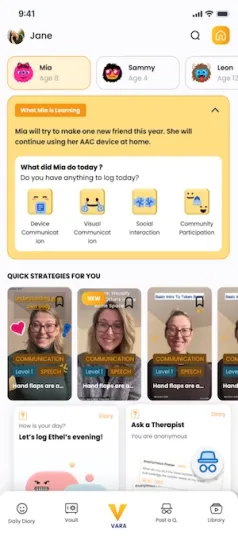
How to use this visual: Keep the infographic somewhere handy, such as on the fridge or in a shared folder with your child’s school or therapist. When a hard moment happens, jot down what came just before it (noise, a demand, a transition, a tired afternoon) and what happened afterwards. A free ABC data sheet makes this quick. After a week or two, look at the four functions together and ask which one fits best. Then plan one small change, such as an easier way to ask for a break, a calmer space or more one-on-one time, and see what difference it makes. If you’d like help working out the function, you can ask an autism therapist in the VARA app.

The 4 Functions of Behavior Explained
Most behavior professionals group the functions of behavior into four types. A single behavior can serve more than one function, and the same action can mean different things for different children.
- Attention (connection): your child wants interaction, comfort or a shared moment with someone. Try regular one-on-one time and teach an easy way to say “come play with me”.
- Escape: your child wants to get away from something that feels too hard, too loud or too much. Try breaking tasks into smaller steps and giving a simple way to ask for a break.
- Sensory: the behavior itself feels good or calming, or blocks out sensory input. Try offering safe sensory alternatives and adjusting noise, light or textures. Understanding your child’s sensory preferences helps here.
- Tangible: your child wants an object or activity, such as a toy, snack or screen. Try a picture card or “first, then” visual so they can ask and know when it is coming.
Where do the functions of behavior come from?
The four functions of behavior come from applied behavior analysis (ABA), where they are used in a functional behavior assessment. You don’t need to follow an ABA program to use them. As a parent, they are simply a way of asking “what is my child telling me?” so you can meet the need and reduce distress.
To go deeper, read our guide to functional behavior assessment.

Rachael’s expertise lies in providing tailored interventions to improve the lives of individuals with behavioral challenges. In addition to her role with Autism360, she also enjoys serving as an Adjunct Instructor at Arizona State University, she not only imparts her knowledge but also inspires the next generation of behavior analysts. Rachael’s commitment to education is paralleled by her pursuit of a PsyD in Clinical Psychology, where she’s actively working to deepen her understanding of human behavior. Her friendly and upbeat demeanor, combined with her passion for helping others, make her a valuable asset in the world of behavior analysis and psychology. Rachael is also proud to identify as neurodivergent, bringing a unique perspective and empathy to her work.