PECS cards are simple picture cards that a child hands to you to ask for what they want, giving them a reliable way to communicate without speech. This article explains to parents and educators how communication cards are used to support the learning and development of kids with autism. By the end, you will have a solid understanding of the PECS autism framework and how to start using picture cards for autism (sometimes called autism pictures for communication) at home or school.
If you are looking for a comprehensive PECS program that comes with 10,000+ complimentary PECS cards, take a look at the PECS Ninja Blueprint for Autism.

Many autistic children find spoken language hard to develop or use, especially when they are stressed. This is a common trait of autism spectrum disorders (ASD). The Picture Exchange Communication System (commonly known as PECS) is a structured framework that supports communication across home, school and community for children and young people with ASD, particularly those who are non-verbal (non-speaking) or minimally speaking. It gives them a reliable way to communicate with teachers, parents and peers. In this guide, we cover the most commonly used PECS autism strategies to help you get started.
A Background of Autism PECS
PECS was developed in 1985 by Andy Bondy and Lori Frost at the Delaware Autistic Program, and was first described in published research in 1994. It has been widely used as an alternative communication system ever since, and some studies show it can also support speech development. The version used today is an updated form of the original procedures. This post defines PECS communication pictures and outlines the steps for using them well, with examples across settings and age groups.
Note: PECS works best with guidance from a trained professional, especially when you are starting out. It can begin in preschool and be used for life, for as long as it helps the person communicate.
What is PECS?
PECS is a method that uses communication pictures. It belongs to the category of augmentative and alternative communication (AAC) systems. It is an “aided” technique, meaning it uses an object (the picture) rather than only the body, and it sits within a larger group of tools that help people who don’t use speech, or don’t use it reliably, to communicate with others.
Sign language and picture boards are other common AAC systems. PECS helps autistic people (particularly non verbal children) start communication themselves, rather than waiting to be asked. Its developers describe it as a behavior-based approach that teaches the learner to use pictures or symbols to communicate. PECS is built on the principles of Applied Behavior Analysis.
PECS teaches learners to hand a picture or symbol of something they want to a communication partner, in exchange for the actual item.
The 6 Phases of PECS Autism Framework
PECS has six phases of instruction, each building on the one before. They are:
- Teaching the physically assisted exchange
- Expanding spontaneity
- Simultaneous discrimination of pictures
- Building sentence structure
- Responding to “What do you want?”
- Commenting (first in response to a question and later spontaneously)
PECS is different from other picture communication systems for autism. With PECS, the person physically hands a symbol of what they want to their communication partner. Learners first discover that pictures can be used to make requests. This then extends to other communication (such as labeling and asking questions) and to other places (such as home and the community).
Why use PECS Cards as Communication Pictures?
Communication differences are a core characteristic of autism spectrum disorders (ASD). Autistic children often use words, eye contact, sounds and gestures differently from non-autistic children, and some use very few of them to communicate.
When a child has no reliable way to say what they want, they still communicate, often through behavior such as grabbing, crying or meltdowns. That behavior makes sense: it’s the tool they have.
For children who are still developing speech and gestures, expressing wants and needs can be very hard. Early support helps autistic children and young people build communication skills. Using PECS pictures is a well-established, well-supported practice, and it tends to work best when started early.
When communication is hard, both the child and the caregiver can end up frustrated, and distress behaviors often increase. Tools like autism PECS give the child a clear, reliable way to ask for what they need, which often reduces distress and builds functional communication.
Must Read: Ash Bernard Introduces PECS Ninja Masterplan for Kids with Autism
Who Can Use PECS Cards, and Where?

Any professional, parent or caregiver can use PECS. However, training beforehand is recommended, and it is available from the developers of the PECS system. Professionals who want to be certified can train through Pyramid Educational Consultants, Inc. (more information at www.pecsusa.com).
This guide gives a detailed overview of using PECS well, as extra training for parents and support staff working in educational and community settings.
PECS can be used anywhere communication is wanted or needed, including home, school and the community.
What Age Group Is PECS Best For?
Research suggests PECS is most effective with preschool and primary school children.
Note: most PECS research has been done with younger children, but there is evidence that it also works with older students and with adult learners.
Assessments Before Using PECS as Autism Communication Pictures
Before starting PECS, it helps to understand the learner’s current communication and everyday skills. A speech pathologist or psychologist may already have information from earlier assessments of communication and daily living skills. Three further steps are especially useful.
First, complete a checklist of how the learner communicates right now. Knowing how they currently make requests (for example, by pointing, leading you by the hand, or using sounds or words) helps you decide where to start and what support they need during tasks and transitions.
This information (such as how they request and how they start interactions) helps teachers choose the specific skills to target in PECS autism training.
Second, look at how the learner understands pictures and objects. For example, can they match a photo to the real item? This helps you decide whether to start with photos, simple drawings or symbols.
Finally, do a reinforcer sampling (an informal list of items and activities the learner especially enjoys) alongside the communication assessment. There are several ways to do this. For children who are still building communication skills, these steps are suggested:
- Gather a selection of items or activities the learner enjoys. Caregivers can identify these by asking and watching. Items can range from food (like lollies or ice-cream) to favorite classroom activities.
- Offer the learner pairs of choices. Pair each item with each of the others at least once to find out which they prefer. Swap the left and right positions throughout, so a habit of always reaching to one side doesn’t skew the results.
- Write down the items the learner chooses most, and any strong reactions of acceptance or rejection. This list becomes the starting set of favorite items for PECS autism training. Using things the learner loves increases motivation and helps them learn to communicate effectively.
Implementing PECS Cards to Enhance Communication with Autism
Things to keep in mind before starting with PECS autism communication pictures:
- Make the communication pictures or symbol cards after you have identified enough motivating items.
- The number of items and picture cards is different for each learner. The goal is to keep them engaged and motivated by offering enough choices. Use simple drawings or photos taken with your phone, depending on what the learner understands best. Alternatively, see our Autism PECS Blueprint for 500+ ready-made autism PECS pictures.
Before PECS teaching begins, a few other things need to be sorted out:
- Training Environment: PECS should eventually be used in all natural environments. The early phases work best in a structured, consistent setting. As the learner becomes more confident with PECS pictures, the setting can become more relaxed so the skill carries over to everyday life.
- Teachers/Adults: At first, two adults are involved in teaching: the helper and the communication partner, who swap roles throughout.
- Autism PECS should be used across all natural settings. This builds a truly functional communication system. Children and young people with ASD can then communicate with many different partners, including peers their own age.
Using Communication Pictures (or Autism PECS Cards)
The early phases use only a few pictures or symbols. A dedicated communication book is important. It should hold commonly used pictures or symbols, organized by theme so it’s as practical as possible. Books are usually organized by vocabulary categories, such as food, toys, places and people, or by daily activities, like snack time, library time and play time. Add pages as needed.
Keep the first board very small. Ashley Hyman, a behavioral coach at Autism 360, explains that in the early stages “we just have one or two PECS on the board max, because we want to set him up for success”. Ashley suggests starting with one or two highly motivating pictures, prompting heavily at first and giving the item straight away. Treat every new picture as a step-one picture: hand over the item with its picture first, then move the picture to the board once your child uses it reliably.
Once the learner starts using PECS in different places and with different people, make a second copy of the book, with extra pictures or symbols, for use at home. Rather than printing pictures one at a time as you need them, keep a ready set of PECS autism pictures covering a wide range of images, so you can quickly choose and add the ones your child needs.
How to Make Printable PECS Cards at Home
You can make your own printable PECS cards in an afternoon:
- Take clear photos of your child’s favorite items on a plain background, or use simple symbols.
- Print them about 5 cm square, with the word underneath.
- Laminate each card (or cover it with clear contact) so it lasts.
- Add a small piece of hook-and-loop tape to the back, and a strip inside a folder or book, so cards stay in place.
Start with a few motivating items and add more as your child learns. Our free printable communication cards for everyday activities are a ready-made place to start.
How can you build picture exchange into snack time?
New communication skills grow fastest inside one routine you already do every day. Snack time works well because the reward is right there. Put two or three snack pictures on the board, show your child the food, then pause and wait for them to hand you a card. Help with the exchange at first if needed, say the word as you hand the food over, and point to the pictures yourself as you talk. Repeat the same routine each day so the pattern feels predictable.
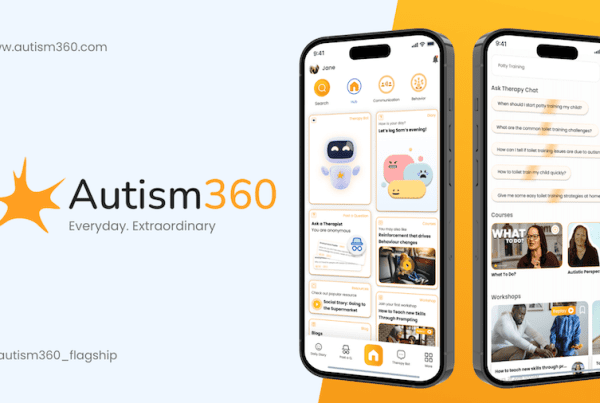
Questions often come up between appointments, such as what to do when your child reaches for the food instead of the card, or when to add a new picture. VARA’s AI parent coaching gives you guidance between appointments on applying a strategy in everyday moments, so you feel confident you are doing it right. It works alongside your child’s speech pathologist, not in place of them.
 AI parent coaching
Monitoring Individual Student Progress
The methods in this guide can be used to track a learner’s progress through all of the phases. Official progress monitoring forms and checklists come with the Picture Exchange Communication System Training Manual, available from www.pecsusa.com.
PECS training begins once the key people (learner, helper and partner) have identified the motivating items and made the first materials.
Tracking progress in each phase helps teachers and other professionals make good decisions, such as when to fade prompts or move to the next phase. The developers of PECS recommend many communication opportunities throughout the day, with training continuing in each phase until the learner shows 80% or greater success for at least three days. Then it’s time to move on to the next phase.
How can you keep track of new picture requests at home?
Your notes from home help your child’s speech pathologist decide when to fade prompts or move to the next phase. A paper notebook on the fridge works well: jot down which pictures your child asked for, any new exchanges (such as walking across the room to you or choosing between two cards), and the small wins worth celebrating. A line or two each day is plenty.
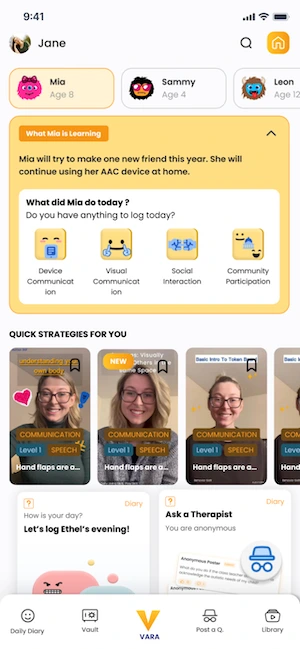
If you would rather keep notes on your phone, VARA’s Daily Diary is for quick daily notes on what you practiced, what happened, and the wins and challenges. Short, messy entries are fine. Insight Reports then turn your diary entries into patterns and progress over time that you can share with your child’s clinician, school or a new provider. They document patterns; they do not diagnose. Bring them to your next speech pathology session to plan the next step together.
Daily DiaryThe Six PECS Phases at a Glance
- Phase 1, How to communicate: the learner picks up a single picture and hands it to a partner in exchange for the item, with physical help from a second adult that is gradually faded.
- Phase 2, Distance and persistence: the learner goes to their communication book, gets the picture and travels to a partner, even across the room.
- Phase 3, Picture discrimination: the learner chooses between two or more pictures to ask for what they really want.
- Phase 4, Sentence structure: the learner builds a simple sentence on a strip, such as “I want” plus a picture.
- Phase 5, Answering questions: the learner uses PECS to answer “What do you want?”.
- Phase 6, Commenting: the learner uses pictures to comment, such as “I see”, “I hear” or “It is”.
PECS for Autism Explained: Tips for Parents
PECS for autism is simple at its heart: your child gives you a picture, and you respond straight away. A few tips help picture communication for autism work at home:
- Respond every time. In the early phases, honor every exchange quickly and warmly. This is how your child learns that pictures work.
- Start with what your child loves. The first PECS cards for autism should be favorite foods, toys or activities, not tasks you want them to do.
- Choose clear pictures for autism communication. Show one item per card on a plain background, and use the same picture every time for the same thing.
- Keep the book within reach. Communication should be available all day, not only at “PECS time”.
- Model it yourself. Point to pictures as you talk (“Let’s go to the park“) so your child sees them used.
- Say the word too. Name the item when you hand it over. Research suggests PECS and other AAC do not stop speech developing, and many children add words over time.
- Accept all communication. Pictures, gestures, sounds, words and signs all count. PECS is one tool in the mix.
Mealtimes are a natural place to practice requesting. Ashley Hyman suggests a food board with hook-and-loop tape at the table, showing only the foods you are happy to offer at that meal and changing it for breakfast, lunch and dinner. As Ashley puts it, “the available foods on the board should always reflect what is actually available”. Point and say the full phrase, such as “I want banana”, then wait for your child to try part of it.
Whether you call them autism picture cards, ASD picture cards, PECS pictures for autism, communication pictures for autism or simply pec cards, the goal is the same: giving your child a way to be heard. If you want support along the way, the VARA app lets you track how your child communicates each day and ask an autism therapist for help.

Ash Bhattacharya is the co-founder and CEO of Autism 360, a global autism brand pioneering parent-mediated intervention. Ash is an autistic adult who grew up in the 1980s with an older autistic brother with high support needs, at a time when there was barely any awareness of autism, let alone acceptance. He saw what his parents faced after his brother’s diagnosis, and how little has changed since for families trying to find support they can afford and access.
That lived experience drives his work. Ash built Autism 360 to put parents in the director’s seat, with the tools, strategies and clinical backing to lead their child’s progress at home. Autism 360 is a registered NDIS provider supporting families across Australia, the USA, Canada and the UK, with outcome-focused programs delivered by speech pathologists, occupational therapists, psychologists and behavior analysts. Ash is a leading advocate for parent empowerment and for making effective autism support affordable and accessible to every family.