
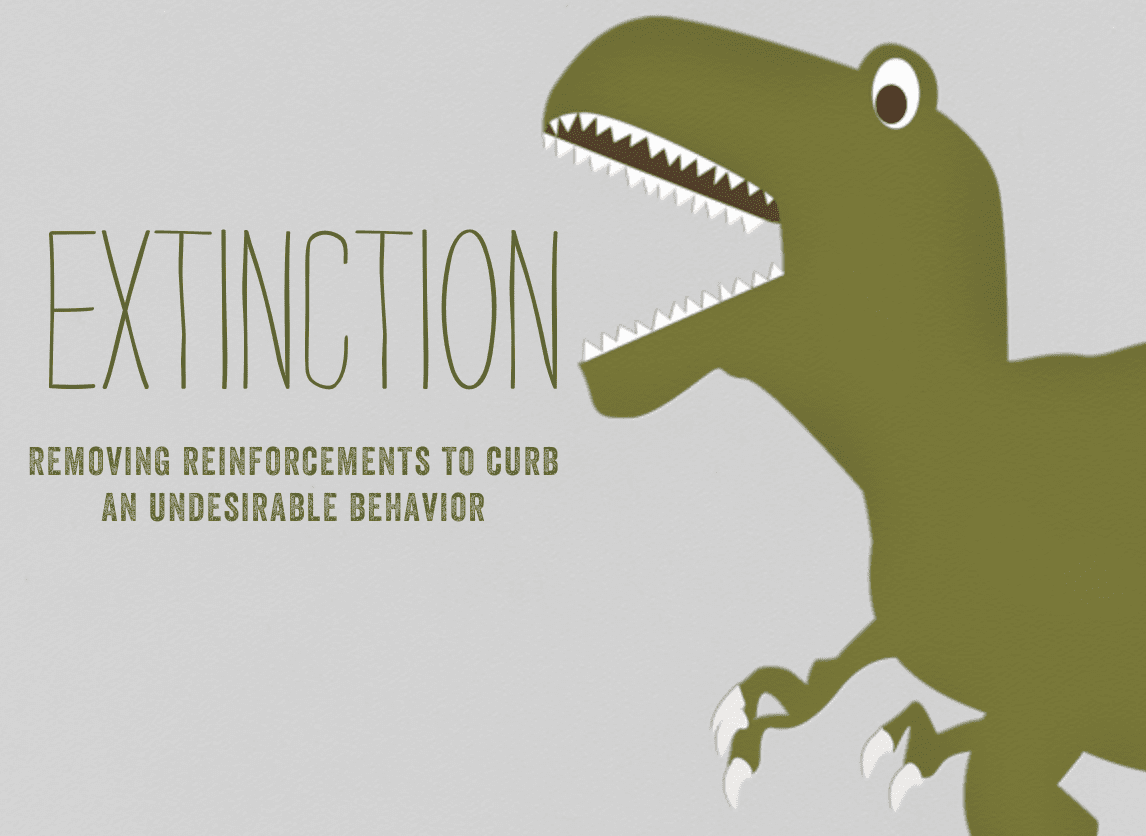
Extinction is one of the best-known techniques in applied behavior analysis (ABA). This guide to extinction ABA explains what extinction in ABA means, how it works, real examples, and the concerns many autistic people and clinicians have about it, so you can make informed choices for your child.
Key takeaways: extinction ABA
- Extinction ABA means no longer providing the reinforcement that has kept a behavior going, so the behavior gradually happens less often.
- An extinction burst is a short-term increase in a behavior after reinforcement stops, so families should know about it in advance.
- Extinction is rarely used alone; it is paired with strategies like functional communication training that teach a new way to meet the need.
- Ignoring distress is not okay: extinction should never be used for crying, meltdowns or requests that come from fear, pain or sensory overload.
- Ask your child’s therapist what need the behavior meets and what new way of communicating will be taught before agreeing to a plan.
What is Extinction in ABA?

Extinction aba definition: in ABA, extinction means no longer providing the consequence (the “reinforcement”) that has been keeping a behavior going, so that the behavior gradually happens less often. Extinction behavior can apply to behaviors previously maintained by positive reinforcement (getting something, such as attention or a toy), negative reinforcement (escaping or avoiding something, such as a task) or naturally occurring sensory consequences (how the behavior feels).
Extinction comes from Applied Behavior Analysis (ABA) and involves withdrawing the reinforcement linked to a behavior. Because the behavior may have been reinforced for a long time, changing the consequence often leads to a temporary increase in the frequency (how often the behavior happens), duration (how long it lasts) and/or intensity (how strong it is) of the target behavior. This is called an extinction burst.
Behavioral extinction (sometimes called behavior extinction) is a wider term from psychology. A classic example of extinction in psychology comes from Pavlov’s dogs: the dogs learned to salivate when they heard a bell that came before food, and when the bell kept ringing with no food, the salivating gradually stopped. ABA extinction applies the same idea to everyday behaviors.

The above image shows effects of positive reinforcement which then needs to be negated using Extinction
What Is an Extinction Burst in ABA?
An extinction burst is a short-term increase in a behavior right after the reinforcement that kept it going is removed. The behavior may happen more often, last longer or become more intense before it settles. It is expected in extinction ABA plans, but it can be distressing, so families should know about it in advance.
For instance, if a teacher suddenly starts ignoring a student’s calling out, the student may at first call out more often or more loudly. You can think of this as the student “trying harder” to get the teacher’s attention. If the teacher’s attention is consistently withheld, the calling out usually decreases. In practice, extinction is rarely used on its own. It is combined with other strategies that teach a new, more effective way to get the same need met.
Strategies such as functional communication training (FCT), differential reinforcement, non-contingent reinforcement, self-management or response interruption/redirection (RIR) may be used to reduce or prevent an extinction burst and to teach the learner a new way of communicating or meeting their need.
What is the Goal of Extinction Behavior Analysis?
In ABA, the goal of extinction is to show the learner that a particular behavior no longer gets the result it used to, while teaching another way to reach the same goal. How this is done depends on the function (purpose) of the behavior, the family’s values and priorities, and the setting where the behavior happens. Extinction can be used with behaviors maintained by positive or negative reinforcement, and by naturally occurring sensory consequences.
In ABA terms, the main goals of extinction are:
- Reducing behaviors that interfere with learning, safety or wellbeing
- Replacing them with other ways of meeting the same need
Areas where extinction-based approaches have been studied include:
- Functional communication
- Self-injurious behaviors
- Sleep difficulties
- Behavior during classroom learning
Extinction ABA Examples
Here are some common examples of extinction ABA practitioners use. Each ABA extinction example is paired with what a needs-focused approach adds, because seeing an example of extinction ABA style helps show both how it works and where caution is needed:
- Attention (positive reinforcement): A child throws toys to get a parent’s attention. In an extinction plan, the parent stops reacting to the throwing. Alongside this, the child is taught a clear way to ask for attention, such as tapping the parent’s arm or using a “play with me” card, and gets lots of attention when they use it.
- Getting an item (positive reinforcement): A child cries at the shop to get a lolly, and in the past this has worked. The family stops buying lollies after crying, and instead uses a visual “shopping list” that includes a chosen treat at the end.
- Escape (negative reinforcement): A child pushes away a worksheet and the task is removed. In “escape extinction”, the task stays. This is the most controversial form, because the child may be overwhelmed, not unwilling. A needs-focused approach first checks whether the task is too hard, too long or too noisy, then offers breaks the child can request.
- Bedtime (attention): A child calls out repeatedly after lights out. Some sleep programs reduce the response gradually, while also making sure the child feels safe, with a predictable routine, a visual schedule and a comfort item.
Concerns About Extinction for Autistic Children
Many autistic adults, families and clinicians have serious concerns about extinction, especially when it is used without understanding why a behavior is happening. Behavior is communication. A child who cries, runs away or refuses may be telling us they are scared, in pain, overloaded or unable to do what is asked.
- Ignoring distress is not okay. Extinction should never be used for crying, meltdowns or requests that come from fear, pain, sensory overload or unmet needs.
- Stimming should not be “extinguished”. Harmless stimming helps autistic people regulate. Only stims that cause injury need support, and the focus should be on safety and a safer alternative.
- Extinction bursts can be intense. Behavior often gets worse before it gets better, which can be distressing and sometimes unsafe.
- Trust matters. Children need to know their communication will be heard. Strategies that teach a child their attempts to communicate don’t work can damage that trust.
A neuroaffirming approach starts with the environment and the child’s needs: reducing sensory load, adjusting demands, making routines predictable and giving the child effective ways to communicate, including AAC. When those needs are met, many behaviors of concern reduce without extinction. This is the approach our NDIS-funded Guided Support program coaches parents to use at home.
Questions to Ask Before Agreeing to an Extinction Plan
If a therapist suggests extinction for your child, it’s reasonable to ask:
- What need is this behavior meeting for my child, and how was that worked out?
- What new way of communicating will my child be taught, and when?
- What will we do if my child becomes distressed or unsafe during an extinction burst?
- Have changes to the environment, demands and routine (antecedent interventions in ABA) been tried first?
- How will my child’s wellbeing, not just the behavior count, be measured?
You are your child’s best advocate. Good therapists welcome these questions and will work with you to find an approach that respects your child and your family’s values. Our parent guide covers more questions to ask an ABA provider, and if you want to learn reinforcement-based strategies yourself, our autism behavior management masterclass is a good place to start.

Ash Bhattacharya is the co-founder and CEO of Autism 360, a global autism brand pioneering parent-mediated intervention. Ash is an autistic adult who grew up in the 1980s with an older autistic brother with high support needs, at a time when there was barely any awareness of autism, let alone acceptance. He saw what his parents faced after his brother’s diagnosis, and how little has changed since for families trying to find support they can afford and access.
That lived experience drives his work. Ash built Autism 360 to put parents in the director’s seat, with the tools, strategies and clinical backing to lead their child’s progress at home. Autism 360 is a registered NDIS provider supporting families across Australia, the USA, Canada and the UK, with outcome-focused programs delivered by speech pathologists, occupational therapists, psychologists and behavior analysts. Ash is a leading advocate for parent empowerment and for making effective autism support affordable and accessible to every family.