
Many people with autism communicate differently from non-autistic people, and these differences show up to different degrees. So, what is autism? Autism is a neurodevelopmental difference that affects how people communicate, interact and experience the world. That is true even for autistic people who have no difficulty with pronunciation and no history of speech delay.
Key takeaways: autism accent
- An autism accent is a speech pattern some autistic people have, with differences in pronunciation, tone, pitch and rhythm.
- An American-sounding accent may come from learning early language from American shows and videos, though no single cause is proven.
- Not every autistic person has an autistic accent, and it rarely stops people understanding each other.
- An accent does not need fixing: speech therapy aims to support being understood, not to change how your child sounds.
- If your child is often misunderstood or frustrated when talking, keep short notes and ask a speech pathologist for support.
One distinctive part of how some autistic people speak is the so-called autism accent, something that is attracting growing interest from researchers, autistic advocates and the wider autism community.
So, what is an autistic accent, and how is it related to autism?
In this post, we take a deep look at the autism accent and what makes it stand out from regional accents.
What is an Autism Accent?
An autism accent is a way of speaking that some autistic people have. It is a distinct speech pattern that involves differences in pronunciation, tone, pitch and rhythm, which can make a person sound as if they come from somewhere else, or simply sound different from the people around them.
Many people on the autism spectrum have an autism accent, but not all autistic people do.
Autism accents vary from person to person. Understanding these differences can build acceptance and inclusion. Embracing different communication styles helps create a more understanding and inclusive community. Many awareness campaigns also use autism colors to represent the spectrum and celebrate diversity among autistic people, especially during Autism Awareness Month in April.
Why Do Some Autistic People Have an American Accent?
One of the most common things people notice is that some autistic children and adults in Australia, the UK and elsewhere speak with an American accent, even though they have never lived in America. Parents often ask: why do some autistic people speak with an American accent?
There is no single proven answer, but a few explanations fit what families and researchers describe:
- Learning language from screens. Many autistic children learn a lot of their early language from favorite shows, YouTube videos and games, much of which is American. If a child enjoys repeating lines from these (a form of echolalia), they may take on the accent along with the words.
- Less influence from peers. Most children gradually pick up the accent of the children around them. Research suggests autistic children may be less influenced by peers’ speech, so their accent can stay closer to the voices they listen to most, whether that’s a parent or a favorite character.
- Gestalt language processing. Some autistic children learn language in whole chunks or “scripts” rather than single words. Those chunks often come with the exact accent and intonation of the original speaker.
- A deep interest. Some autistic people simply love the sound of a particular accent or show, and enjoy using it.
An American-sounding accent is not a problem that needs fixing. For many children it reflects how they learned language and what they love. If your child’s accent shifts over time as they spend more time with peers, that’s fine too.
Autism Accent Mirroring
Some autistic people go the other way: they mirror the accent of whoever they are talking to, sometimes without realizing it. Autism accent mirroring may be part of masking (copying others to fit in), part of echolalia, or simply a strong ear for sound. It can be confusing or embarrassing if others think it is deliberate, but it is usually automatic.
Autism Accents vs ADHD Accents
Like people with autism, some people with ADHD also have shifting accents, sometimes called wandering accents. This may happen as they unconsciously mimic the people they are talking to in different social situations.
Research on Autism Accents
Many people with autism have shared their experiences, and there have also been some interesting studies on autism accents.
Research suggests that language development in children with autism is less influenced by siblings, peers and their surroundings than it is in non-autistic children. In other words, speech development in autistic people can follow a different path from most neurotypical people.
Many people with autism also use echolalia, which is the repetition of words or sounds previously heard. Our guide explains the echolalia meaning in more detail.
Practitioners have also noticed that autistic people may speak in a monotone, flat or sing-song way. Some autistic people have differences in rhythm, stress and intonation, which affect the flow of their speech. These speech patterns may be part of what people call an autism accent.
By understanding and celebrating these differences, we can create more inclusive and supportive spaces for communication.
Although the causes of autistic accents are still unclear, researchers think neurological, social and environmental factors all play a part.
Exploring Speech Characteristics and the Potential Causes of Autism Accent
The autism accent has attracted interest from experts and researchers around the world.
Although the exact causes of autism accents are still unknown, researchers believe several factors are involved, two in particular: neurological factors and social and environmental factors.
1. Neurological Factors
Researchers believe that neurological differences, such as sensory sensitivities, motor coordination and auditory processing differences, contribute to autism accents. Autistic brains process language and sound differently, and this can shape how speech develops.
Examples of neurological patterns that could contribute to an autism accent include:
A. Sensory Processing Sensitivity
Many autistic people have sensory sensitivities, such as heightened sensitivity to tastes, textures, sounds and smells, which can lead to sensory seeking or sensory avoiding. Sensory differences can affect how we hear and produce sounds and speech, which may lead to a distinctive accent.
B. Motor Coordination
Many autistic people have differences in gross and fine motor control, including planning and coordinating movements. These can affect the muscles used for speech, which influences pronunciation, rhythm and intonation.
C. Auditory Processing Differences
Some autistic people process sounds differently, noticing small details of pronunciation that others filter out, or finding it harder to pick out speech from background noise, and this can shape which sounds and patterns they copy. These differences can overlap with auditory processing disorder and autism. The type and intensity of speech differences can also vary across autism levels, with some people showing subtle variations in pronunciation and others more noticeable patterns.
Although these three neurological factors offer useful insights into autistic accents, researchers are still investigating exactly how they work, and experiences vary from one person to another.
2. Social and Environmental Factors
Social and environmental factors can also shape accents in autistic people, including but not limited to:
- Echolalia: Echolalia, a speech pattern that involves repeating words or phrases heard from other people or media, can shape an autism accent because autistic people may take on the pronunciation, intonation and rhythm of the speech they repeat.
- Fewer shared social interactions: Autistic people often communicate and socialize differently, and may spend less time chatting with peers. This can affect how much they pick up the local accent.
- Speech therapy: Speech therapy may influence some features of the autism accent, but the aim of speech therapy is to support communication, not to remove an accent. Many autistic people see their accent and communication style as part of who they are.
Features of an Autism Accent
Common features of an autism accent that make it different from regional accents and speech patterns can include, but are not limited to:
- Finding certain sounds hard to produce: Some people with an autism accent find particular speech sounds harder, like clusters or blends of consonants.
- Prosody differences: Prosody is the stress, intonation and rhythm of speech. Autistic people may use prosody differently, for example stressing unexpected words.
- Monotone or flat intonation: Some people with autism speak in a monotone or flat voice, while others have a sing-song voice where the pitch rises and falls in unexpected ways.
- Echolalia or repetitive speech: Echolalia is another major feature of an autism accent. Repetitive speech can be vocal stimming, where a person repeats their own sounds or words, or echolalia, where they repeat words or phrases they have heard from other people or media.
- Consonant and vowel differences: Some autistic people pronounce certain consonants or vowels differently, or use different timing and pauses between words, syllables, phrases or sentences, which all contribute to an autism accent.
These are general features of the autism accent, and pronunciation and speech patterns differ a lot among people with an autism accent. If your child finds it hard to be understood, or speech is causing them frustration, a speech pathologist can help.
Autism Accent Examples
Some real-life autism accent examples parents describe include an Australian child who says “mom”, “vacation” and “tomayto” like a US cartoon character; a teenager whose questions end with a flat tone instead of rising; and an adult who pronounces every sound very precisely, so others describe them as sounding “posh” or formal. Each one reflects how that person learned and processes speech.
An autism accent may be more common in autistic people who use echolalia or are very sensitive to sounds, but it can appear in any autistic person.
Communication works both ways. If someone has an autism accent, the most helpful thing listeners can do is to be patient, listen with interest and ask if they didn’t understand.
Recognizing how autistic people communicate helps everyone understand each other better and makes it easier to offer early support where it’s wanted. At home, visual supports can also help so communication doesn’t rely only on spoken words, for example when setting boundaries for an autistic child.
How can you tell if your child’s speech needs extra support?
An accent on its own is not a reason for concern. What matters is whether your child can get their message across and how they feel about it. For two weeks, jot down the moments when your child is not understood: what they were trying to say, who was listening (family, teachers, other children or strangers), and how your child reacted. If familiar people understand easily but others often do not, or your child is starting to avoid talking, bring your notes to a speech pathologist. A notebook is all you need.
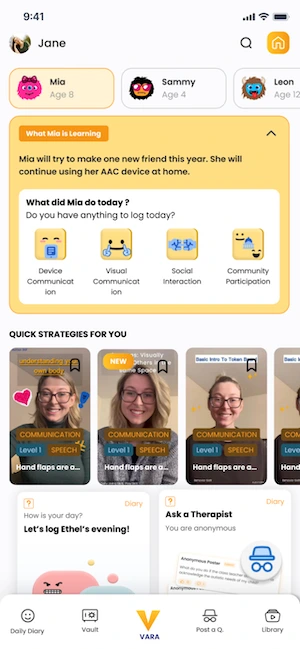
VARA’s Daily Diary takes quick daily notes on what you practiced, what happened, and the wins and challenges, and short, messy entries are fine. Insight Reports turn your diary entries into patterns and progress over time that you can share with your child’s clinician, school or a new provider. They document patterns; they do not diagnose.
 Daily Diary
How an Autism Accent Differs From Regional Accents
A regional accent is usually shaped by geography, dialect, language and culture. An autism accent is shaped by how an autistic person processes and produces language, which affects articulation, intonation and rhythm.
That said, an autism accent is not completely separate from the outside world. As we’ve seen, the voices a person listens to most (family, favorite characters or online creators) can strongly influence it.
Does Autism Accent Hinder Communication or Understanding?
Autistic accents do not usually prevent communication between autistic and non-autistic people. Their distinct speech patterns may simply mean listeners need to tune in and adjust, just as they would to any unfamiliar accent.
It also helps to separate how someone sounds from what they understand. Speech pathologist Stacy Badon, who coaches Autism 360 families, reminds parents that “Communication differences are not an indication of an intellectual delay.” A child with a flat tone, a sing-song rhythm or an accent from a favorite show is still listening and learning, so keep talking with them in the usual way.
We can all work to understand and accept each other’s differences and build a more inclusive community that values different ways of communicating, including autistic people who speak with an accent.
Can Autism Accent Be Changed or Modified?
Because an autism accent is tied to how a person processes language, it can be hard to change, and changing it is rarely necessary. Where speech clarity is a concern, a speech pathologist can use specific approaches to support articulation, rhythm and intonation.
Autistic people and families can work with speech pathologists to create a personalized plan that supports speech clarity, pronunciation and communication, based on the person’s own goals. Parents who want to build everyday conversation skills at home can try our communication skills advanced masterclass.
Always remember that the aim is not to eliminate an autism accent, but to support people with autistic accents in their communication journeys.
How can you support clear communication at home without changing the accent?
Aim for being understood, not sounding like everyone else. Speak a little slower yourself, give your child time to finish before you reply, and if you missed something, ask about the part you did not catch (“You went where after school?”) instead of asking them to say it all again. Keep a picture, a gesture or writing ready as a backup for busy places where speech is harder to hear. If a speech pathologist has given you a sound or rhythm to practice, fit it into games and routines rather than correcting everyday conversation.
VARA’s AI parent coaching gives you guidance between appointments on applying a strategy in everyday moments, so you feel confident you are doing it right. If you are not sure where to start, AI-guided Goals helps you pick one developmental goal to focus on, so practice has a clear direction instead of trying everything at once.
AI parent coachingSupporting People with an Autism Accent
People with an autism accent may sometimes be misunderstood in social settings, but there are resources and strategies that help, including speech therapy and, just as importantly, understanding and accepting neurodiversity.
Speech Therapy and Support
Speech therapy can help people with an autism accent if they want support with pronunciation, articulation or being understood, using strategies tailored to the person.
Speech pathologists use a wide range of techniques to support someone with an autistic accent, including but not limited to:
- Articulation activities for particular sounds, to support speech clarity
- Phonological awareness activities to recognize and practice sounds in words
- Rhythm and intonation activities to support the flow of speech
Autism speech therapy is usually personalized to each person’s goals. Regular practice and ongoing support from family and speech pathologists can make a real difference to communication and confidence.
Understanding and Embracing Neurodiversity
Neurodiversity is about appreciating and embracing the natural differences between human brains, and neurodivergent people often bring valuable talents and perspectives.
Understanding neurodiversity helps us support people with an autism accent and recognize the value every person brings, including autistic people.
That starts at home. If siblings or cousins tease your child’s accent, Ella Bailey, a positive behavior support practitioner and Autism 360 coach, suggests getting comfortable with your child’s way of communicating yourself first, then explaining to the other children that “all brains are different just like all feet are different, just like all fingerprints are different.” A picture book about different brains, or a chat about all the ways people share messages, makes it clear that your child’s way is not better or worse, just different.
By valuing neurodiversity, we can create an inclusive environment that respects the unique perspectives and strengths of people with an autism accent. Many people ask, ‘Is autism a superpower?’ Autism comes with challenges, but it also brings unique talents, creativity and perspectives that can make a powerful impact on society.
We can do this by:
- Learning more about the autism accent and sharing what we learn, to increase understanding, end stigma and build acceptance.
- Advocating for equal opportunities and inclusive support in our communities, so people with autistic accents have the accommodations, resources and opportunities they need.
- Creating inclusive environments at work, at school and in the community, so people with distinct autism accents feel appreciated and valued.
As individuals and as a community, we can accept autism as part of a person’s identity, create welcoming and supportive spaces, and help people with autism reach their own goals.
FAQs on Autism Accent
Do all autistic people have an autism accent?
What causes an autism accent?
Can an autism accent affect communication?
Can an autism accent be changed or modified?
Summary
An autism accent is a distinctive way of speaking that some autistic people have because their brains process language differently. Some autistic people speak with an American accent picked up from favorite shows, others mirror the people around them, and others have their own unique rhythm and tone. Whatever an autistic person’s accent, everyone deserves a patient, non-judgmental listener.
By embracing and valuing neurodiversity, we support autistic people and build inclusion in schools, workplaces and communities, creating a richer, more welcoming world for us all.

Stephanie Collins is Head of Program Delivery and a founding member of Autism 360, and the company’s US spokesperson. Based in Colorado, she is a parent of two autistic children, so she brings both professional and lived experience to her work. Stephanie is a behavior support practitioner and developmental educator with more than 15 years in special education, and she is certified in American Sign Language. She is a well-known community advocate for the needs of autistic girls, and has been interviewed on the topic by news channels including Fox, Channel 9 and Channel 5. Stephanie writes about sensory differences, communication, schooling and ADHD.