Autism affects each person differently, and many autistic children communicate and socialize in different ways from their non-autistic peers. Some may find it hard to speak clearly, understand spoken language, or read social cues like facial expressions and tone of voice. These differences can show up as early as age two, or even earlier.
Key takeaways: speech therapy for autism
- Speech therapy for autism helps children express themselves, understand others and feel more confident, whether through speech, signs, pictures or a communication device.
- Autism speech therapy works best with a qualified speech pathologist who has autism experience and uses neuroaffirming approaches.
- Starting early helps, and you don’t need to wait for a diagnosis to see a speech pathologist.
- Family involvement matters: speech therapy for autistic children works best when families join sessions and practice activities at home.
- Ask your GP or the Speech Pathology Australia directory to find a speech pathologist, and note the NDIS can fund therapy for eligible children.
Autism speech therapy is a key part of autism support. Speech therapy for autism helps children find ways to express themselves, understand others and feel more confident in everyday situations, whether that’s through speech, signs, pictures or a communication device. With the right support, autistic children and adults can build communication skills that strengthen their relationships, independence and quality of life. In this article on speech therapy and autism, we explain what speech therapy for children with autism looks like, how it helps, and what parents can do at home to support their child’s progress.
What is Speech Therapy?
Speech therapy helps people with speech, language, communication and swallowing. In Australia it’s provided by a qualified speech pathologist (called a speech-language pathologist, or SLP, in the United States), and it can address speech sound difficulties, language differences, stuttering, voice difficulties and more.
Therapy is tailored to each person’s needs, whether that’s helping a toddler say or sign their first words or supporting an adult after a stroke. Speech and language therapy for autism focuses on how the person communicates, and on making communication easier and more rewarding for them and the people around them. It is one of several therapy options for autistic children, and it often works best alongside others.
Types of SLPs
Speech pathologists (SLPs) often specialize. When looking for speech therapy for autistic children, you may come across:
- Pediatric speech pathologists, who work with babies, children and teenagers.
- AAC specialists, who help people who are non-speaking or minimally speaking use communication devices, apps or picture systems.
- Feeding and swallowing specialists, who help with eating difficulties, which are common in autistic children.
- Fluency and voice specialists, who help with stuttering and voice differences.
- School-based speech pathologists, who support communication in the classroom.
Ask whether the speech pathologist has experience with autism and uses neuroaffirming approaches that respect your child’s natural ways of communicating. Autism 360’s autism-focused speech pathology team works this way.
Types of Speech Therapy for Autistic Individuals
 Speech therapy for autism includes different approaches tailored to each person’s needs. Some are delivered by speech pathologists, and others by different professionals who may work alongside them. Common approaches include:
-
Applied Behavior Analysis (ABA)
A behavioral approach (usually delivered by behavior therapists rather than speech pathologists) that breaks skills, including communication, into small steps. ABA is debated within the autistic community, so ask any provider how they prioritize your child’s comfort, consent and autonomy. Our honest guide to ABA covers the questions to ask.
-
Social Skills Training
Explores how to communicate and connect in everyday situations. The best programs respect autistic ways of socializing rather than teaching children to copy non-autistic behavior.
-
Verbal Behavior Therapy (VBT)
Focuses on teaching language through the purpose of words, like asking for things or expressing feelings.
-
Picture Exchange Communication System (PECS)
Uses pictures to help nonverbal (non-speaking) children communicate their wants and needs.
-
Pivotal Response Treatment (PRT)
A play-based approach that follows the child’s interests to build motivation and natural communication.
-
The Hanen Program
Offers fun, parent-led activities to support language and interaction at home.
-
Speech Sound Disorders Therapy
Helps improve speech clarity and fluency.
-
Oral Motor Therapy
Works on jaw, tongue and mouth movements. It can help with feeding, but evidence that oral motor exercises on their own improve speech is limited, so ask your speech pathologist how it fits your child’s goals.
How Does Autism Affect a Child’s Speech?
Here are some of the ways autism can affect a child’s speech and communication:
- Delayed speech development: Children with autism may start speaking later than other children their age, or develop language in a different order. Approximately 40 to 70% of autistic children experience delayed speech.
- Echolalia: Autistic people might repeat words, phrases or sounds made by others as soon as they hear them (immediate echolalia) or after some time (delayed echolalia). Echolalia is a real form of communication, and often a step towards more flexible language.
- Differences in conversation: Children with autism may find it hard to start or keep up two-way conversations, especially about topics that don’t interest them.
- Different tone of voice or speech: Some autistic people speak in a flatter or more even tone, or with a different rhythm, and might also have what’s sometimes called an autism accent.
- Differences in nonverbal communication: including using or reading tone of voice, body language, facial expressions or gestures in different ways.
- Taking language literally: Many autistic people find unclear or ambiguous language, sarcasm, jokes and idioms confusing, and prefer clear, direct communication.
What Are the Benefits of Speech Therapy for Autism?

The benefits of speech therapy for autistic children can include:
- Finding ways to communicate that work for the child, spoken or not
- More enjoyable social interaction and connection
- Support with emotional regulation and self-advocacy
- Greater confidence and independence
- Fewer frustrations and meltdowns caused by not being understood
- Support with nonverbal communication like gestures and facial expressions
Who Exactly is a Speech Language Pathologist?
A speech-language pathologist (speech pathologist in Australia) is a university-qualified professional who works in many settings, such as private homes, hospitals, clinics, residential care and schools, often as part of an inclusive team. In Australia, look for a Certified Practicing Speech Pathologist (CPSP) registered with Speech Pathology Australia. Speech pathologists often work alongside other therapists and providers.
A speech pathologist uses a wide range of tools and resources, from colorful pictures and autism toys to formal assessments, to support autistic children, teens and adults with their communication.
The Role of Speech Therapy in Supporting Autistic Children
Because communication differences are common in autistic children, speech pathologists are often involved in early support.
Speech pathologists can help with any communication differences an autistic person has, and starting early often helps most.
Once a child is diagnosed, speech pathologists work closely with the family, the school and other professionals to find practical ways to make communication easier and improve the child’s quality of life.
Speech pathologists are often part of the team that assesses for autism, and they can also recommend assessments by other specialists.
For autistic children who have little or no speech, speech pathologists often introduce other ways to communicate, such as sign language, pictures or speech-generating technology. Using these doesn’t stop a child from developing speech; research suggests it can support it. Our Let’s Communicate bootcamp shows parents how to help a non-speaking child communicate using these tools.
They also support autistic children, teens and adults with articulation, fluency and the speed and rhythm of speech, so that every autistic person can feel heard and understood in their own voice.
Does Speech Therapy for Autism Work?
Research shows that speech and language support can help many autistic children communicate more easily, especially when it starts early, continues over time and involves the family. Results vary from child to child, and progress is not always measured in words: a child who learns to request, protest or share joy with a device or gesture has made real progress.
Ideally, speech therapy is delivered by a qualified speech pathologist with experience supporting autistic children, and backed up by parents, teachers and other adults in the child’s life.
How Speech Therapists Work with Autistic Individuals
Speech therapists offer individual support to help autistic children understand social situations and get their needs met. They may use sign language, visual supports and play-based activities.
Some autistic children repeat words, phrases or sounds they have heard before, either straight away or later. This is known as echolalia. Speech therapists recognize echolalia as meaningful communication and help children build on it towards more flexible language.
Speech therapy for autism can also help children build their vocabulary by introducing new words through activities they enjoy. Using a child’s interests is particularly helpful for sensitive children, because it creates a relaxed, supportive environment that suits their needs. This is the idea behind naturalistic intervention: teaching communication during everyday routines.
Speech therapists can also support children’s receptive language (understanding). Children can learn to recognize and understand non-verbal cues such as body language, gestures and facial expressions, using flashcards or autism books with pictures and symbols to view and practice.
Speech therapists also help children expand how they use their voice, by modeling and giving lots of chances to practice. They may use AAC devices and other technology to help autistic people communicate, connect with others and live more independently.
What Are the Best Speech Therapy Materials for Autism?
The best speech therapy materials for autism support communication, engagement and learning through visual, auditory and hands-on tools. Common materials include:
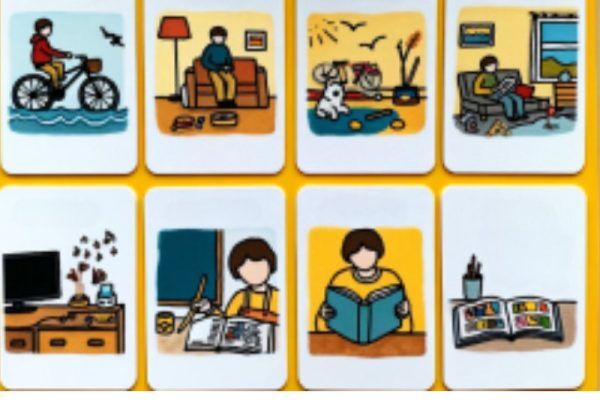
- Visual Supports: Flashcards, picture schedules and communication boards to support understanding and expression.
- PECS (Picture Exchange Communication System) cards: Help nonverbal children communicate needs and feelings. Our printable PECS conversation cards are a good starting point.
- Apps and AAC devices: Offer speech-generating support and interactive communication practice.
- Toys and Games: Encourage turn-taking, language development and social interaction.
- Storybooks and Social Stories: Explore conversations and help prepare for real-life situations.
- Mirrors and Oral Motor Tools: Support articulation and mouth movement.
The most effective materials are chosen to suit the person’s communication style, age, interests and goals.
Speech Therapy Techniques for Autism
A speech therapist may adapt standard speech therapy techniques to suit each child. Depending on the child, they may use:
- Gestures
- Facial expressions
- Modeling and visual cues
- Making communication practice a fun activity
- Augmentative and alternative communication (AAC) devices
- A picture exchange communication system (PECS)
- Voice output devices
When Should Speech Therapy Start for Autistic Children?
The best time to start speech therapy for autism depends on each child’s needs and skills, but most specialists recommend starting early.
The earlier a child starts, the sooner they’re likely to find ways to communicate that work for them. Early identification of the symptoms of autism in children helps them get support as soon as possible, and you don’t need to wait for a diagnosis to see a speech pathologist.
Whatever your child’s age, or whenever they were diagnosed, a speech therapist can help them build communication skills for life.
What Is the Role of Speech Therapists in Autism Support?
Speech therapists help autistic people develop their communication. They may help with early identification of autism and refer families to other specialists when needed. After diagnosis, they assess speech and language and create a personalized plan.
They also work closely with families, teachers and carers to support progress at home and school. For nonverbal (non-speaking) people, speech therapists may recommend tools like AAC devices or speech-generating apps.
The Goals of Speech Therapy for Individuals With Autism
 Speech therapy with an experienced speech pathologist can make a real difference to an autistic child’s life. Being able to communicate builds confidence and lets children express their needs, wants and preferences. It can also help them build friendships and enjoy social activities.
Speech therapy goals for autism should be set with you and, where possible, your child. They may include:
- Support with articulation (speech sounds)
- Building verbal and nonverbal communication, including gestures, facial expressions, sign language or AAC
- Starting conversations by commenting or asking questions
- Enjoying social interaction and play with peers
- Learning to communicate feelings and use self-regulation strategies
- Building listening and shared attention in ways that feel comfortable (eye contact is not required to listen)
- Responding to peers’ invitations to interact or play
- Using greetings and farewells in ways that work for the child
- Noticing when a message hasn’t been understood and trying another way
- Self-advocacy, such as asking for a break or saying “I don’t understand”
How to Find a Good Speech Therapist
Choosing the right speech pathologist for your child matters. A good match can make a big difference to both progress and your child’s experience of therapy.
Choose a speech therapist who puts your family first and supports parents. Family involvement is one of the most important factors in effective speech therapy, so look for a professional who understands that and coaches you as well as your child.
The therapist should understand your child’s needs and tailor sessions to them. Asking other families or your GP for recommendations is also a smart option.
Where Do I Find Speech Therapists?
Speech therapists can be found in:
- Hospitals and clinics
- Community health centers
- Schools
- Universities (some run student clinics)
- Rehabilitation centers
- Residential care facilities
- Private practices
- Telepractice/telehealth
If you’re looking for speech therapy for autism near you in Australia, you can search the Speech Pathology Australia “Find a Speech Pathologist” directory and filter for experience with autism. Medicare rebates may be available through a GP management plan, and the NDIS can fund speech therapy for eligible children. Choose a speech pathologist who offers inclusive, family-focused care in an environment where you and your child feel supported and understood. If you would rather be coached to support your child’s communication yourself, our NDIS-funded Guided Support program pairs you with a key worker who builds speech and language goals into daily life.
What to Expect in Speech Therapy for Autism
Thorough assessments can take a few hours, sometimes over more than one session. Once the assessment is done, an individual plan is created to suit your child’s communication needs and goals. Sessions for young children are usually play-based and may happen at a clinic, at home, at childcare or online.
How Long Does Speech Therapy for Autism Last?
How long speech therapy lasts varies with each child’s needs, your family’s availability and their goals. Some children see a speech therapist for a few months, while others benefit from support over years.
Many autistic children benefit from longer-term support, because communication keeps developing as they grow and face new settings like school, friendships and work. A speech therapist can help at every stage.
How Often Should an Autistic Child Attend Speech Therapy Sessions?
Regular sessions help children work towards their short-term and long-term goals, but your speech therapist will recommend how often your child should attend, based on their needs.
If you can’t make scheduled sessions, talk with your therapist so you can work out a schedule that suits everyone, including home practice between sessions.
Is Speech Therapy for Autism Different for Adults?
Yes, speech therapy for adults with autism focuses on practical communication for everyday life. It can help with:
- Starting conversations
- Understanding and responding to body language
- Interpreting abstract language
- Processing information
- Workplace communication
Speech therapy for adults with autism usually focuses on functional, work-related and social communication, including self-advocacy and asking for workplace adjustments.
Why Speech Therapy Works Best When Families Are Involved
Speech pathologists work with the child’s family to get the best results and make sure everyone feels supported. Therapists usually invite parents or carers to be part of both the assessment and therapy sessions, so they see the child as they really are and parents learn strategies to use at home.
Autistic children and their families get the most from speech therapy when it starts early. But don’t let that discourage you from seeking help at any stage. Speech therapy can make a meaningful difference at any age.
Every child is unique, with different needs and personalities, and there’s no single plan that suits all autistic children. However, research has found that speech therapy can help many autistic children feel more comfortable communicating and connecting with others.
Speech Therapy at Home: How you Can Help as a Parent
Speech therapists can give parents training, activities and resources to create communication opportunities at home. Our guide to autism therapy at home has more ideas you can build into everyday routines.
Here are some ideas to help you and your autistic child:
- Use visual supports to help understanding
- Use visual schedules so your child knows what to expect through the day
- Use social stories to help your autistic child prepare for different situations
- Break large tasks into small, manageable steps
- Where possible, teach your autistic child self-determination and problem-solving strategies to build independence
- Create opportunities for your child to make choices and build autonomy
- Practice activities from speech therapy at home in everyday routines
- Notice and celebrate every attempt to communicate, in any form
- Work with your speech therapist to understand your child’s goals
- Be encouraging and patient, and give your child plenty of time to respond
- Create a calm, supportive environment at home for your autistic child
Explore Effective Autism Treatments Beyond Speech Therapy
Other supports that can help autistic children include, but are not limited to:
- Applied behavior analysis (ABA)
- Cognitive behavioral therapy (CBT)
- Occupational therapy
- Physical therapy
- Social skills training
- Medications for co-occurring conditions like depression and anxiety (medication does not treat autism itself)
- TEACCH, a structured teaching approach that uses visual organization and predictable routines
- Complementary approaches such as art therapy, animal therapy and calming therapy
If you want to know which approach suits your autistic child, talk to a specialist such as a pediatrician.
FAQ
Is early speech therapy more effective for autism?
Is speech therapy possible at home?
How long does speech therapy for autism take?
What are the Best Speech Therapy Materials for Autism?
Is Speech Therapy Necessary for Autism?
Conclusion
Autistic people communicate in many different ways. Because autism is a spectrum, communication differences vary widely, from later speech, stuttering or echolalia to using sounds, gestures or devices instead of words, and finding eye contact uncomfortable. With an accurate diagnosis and early support, speech therapy can help each autistic child communicate in the ways that work best for them, through a plan built around their needs and strengths. For more information, visit Autism360.com.

Ozgul Kara is Clinical Lead for Speech Pathology and a Senior Speech Pathologist at Autism 360. She leads the speech pathology team, setting the clinical standard for how Autism 360’s speech pathologists coach parents to build their child’s communication at home.
Ozgul’s practice is guided by a few convictions drawn from her years working with children and families: that little people have big spirits, that the best learning happens through life experience, that it is the little things that make a difference, and that anything is possible when a child has the right support.
At Autism 360 she supervises and mentors the speech pathology team and reviews articles on speech, language and communication.
Registration: Speech Pathologist, member of Speech Pathology Australia, member number 7054.