
Signs of autism in 4 year old children include delayed speech, less eye contact, differences in social interaction, repetitive behaviors, sensitivity to sounds or textures and a strong preference for routines. They may find pretend play hard, have intense interests or find it difficult to understand emotions.
Key takeaways: signs of autism in 4 year old
- The most common signs of autism in 4 year old children include delayed speech, social differences, repetitive behaviors, strong routines and sensory sensitivities.
- Every child is different, so when you look for signs of autism in toddlers age 4, remember not every child shows every sign.
- Stimming and comfort objects often help a child regulate and do not need stopping unless they cause harm.
- Talk to your GP or pediatrician if you tick several checklist signs, and bring dated notes to share.
- Boys are often noticed earlier, while girls may copy peers and hold it together at preschool.
Early signs vary from child to child, so if you notice these behaviors, a professional assessment can give you clarity and help you support your child’s development.
Understanding Autism: Early Signs, Diagnosis, and Support
Autism Spectrum Disorder (ASD) is a neurodevelopmental difference that affects how a child communicates and interacts socially, and often includes repetitive behaviors and focused interests.
The “spectrum” in Autism Spectrum Disorder reflects that every autistic person is unique. Each child has their own mix of strengths and support needs.
Many children are first identified as autistic around 3 to 4 years of age, although early signs of autism in toddlers can appear well before this. This is often when they start preschool or kindergarten and spend time with educators who have lots of experience with young children and can notice developmental differences.
Starting preschool brings a structured day with multiple transitions, more social communication and new challenges, which can make differences more visible. The number of children diagnosed with autism has risen over the past two decades, alongside better diagnostic tools, wider awareness and more research into how autism presents at different ages.
Early support plays a crucial role in understanding what children with autism need, and it is one of the most helpful ways to support positive long-term outcomes.
Signs of Autism in 4 Year Old

Signs of autism in 4 year old children may include delayed speech, differences in social interaction, repetitive behaviors, strong routines or sensitivity to sounds and textures. They might find imaginative play hard, have intense interests or find it hard to understand emotions. Not every child shows every sign. If you notice several of these behaviors, talking to a doctor or specialist can help you get early support.
1. Challenges with Expressive Language
In autism research, expressive language is often described as “useful speech“: language that is used often, to communicate with others, to refer to things and with a varied vocabulary.
Expressive language is the child’s ability to express their needs, using words or non-verbal behavior such as gestures. Having ways to express themselves (speech, signs, pictures or a device) is linked to better social and daily living outcomes for the child.
Signs that an autistic child may be finding expressive language hard include:
- Speaking less often than other children their age
- Making sounds or saying words that don’t seem directed at others
- A smaller vocabulary
- Echolalia (repeating words and phrases they have heard, either straight away or later and in a different context), which is often a real attempt to communicate
- Finding it hard to answer questions
- Using behavior to communicate needs and wants, such as leading an adult by the hand or becoming distressed
Expressive language differs greatly among autistic children, and not every child will show all of these signs. All communication counts, including gestures, pictures and AAC (augmentative and alternative communication).
Echolalia is a good example. Speech pathologist Stacy Badon, who coaches Autism 360 families, explains that a line from a song or a show can stand in for words a child cannot yet put together. “It’s like a cheat sheet for communication,” she says. Listen for when a script turns up. If a song about stopping always appears at the end of an activity, respond to it as a real message, such as “I am done,” and the echo becomes part of a conversation.
2. Difficulty in Transitioning Between Activities
When a child moves from a less structured home life into preschool, with many transitions each day, new behaviors may appear. Transitions can be very hard for an autistic child, because stopping what they are focused on and switching suddenly to something new can be distressing.
Moving between places can also be hard for children with autism. These difficulties can happen at any time but are often more noticeable when the child is tired or has had many transitions in one day.
Thoughtful preparation and warnings about upcoming changes help. Visual aids and schedules make the day more predictable, and planning the day to reduce the number of transitions in a short time can make a big difference.
3. Differences in Understanding and Expressing Emotions
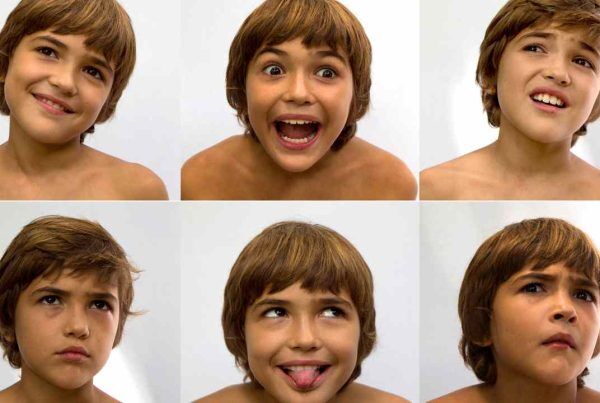
Understanding and expressing emotions affects how a person navigates the social world. Reading subtle emotions and nonverbal communication, such as body language and facial expressions, can be hard for children with autism.
Autistic children may be confused by big emotional reactions or sudden shifts in mood. They may also miss feelings that others don’t show clearly.
When a child finds it hard to understand other people’s emotions or express their own, they may show their confusion or distress through behavior. This can make everyday life feel unpredictable for them.
Learning to recognize emotional cues, in ways that work for the child, helps them stay safe, communicate their needs and build relationships. Visual emotion charts, naming feelings out loud and books about feelings can all help.
4. Repetitive Motor Behaviors
Children with autism may show repetitive movements, commonly known as “stimming”. The clinical term is motor stereotypies, and they may include:
- Rocking back and forth
- Hand flapping
- Banging toys together
- Twirling
- Pacing
- Repeatedly handling or lining up objects
Stimming usually meets a sensory need or helps a child regulate their emotions, for example when they are excited, anxious or overwhelmed. It is a natural part of being autistic and does not need to be stopped. If a particular movement is causing harm, an occupational therapist can help you understand what it does for your child and find a safer way to meet the same need.
5. Preference for Routine
Children with autism often have a strong need for routine, so that their day, their tasks and what is expected of them feel predictable. A daily visual routine can give an autistic child comfort and security, support independence and give them a sense of control over their day and the order of their tasks.
Without a predictable routine, a child may find it hard to move between activities without warning, or feel unsure about what is happening in their day. This can lead to a sense of chaos and overwhelm, which may show up as distress.
6. Intense Resistance to Change
Resistance to change goes hand in hand with the need for routine. It is a core feature of autism and is described as a “higher-order” repetitive behavior, as opposed to motor stereotypy, which is described as “lower-order”. It may look like:
- Eating only the same few foods at every meal
- Becoming very distressed with even small changes to plans
- Needing to walk the same route each day
- An intense need to follow step-by-step instructions exactly the same way each time
- Wearing the same clothes every day
Autistic people often find comfort in sameness and can become dysregulated when routines are interrupted. Unexpected changes can feel threatening because they take away the comfort of predictability.
Rewards and consequences rarely change this, because the need for sameness comes from anxiety, not from choice. What helps more is understanding what the routine gives your child, preparing them for changes with visual supports and warnings, and introducing small changes gradually so they can build confidence.
7. Strong Attachment to Objects
Some autistic children form strong attachments to particular objects, and may even give them human-like qualities.
Often, these objects reduce anxiety and give comfort in new or challenging environments. Because they can travel with the child, they become a helpful emotional regulation tool, and there is no need to discourage them unless they cause harm.
8. Delayed Motor Skills
Research shows that a significant percentage of children with autism have some delay in motor skill development, whether in gross or fine motor skills. This may show up as movements that look less smooth or coordinated.
Examples of delayed gross motor skills in 4 year olds
- Finding playground equipment hard to use
- Not yet climbing stairs confidently
- Unsteady balance
- Less coordinated large movements
- Clumsiness when running and jumping
Examples of delayed fine motor skills in 4 year olds
- Finding drawing or early writing hard
- Trouble picking up small items
- Difficulty handling objects within the hand
- Not yet able to do up buttons or zips
Occupational therapy can support coordination and balance, hand strength and the motor skills a child needs for everyday tasks.
9. Differences in Imaginative Play
Many autistic children play differently. While non-autistic children often spend a lot of time in pretend play, children with autism may find this kind of play less appealing or harder to join in with, because it relies heavily on social understanding and communication.
Most imaginary play involves role-playing and acting out social roles. It also requires the child to interpret and respond to other children’s pretend ideas, which can be hard when autism affects social communication.
Some researchers suggest that autistic children may prefer play based on real life, such as lining up, sorting, building or acting out familiar scenes. This is still meaningful play, and joining your child in the way they like to play is a great way to connect.
In an Autism 360 parent workshop, speech pathologist Michelle Dannels, one of the Autism 360 coaches, shared a simple way in. Observe, wait and listen for any small invitation, such as a point, a reach or a sound. Then sit nearby and copy what your child is doing, like pushing a car and making car sounds, and add one or two words such as “car go” without asking for a reply. As she puts it, “When we imitate the hard to engage child, that child might just stop and take notice of us.”
10. A Small Selection of Interests
Focused, intense interests are a common sign of autism. Autistic children and adults often become experts on their favorite topics and seek out as much information as possible about them. Some love sharing what they know with others (often called “info-dumping”), while others prefer to keep their interests to themselves.
Many autistic people prefer concrete facts to abstract ideas. Learning everything about a favorite topic can give a sense of security and calm, which helps with self-regulation. These interests are also a wonderful doorway to learning and connection.
11. Challenges with Social Interactions
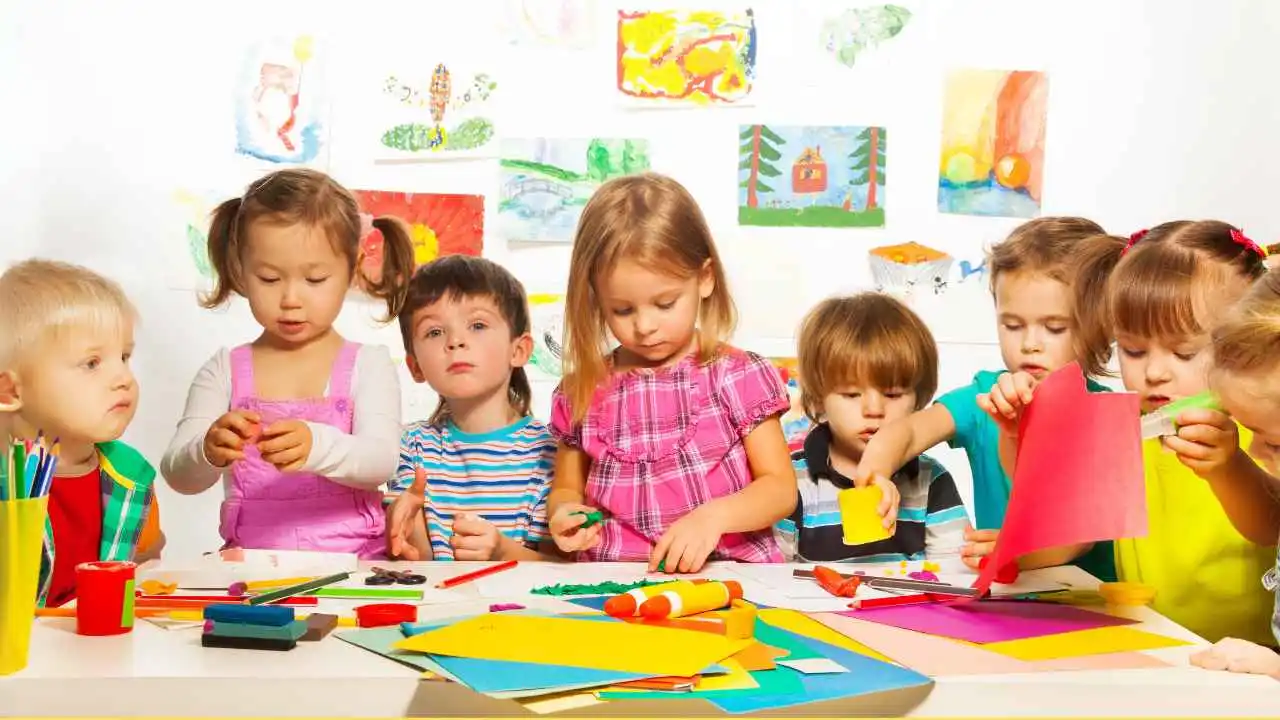
Age 4 is often when social differences become noticeable, because children are spending more time with peers. Signs for an autistic 4 year old may include:
- Finding it hard to interpret the verbal and non-verbal behavior of others
- Showing less interest in other children nearby
- Preferring to play alone with the same objects or scripts
- Finding parallel play (playing alongside a peer in the same way) hard
- Less pretend play
- Not seeming interested in activities other children find exciting
Supporting social connection early helps autistic children enjoy friendship in their own way. Some children benefit from having unspoken social rules explained clearly, and from lots of low-pressure chances to play with others who share their interests.
Building connections helps children form and keep relationships, which matter for quality of life as teenagers and adults. The goal is connection and enjoyment, not making the child act like everyone else.
12. Sensory Sensitivities
Sensory processing is how a person makes sense of the information coming in through their senses. Autistic people may experience sensory input differently, so some sensations feel overwhelming (hypersensitivity) and others barely register (hyposensitivity). Research shows that around 80% of autistic adults report sensory processing differences.
Below are some examples of how sensory sensitivities may show up in an autistic 4 year old.
A. Hypersensitivities (high levels of sensory feedback)
- Becoming very upset by loud noises
- Avoiding bright lights or colors
- Becoming distressed when too much is happening at once
- Preferring not to be touched
- Sensitivity to certain materials and clothes
B. Hyposensitivities (low levels or absence of sensory feedback)
- Reacting less to pain
- Not noticing being hot or cold
- Sensory seeking, for example rubbing against certain textures or asking for hugs and deep pressure
- Holding items close to their eyes to inspect them
- Enjoying strongly flavored or textured foods
- Liking the TV or music turned up loud
- Speaking loudly
Heightened sensitivity to sensory input can push autistic people into fight-or-flight mode. Many people can filter out small background sensations, but autistic children may feel these “micro-sensations” with great intensity.
Feeling so many sensations every day can overwhelm a child and lead to big emotional responses as they try to cope. These reactions are easy to misread, because the cause isn’t always visible to others. Changing the environment (quieter spaces, softer lighting, comfortable clothes) is often the most effective first step.
13. Intense Emotional Dysregulation
Intense emotional dysregulation in autistic 4 year olds often comes from a mix of the differences above. Emotional dysregulation means a child finds it hard to manage big feelings and use calming strategies in the moment.
Every behavior communicates something. For example, an autistic child who doesn’t yet have words or another way to say “this is too much” may learn that becoming distressed gets them away from what is bothering them. Giving them another way to communicate (pictures, signs, a “break” card or words) can reduce distress.
Emotional dysregulation can happen in response to many different events and changes. Without a good understanding of autism and how it affects a child, it can be very hard for parents and families to know how to help, so learning about your child’s triggers and needs is a big step.
📌 MUST READ:
Signs of autism in 1 year old
Signs of autism in 2 year old
Signs of autism in 3 year old
Does autism get worse with age
4 Year Old Autism Checklist
Use this quick 4 year old autism checklist as a starting point. It is not a diagnostic tool, but it can help you organize what you have noticed before talking to your GP or pediatrician. Does your child:
- Speak less than other 4 year olds, repeat phrases (echolalia) or find back-and-forth conversation hard?
- Rarely point to show you things, or use your hand as a tool to get what they want?
- Prefer playing alone, or show little interest in other children?
- Line up, sort or spin objects rather than use them in pretend play?
- Become very distressed by small changes to routine?
- Have strong reactions to noise, textures, food or clothing?
- Flap their hands, rock, spin or make repeated movements when excited or upset?
- Have one or two very intense interests?
If you ticked several of these, it is worth talking to a professional. Trust your instincts: you know your child best. An online autism screening test is a low-pressure way to put your observations together before that first appointment.
How can you keep a record of what you notice before the assessment?
Doctors and diagnosing professionals rely partly on what parents tell them, and details are easy to forget in a short appointment. Writing things down as they happen helps. For each sign on the checklist, note the date, where you were, what your child did and what happened just before. Add the strengths and interests you see too, not only the hard moments. A paper notebook works too; what matters is that the notes are dated and specific.
VARA, a clinically informed support tool that helps families practice and track their child’s development at home, between appointments and alongside their child’s care team, makes this easier to keep going. Early Signs Documentation gives you a structured way to document the early signs you are noticing, so you arrive at an assessment with records instead of vague memories. The Daily Diary is for quick daily notes on what you practiced, what happened, and the wins and challenges. Short, messy entries are fine. Your notes don’t replace an assessment; they help you share clear examples with the professional doing it.
 Daily Diary
Signs of Autism in a 4 Year Old Boy vs Girl
Autism signs in 4 year old boys and girls are the same at their core, but they can look different on the surface.
- Signs of autism in 4 year old boy: Boys are more often noticed early because their signs can be more visible, such as delayed speech, intense interests in things like vehicles or numbers, repetitive movements and big reactions to change.
- Signs of autism in 4 year old girl: Autism in 4 year old girls can be easier to miss. Girls may copy other children’s play, have interests that seem typical (like animals or dolls) but are unusually intense, or hold it together at preschool and release their distress at home.
Signs of autism in 4 year old girls are often overlooked, so if something feels different about your daughter, it is worth asking about. If your child talks well but still shows several of these signs, try our autism test for children.
Family Impact
Raising young children is hard work for every family. When your child is autistic, everyday parenting can bring extra challenges, and many parents and carers feel overwhelmed at times. That is normal, and it is not a sign you are doing anything wrong.
Parents who notice differences in their child often have to explain their concerns again and again to different health professionals while seeking support. It is important for parents of children with autism, whatever their child’s support needs, to look after their own wellbeing and protect their mental health.
Raising an autistic child can also bring financial costs and extra pressure, especially when there are other children in the family.
When parents are stretched, it is harder to support their child through the signs of autism. One of the most helpful ways to build a parent’s confidence and capacity is parent training.
Parent Training
Parent training programs for autism aim to empower parents and carers by helping them understand their child’s behaviors and the reasons behind them. Parents learn to work out what a behavior is communicating, and which things in the environment make it more or less likely.
Parent training also offers a supportive space for parents to share their challenges and get specialized support and strategies tailored to their family.
Building parents’ and carers’ confidence in supporting their child is one of the best ways to improve long-term outcomes.
Formal Diagnosis Process
Seeking a formal autism diagnosis can feel daunting. Parents often say the hardest part is not knowing how the process works or what the outcome will be. Here is a general guide.
1. Appointment with a general practitioner (GP) or primary care physician (PCP)
At the first appointment, you will talk about your concerns and the doctor will ask questions. Based on your answers and their observations of your child, the doctor can refer your family to a qualified diagnosing professional.
2. Appointment with diagnosing professional
A diagnosing professional can be a pediatrician, a psychiatrist or a psychologist.
They will look at your child’s development and may also check for medical causes.
If there are no medical causes for the behaviors, they will carry out a diagnostic assessment.
You can expect interviews with you and several observations of, and activities with, your child.
3. Access support
You don’t need a formal diagnosis to start getting support for a child with suspected developmental differences such as autism.
Allied health professionals such as speech pathologists, psychologists, occupational therapists and behavior support practitioners often work as a team to understand and support the needs of the child and their family. Their observations, data and recommendations may also inform the diagnostic report and any funding the family can access.
What can you practice at home while you wait?
Waiting lists for an assessment can be long, and you don’t have to put everything on hold. Keep your place on the list and keep talking to your child’s doctor. In the meantime, pick one small communication or play goal to practice in everyday moments. That might be joining your child’s favorite game for a few minutes each day, or answering every way they ask for something, whether that is a word, a sign, a picture or leading you by the hand. One goal at a time is easier to keep up than ten.
VARA can help you keep that practice going. AI-guided Goals helps you pick one developmental goal to focus on, so practice has a clear direction instead of trying everything at once. AI parent coaching gives you guidance between appointments on applying a strategy in everyday moments, so you feel confident you are doing it right. This home practice sits alongside your child’s assessment and care team, not in place of them.
AI-guided GoalsFAQs on Autism in 4 Year Olds
Signs of Autism in Toddlers Age 4
What does Autism look like in a 4 year old?
How to Identify Autism in 4 year old?
What are the signs of high functioning autism in a 4 year old?
Treatment options for autism in 4 year old?
How do I know if my 4 year old has mild autism?
What are the mild autism symptoms in a 4 year old boy or girl?
Conclusion
Recognizing the signs of autism in 4 year old children is important, because it helps parents seek early support. Every child with autism is different, with their own strengths and challenges. Knowing the common signs can give parents confidence and reassurance about what they are seeing.
Talking to qualified professionals and joining parent training programs can make it easier to understand and support your child’s needs. With the right guidance, children with autism can feel understood, grow with confidence and thrive in their own way.
📌 REFERENCE:
https://www.ncbi.nlm.nih.gov/pmc/articles/PMC5772739/

Kyran Ewing, M.Ed, BCBA, is a Senior Behavioral Specialist at Autism 360, a Board Certified Behavior Analyst and a published author on autism and Pathological Demand Avoidance (PDA). Based in Western Australia, she is a neurodivergent adult raising neurodivergent children, so her work is grounded in lived experience as well as clinical training. That combination shapes everything she writes: practical, respectful support that works in real homes and real classrooms.
Kyran began her career as a teacher and is a certified developmental educator with Western Australia’s Department of Education. Her years in the classroom gave her a deep understanding of how neurodivergent children learn, and led her into behavior analysis, where she now has extensive experience in positive behavior support for autistic children and their families.
She is the author of The Invisible Series, a set of guides for parents and professionals. Titles include The Invisible Difference: A Parent’s Guide to Understanding Autism From the Inside Out and The Invisible Threat: A Comprehensive Guide to Understanding and Supporting Children With Pathological Demand Avoidance. Kyran is also a specialist resource creator, producing social stories, visual supports and practical tools that families and educators can use straight away, and she regularly presents parent education videos and webinars for Autism 360.
At Autism 360, Kyran coaches families across Australia and overseas, and is leading the pilot of Autism 360’s teacher education program, which equips teachers across Australia to better understand and support autistic students. She writes about early signs of autism, the diagnosis process, emotional regulation, behavior and social skills.
Certification: Board Certified Behavior Analyst (BCBA), Behavior Analyst Certification Board, certification number 1-22-62929.