
High functioning autism in women often looks like someone coping well on the outside while working very hard on the inside to keep up. Many autistic women mask their traits so well that they are not diagnosed until adulthood, often after years of anxiety, exhaustion or a mental health diagnosis that never quite fit.
Key takeaways: high functioning autism in women
- High functioning autism in women is often missed because many women mask their traits and criteria were built around boys.
- Common signs include social exhaustion, scripted conversations, sensory sensitivities, deep interests and burnout.
- Autism in women is often diagnosed late, and many describe the diagnosis as a relief.
- Ask your GP for a referral to a psychologist or psychiatrist experienced with women and masking.
High functioning autism is an informal term for autistic people who do not have an intellectual disability and who need less day-to-day support. Today, clinicians usually describe this as autism spectrum disorder Level 1 under the DSM-5-TR. Many women first recognize their own traits while their child is being assessed, which is why this guide is written for women wondering about themselves and for the parents of autistic girls.

Interactive tool · about 3 minutes
Traits I relate to: notes for your GP or psychologist
Pick the experiences that sound like you, add your own examples, and copy a tidy summary to take to your appointment. There is no score and no result, just clear notes in your own words.
Question 1 of 6
What made you start wondering if you might be autistic?
Key Takeaways
- High functioning autism in women is often missed because many women mask or camouflage their traits, and because diagnostic criteria were built mostly on how autism looks in boys.
- Common signs include social exhaustion, scripting conversations, sensory sensitivities, deep interests, a strong need for routine and periods of autistic burnout.
- The gap between boys and girls is smaller than once thought. A 2017 review put the ratio closer to 3 to 1 than 4 to 1, and a 2026 Swedish study found girls catch up in diagnosis by late adolescence.
- A late diagnosis is common, and many women describe it as a relief that helps them understand themselves and reduce masking.
- Support works best when it helps you understand your own sensory and social needs, not when it teaches you to hide autistic traits.
What Is High Functioning Autism in Women?
Autism is a lifelong neurodevelopmental difference that affects how people communicate, connect socially and experience the world. The diagnosis is autism spectrum disorder (ASD), and it covers a wide range of traits, strengths and support needs.
“High functioning autism” is not a formal diagnosis. People use it to describe autistic people who speak fluently, have average or above average intelligence and often live independently. In the DSM-5-TR, the closest match is Level 1, “requiring support”. Some women diagnosed before 2013 were given an Asperger’s diagnosis, which is now part of autism spectrum disorder.
The label can be misleading. A woman who holds down a demanding job may still need hours alone to recover after work, or may lose skills during burnout. Her support needs are real, even when other people cannot see them. That gap between how she looks and how she feels is at the heart of high functioning autism in women.
Signs of High Functioning Autism in Women
The core traits of autism are the same for women and men, but women often show them in quieter or more socially accepted ways. Here are the signs women most often describe:

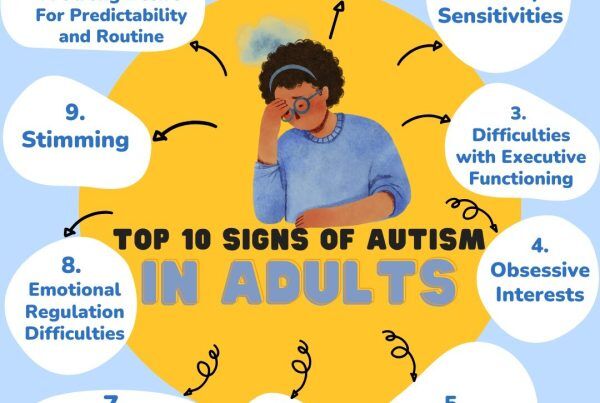
Infographic: Signs of high functioning autism in women
These signs are easy to mistake for shyness, anxiety or a sensitive personality, so it helps to look at the whole pattern across your life rather than one trait on its own.
1. Social Differences
- Finding it hard to keep up friendships over time, or having one intense friendship at a time
- Reading gestures, facial expressions and tone differently from other people
- Finding small talk tiring, with social events bringing worry beforehand and exhaustion afterwards
2. Masking and Camouflaging
- Copying other people’s expressions, tone, clothes or interests to fit in
- Rehearsing conversations, forcing eye contact or following learned social rules
- Feeling drained, anxious or unsure who you really are after years of masking
3. Deep Interests
- Intense, long-lasting passions that bring real joy and expertise
- Interests in socially accepted areas such as books, psychology, animals, art or a favorite TV series, so they rarely stand out as autistic traits
4. Sensory Sensitivities
- Strong reactions to noise, bright light, smells or clothing textures
- Avoiding busy shops, open-plan offices or loud events, or needing a long recovery afterwards
5. Need for Routine and Structure
- Feeling calmer with routines, plans and predictability
- Finding last-minute changes very hard, even when they look small to others
6. Emotional Regulation Differences
- Intense emotions and frequent anxiety
- Meltdowns or shutdowns when overloaded, often in private
- Many autistic women report past experiences of bullying, exclusion or trauma, which can shape anxiety later in life
7. Executive Functioning Challenges
- Finding planning, organization and time management hard
- Difficulty starting or finishing tasks, especially boring ones
- Daily life taking more energy than it seems to take for others
What Does High Functioning Autism Look Like in Women?
On the outside, a woman with high functioning autism might look like she is coping well: holding down a job, studying or raising a family. On the inside, she may be working much harder than others to manage. Many women describe:
- Needing long periods alone to recover after work, social events or shopping
- Scripting phone calls or conversations in advance
- Feeling like they are “acting” in social situations
- Having one or two close friends rather than a big group
- Being called “too sensitive”, “intense” or “shy” growing up
- Burnout, where daily tasks suddenly become much harder after a long period of masking
High Masking Autism in Women
High masking autism in women describes autistic women who hide their traits so well that friends, colleagues and even doctors don’t notice. Researchers call this camouflaging. In a 2017 study of 92 autistic adults, most of them women, people said they camouflaged to fit in, to avoid bullying, to keep jobs and to make friends. Exhaustion was the most common cost, along with anxiety and a feeling of not being their true self, and some said camouflaging had delayed their diagnosis.
You can read more about how it works in our guide to the signs of autism masking. Many late-diagnosed women say that understanding their autism finally gave them permission to stop masking in safe places. Hearing this directly from autistic adults can be powerful, which is why our autistic adults experiences masterclass is built around their own accounts of masking, late diagnosis and what helped.
High Functioning Autism in Girls
High functioning autism in girls often shows up as being very quiet or “well behaved” at school, then having meltdowns at home after holding it together all day. Girls may copy a friend closely, have intense friendships that are hard to keep, or have deep interests (such as animals, books or a particular show) that look typical for their age. Our guide to the early signs of autism in girls covers what parents can look for at each age. Recognizing autism early means a girl can understand herself and get support before years of masking take their toll.
Strengths and Positive Traits in Women with High Functioning Autism
Autistic women often have strengths that serve them well at work and in life. Intense focus and attention to detail help many autistic women do excellent work in roles that need precision and deep concentration. Deep interests can grow into real expertise, creativity and new ideas.
Many autistic women also feel empathy strongly and care deeply about fairness and honesty. These qualities can feel overwhelming at times, but they help autistic women build loyal, meaningful relationships, especially with people who share their passions.
Stimming, such as fidgeting, rocking or repeating a favorite phrase, is a healthy way to self-regulate. Recognizing these strengths and needs builds self-esteem and helps autistic women find places where they are valued for who they are.
Why Is High Functioning Autism in Women Underdiagnosed?

High functioning autism in women is underdiagnosed because autism research and diagnostic tools were built mostly on boys and men, and because many women mask their traits. The figures show how big the gap has been, and how fast it is closing:
- In children: the CDC’s latest monitoring data (2022) found about 1 in 31 eight-year-olds are autistic, and boys are diagnosed about 3.4 times as often as girls.
- Across studies: a 2017 review and meta-analysis concluded that the true male to female ratio is closer to 3 to 1 than the 4 to 1 often quoted, and that girls who meet criteria are at disproportionate risk of not being diagnosed.
- Across a lifetime: a 2026 BMJ study of more than 2.7 million people in Sweden found diagnoses peaked at ages 10 to 14 for boys and 15 to 19 for girls. By age 20, the ratio was close to 1 to 1, and the authors called for research into why girls and women are diagnosed later.
In other words, many autistic girls and women have not been rare. They have been missed, or found late.
Masking is a big part of why. Many women learn to mimic social interactions or follow scripted conversations, which hides their traits from teachers and doctors. Before autism is considered, women are often diagnosed with anxiety, depression, attention deficit hyperactivity disorder (ADHD), obsessive compulsive disorder (OCD), an eating disorder or borderline personality disorder. Some of these conditions can also be present alongside autism, which is why an assessor who looks at the full picture matters.
If you are an adult woman wondering about autism more broadly, including diagnosis in midlife and later, our guide to autism in adult women covers signs, insights and everyday strategies.
High Functioning Autism and ADHD in Women
Many autistic women also have ADHD (sometimes called AuDHD). When both are present, ADHD traits such as chattiness, impulsivity or a busy mind can hide autistic traits, and women are often diagnosed with ADHD first. If ADHD support helps but social exhaustion, sensory overload or a strong need for routine remain, it is worth asking for an assessment that looks at both. Our guide to autism and ADHD together explains how the two interact.
What Is Autistic Burnout in Women?
Autistic burnout is a state of deep, long-lasting exhaustion, loss of skills and lower tolerance for sensory input, caused by demands that build up faster than a person can recover. A 2020 study led by Dora Raymaker, published in Autism in Adulthood, found it is distinct from work burnout and from clinical depression, although the two can look alike.
For many high masking women, burnout is the moment everything changes. A woman who has coped for years may suddenly find she cannot face the supermarket, return emails or manage conversations she used to script easily. This is often when she, or her doctor, starts to wonder about autism. Our guide to signs of autistic burnout explains how to spot it early.
Recovery time is not a luxury. Speech pathologist Stacy Badon, who coaches Autism 360 families, explains in an Autism 360 workshop on workplace challenges that autistic people need decompression time after work and social contact: “They need time to regulate their sensory system. They need time to reboot their social battery.” She suggests choosing work that lines up with your interests, checking that the hours leave real downtime, and planning a quiet stretch after each working day.
Unique Challenges Faced by Women with High Functioning Autism
1. Mental Health Challenges
Autistic women experience higher rates of anxiety, depression, eating disorders and other mental health conditions. Years of masking, misunderstanding and unmet support needs can make these harder, so mental health support works best when the clinician understands autism.
2. Late Diagnosis
Many women are diagnosed in adulthood after years of feeling different or misunderstood. A late diagnosis delays support, but many women also describe it as a relief that finally explains their experiences. A qualified professional should carry out a comprehensive assessment to make sure the diagnosis is accurate.
3. Relationship and Social Differences
Forming and keeping relationships can be harder when social styles differ. Misunderstandings often run both ways: autistic and non-autistic people can find each other’s communication confusing (this is known as the double empathy problem).
4. Workplace Challenges
Office politics, sensory overload in open-plan spaces and the effort of masking all day can lead to burnout. Quiet workspaces, flexible schedules and written instructions can make a big difference. In the U.S., the Americans with Disabilities Act (ADA) provides workplace protections for autistic people. In Australia, the Disability Discrimination Act 1992 requires employers to make reasonable adjustments.
5. Misunderstood Communication Style
Direct communication may be read as blunt, and quietness may be read as shyness or coldness. Differences in eye contact or facial expression can make first impressions harder, which is why understanding and acceptance from others matter so much.
Discovering Your Own Autism Through Your Child
Many women first recognize their own autistic traits while their child is being assessed. Reading about your child’s sensory needs, routines or social differences can feel like reading about your own childhood. A 2026 University of Hertfordshire doctoral study of 10 late-diagnosed autistic mothers found that all of them were diagnosed after their first autistic child was born, and that diagnosis was a positive turning point for their wellbeing and confidence as parents.
If this sounds familiar, two things can be true at once. You can be the expert on your child because you share some of their experiences, and you may need support for yourself too. Notice what helps you both: quiet time after school, warning before changes, clear plans for busy days.
How VARA Helps Autistic Parents Keep Track
Keeping notes on your child’s day is easier when your own energy is limited. A paper notebook works, and so does the VARA app. The Daily Diary lets you add quick daily notes on what you practiced, what happened, and the wins and challenges. Short, messy entries are fine. Over time, Insight Reports turn your diary entries into patterns and progress that you can share with your child’s clinician, school or a new provider. They document patterns; they do not diagnose. Many parents find that spotting their child’s patterns also helps them notice their own.
 Daily Diary
How Do Women Get Diagnosed With High Functioning Autism as Adults?
Women usually get diagnosed with high functioning autism as adults by asking their GP or doctor for a referral to a psychologist or psychiatrist who assesses autistic adults. These steps make the process smoother:
- Write down what you notice. The notes builder near the top of this page turns the traits you relate to into a summary you can take with you.
- Ask for the right clinician. Ask whether the assessor has experience with women and with masking, since high masking traits are easy to miss in a short appointment.
- Bring your history. School reports, old diaries or a parent or sibling who remembers you as a child can help the assessor see patterns from early life.
- Expect a conversation, not a pass or fail test. Adult assessments usually combine interviews, questionnaires and observation.
Our step-by-step guide on how to get tested for autism as a woman explains what to expect and how to prepare. If you would like a starting point before you see anyone, a high functioning autism test can help you reflect on your traits, though only a qualified clinician can diagnose autism.
How to Cope and Thrive as an Autistic Woman
How to Cope with being an Autistic Woman?
1. Learn Your Own Sensory and Social Needs
Stacy Badon’s advice for newly diagnosed autistic adults, from the Autism 360 course The Autistic Perspective, is to get to know yourself first: “So get to understand your autistic identity, know your sensory needs, communicate and advocate to get through the challenges of the day.” In practice that means learning which sounds, lights and situations drain you, listing what helps at work (a quiet desk, a lamp instead of overhead lights, notice before meetings) and planning recovery time after big events.
2. Build a Support Network
Many women find that connecting with other autistic women, online or in person, is one of the most validating parts of a late diagnosis. Autism 360 coach Ella Bailey, speaking at an Autism 360 parent workshop, points families to autistic-led groups such as Yellow Ladybugs, which runs community for autistic girls, women and non-binary people.
3. Reduce Masking and Practice Self-Acceptance
Unmasking does not have to be all or nothing. Start small, by stimming freely at home, saying no to an event you will need days to recover from, or telling one trusted person what you find hard.
4. Find Autism-Informed Support
Look for a psychologist or counselor who understands autism. Cognitive behavioral therapy (CBT) adapted for autistic people can help with anxiety, and an occupational therapist can help with sensory needs, executive functioning and daily routines. Good support helps you build a life that fits how your brain works, without pressure to act neurotypical.
5. Ask for Workplace Adjustments
Ask for sensory-friendly spaces, flexible hours, written instructions and clear communication. You do not need a formal diagnosis to ask for many simple adjustments.
6. Protect Your Energy
Plan time for your interests, rest, movement and quiet. Treat recovery time as part of your routine, not a reward you earn after everything else is done.
Final Thoughts: Acceptance Changes Lives
Recognizing high functioning autism in women leads to earlier diagnosis, better support and less pressure to mask. If you see yourself in this guide, a good next step is to build your notes with the tool above and book a GP appointment, and if your daughter shows similar signs, share what you have learned with her doctor or school. For community and resources led by autistic people, visit the Autistic Self Advocacy Network (ASAN).
Books like Divergent Mind by Jenara Nerenberg offer further insight into autism in women. With the right understanding and support, autistic women can thrive in their personal and professional lives while embracing their neurodivergent strengths.
FAQs About High Functioning Autism in Women
What does high functioning autism look like in women?
What are the signs of high functioning autism in women?
What is high masking autism in women?
Can you be diagnosed with autism as an adult woman?
Can women have both autism and ADHD?
Is high functioning autism the same as Asperger's?
References
The trusted sources behind this guide
Sources we used
- The BMJ (peer-reviewed study)Time trends in the male to female ratio for autism incidence: Swedish birth cohort study (2026)
- Journal of the American Academy of Child and Adolescent Psychiatry (peer-reviewed study)What is the male-to-female ratio in autism spectrum disorder? A systematic review and meta-analysis (2017)
- Journal of Autism and Developmental Disorders (peer-reviewed study)Putting on my best normal: social camouflaging in adults with autism spectrum conditions (2017)

Stephanie Collins is Head of Program Delivery and a founding member of Autism 360, and the company’s US spokesperson. Based in Colorado, she is a parent of two autistic children, so she brings both professional and lived experience to her work. Stephanie is a behavior support practitioner and developmental educator with more than 15 years in special education, and she is certified in American Sign Language. She is a well-known community advocate for the needs of autistic girls, and has been interviewed on the topic by news channels including Fox, Channel 9 and Channel 5. Stephanie writes about sensory differences, communication, schooling and ADHD.