


Global developmental delay (GDD) is a diagnosis for a child under 5 who is well behind other children the same age in two or more areas of development, such as moving, talking, thinking, playing or everyday skills. It describes where your child is now. It does not tell you where they will end up.

Find Your Child’s Pathway
The tool below asks four quick questions, then shows what applies to your child today, who to call first and what is open in your state.
Interactive tool: answer four quick questions to see what Thriving Kids means for your child, who to call first and what is open in your state.
Key facts
- Global developmental delay (GDD) is a diagnosis used for children under 5. It is meant to be reviewed as your child grows.
- Research puts it at about 1% to 3% of children under 5. That is an international figure. We could not find an Australian one.
- Start with your GP or child and family health nurse. A paediatrician or psychologist can make the diagnosis.
- NDIS today: GDD is on List D for children under 7. There are no changes to how people access the NDIS until 1 January 2028.
- Thriving Kids is for children aged 8 and under with developmental delay or autism. You don’t need a diagnosis.
- National phoneline: 1800 882 436, 7am to midnight Australian Eastern time, 7 days.
Facts checked against government sources on 13 October 2026.
What Is Global Developmental Delay?
Global developmental delay means a young child is developing more slowly than expected across several areas at once, not only one. The word global does not mean every skill is affected. It means the delay is spread across more than one area.
The diagnosis is set out in the DSM-5, the manual clinicians use to make a diagnosis. The manual is paywalled, so this is how clinical references reproduce it. GDD is for children under 5 whose abilities cannot yet be measured reliably, often because they are too young for formal testing. It is given when a child “fails to meet expected developmental milestones” in several areas of intellectual functioning. The manual also says the diagnosis has to be reassessed after a period of time.
You will also see GDD described as a significant delay in two or more developmental domains. That wording comes from paediatric research, not from the manual. A 2017 review of the evidence in Archives of Disease in Childhood uses it. It explains that a significant delay usually means a score at least 2 standard deviations below the average for a child’s age on a standardised test. The South Australian Department for Education uses the same two or more wording.
How Common Is Global Developmental Delay?
The same review says GDD affects about 1% to 3% of children under 5. That figure is international. We could not find an Australian one.
Is Developmental Delay the Same Thing?
Not quite. Developmental delay is the wider term. The official Thriving Kids hub (run by Raising Children Network) explains in its developmental delay guide that health professionals often use it until they identify the cause, and that GDD is the term when more than one area is affected. The NDIS has its own meaning for the term, covered further down.
Which Areas of Development Does GDD Affect?
Clinicians look at five areas: movement, speech and language, thinking and learning, social skills and play, and daily living skills. The examples below are ours and are not a checklist.

Children vary a lot. Raising Children Network notes that walking can start anywhere from 8 to 18 months. Its rule of thumb is to watch for a pattern over several months, where your child keeps falling behind others their age in moving, getting along with people or talking. For examples by age, see our guide to developmental milestone red flags.
How Is Global Developmental Delay Diagnosed in Australia?
Start with your GP or your child and family health nurse. They can check your child’s development and refer you on for a fuller assessment.
Who Can Diagnose Global Developmental Delay?
South Australian government guidance says GDD may be diagnosed by a paediatrician or a psychologist. Medicare is stricter. A federal health department fact sheet, updated on 8 May 2026, names GDD as an example of a complex neurodevelopmental condition and says only a paediatrician or psychiatrist can diagnose one for Medicare purposes. Ask your GP which route suits your child.
What Happens in the Assessment?
It usually begins with screening. Your nurse or GP may use a parent questionnaire such as PEDS or the ASQ. Screening can flag a possible delay. It cannot diagnose one.
A full assessment goes further. It starts with your child’s history and a physical examination, and uses standardised developmental tests. Other professionals may add their view, such as a speech pathologist, occupational therapist, physiotherapist or psychologist. An audiologist or optometrist may check hearing and vision.
Will My Child Need Medical Tests?
Possibly. The 2017 review, which is UK based, says a careful history and examination should guide the rest. It recommends a genetic test called a chromosomal microarray first, fragile X testing when the delay is moderate to severe, and an MRI when there are clinical signs that call for one. Your paediatrician will decide what fits your child.
How Long Is the Wait?
In the public system it can be long. One published study of a child development service in South Western Sydney found a median wait of 302.5 days between 2018 and 2022, with 70% of children seen within 12 months. That is one service, and yours may differ. Our guide on what to do while you wait covers things you can start at home now.
What Causes Global Developmental Delay?
Often, no cause is found. When doctors do find one, the most common are genetic conditions and differences in the structure of the brain.
Raising Children Network lists complications in pregnancy or birth, such as being born early, among the longer term causes. It also notes that illness, a long stay in hospital or a stressful period for the family can slow a child’s development for a while.
If you have been lying awake going over what you did or did not do, please hear this. The causes doctors find most often are genetic, or to do with the structure of the brain. They are not things a parent chooses. A GDD diagnosis is not a judgement on your parenting.
What Happens After Age 5?
The diagnosis is reviewed. GDD is a temporary label, used while a child is too young for thinking skills to be tested reliably.
After 5, intellectual disability is the term used if testing shows it applies. In practice the testing can come later. South Australian guidance says a cognitive assessment is not usually done until about age 7, because young children’s abilities can change a lot.
The research on what comes next is thin. One study that followed 48 children to an average age of 7 years and 4 months found that a preschool GDD diagnosis tended to mean support was still needed at school age. A second small study found children went on to a range of different diagnoses at school age. South Australian education guidance lists autism, ADHD, hearing loss, intellectual disability and language disorders among the conditions that can sit alongside GDD or later explain it.
Raising Children Network adds that some children need less support as they grow older. So if you are asking whether your child will catch up, the fair answer is that no one can tell you yet.
Is Global Developmental Delay Covered by the NDIS?
As at 13 October 2026, it is on the NDIS list for early intervention. Global Developmental Delay is named on NDIS List D. The NDIS guideline dated 26 August 2026 says a child younger than 7 with a List D diagnosis is treated as meeting the early intervention requirements without further assessment. Other NDIS rules, such as residency, still apply, and the NDIA makes the decision on each application.
The NDIS meaning of developmental delay is a test of everyday function, not a diagnosis. The NDIS early intervention requirements say the delay must substantially reduce what your child can do compared with children the same age. Your child must also need support from a team of more than one professional for longer than 12 months. A child can meet this test without a GDD diagnosis, and the reverse is also true.
One more date to know. A child who joins the NDIS under developmental delay is usually no longer eligible after turning 6, unless there is evidence of an impairment that is likely to be permanent. The NDIS says it contacts parents before then. Our guide to NDIS early intervention ages walks through each step.
What Does Thriving Kids Mean for Children With Developmental Delay?
Developmental delay is one of the two groups Thriving Kids names. The Australian Government’s Thriving Kids page says it is for families and their children aged 8 and under with developmental delay or autism. The policy wording adds that it is for children with low to moderate support needs.
You don’t need a diagnosis to access supports, so there is no need to wait for a GDD diagnosis before using what is open. Right now that means the national phoneline, the Thriving Kids Autism Helpline, the official Thriving Kids hub and some local supports that differ by state. All supports are due to be rolled out by 1 January 2028.
There are no changes to how people access the NDIS until 1 January 2028. Here is what government has published about the changes from that date:
- Children aged 8 and under with developmental delay or autism and low to moderate support needs will no longer be eligible for the NDIS. They will be supported by Thriving Kids.
- Children with substantially reduced functional capacity, which government calls high support needs, will remain eligible for the NDIS.
- Children who are on the NDIS before 1 January 2028 will keep being reassessed under the earlier criteria while they are aged 8 and under. Once they turn 9, they will be reassessed under new criteria based on functional capacity.
The Department’s summary of the changes also lists removing diagnosis lists as the means of entry to the NDIS. The page we read gives no date for that step. It would matter for GDD, because List D is a list of diagnoses. Access is to be decided by an assessment of functional capacity, and the thresholds have not been set.
Based on what government has published, a child with developmental delay is likely to be in the group Thriving Kids is designed for. Whether a child with GDD counts as low to moderate or high support needs has not been defined. Our Thriving Kids guide tracks each update as it is published.
Is Global Developmental Delay the Same as Autism?
No. They are different diagnoses, and a child can have both. The two can look alike in a preschooler, and only a formal assessment can tell them apart.
When a child has a delay, clinicians ask whether their social communication is lower than you would expect for their overall stage of development. Our guide to global developmental delay vs autism explains the overlap.
What Helps a Child With Global Developmental Delay?
Early support, built into ordinary days. Raising Children Network says early intervention can make a difference, and that children with a delay often need skills taught in smaller steps, with more time and more practice.
The National Best Practice Framework for Early Childhood Intervention tells families that everyday routines, from meals to play to getting dressed, are where children learn best. It also treats you as the expert on your child.
The three ideas below come from programs Autism 360 runs for families of autistic children. We have included them because they are built around everyday routines. They are coaching guidance, not research findings. Your child’s therapist can tell you which ones fit.
How Can You Build Communication Into the Day?
Give your child a reason to ask. Speech pathologist Stacy Badon, who coaches Autism 360 families, points out that when everything is handed over at once, a child has no need to communicate. Her suggestion is to offer a snack a few pieces at a time, or pour only a little juice, and then wait.
Then respond to whatever comes, whether it is a look, a point, a sign or a word. Stacy’s advice is to acknowledge every attempt, so your child learns that communicating works, and to offer only things you are happy to say yes to.
How Can You Join Your Child’s Play?
Get down on the floor and let your child choose. Stacy’s guidance is to sit at your child’s level, follow the game they have picked without directing it, and wait for them to send you a message before you respond. Her reminder for these moments is to be a parent, not a teacher.
How Do You Teach Daily Living Skills in Small Steps?
Pick one routine and break it down. The Autism 360 clinical team suggests choosing a single task, such as washing hands or putting on a shirt, and showing each small step in order with pictures. Put the pictures where the task happens, like beside the bathroom mirror. Point to each step as your child does it, and give a little less help over time.
South Australian education guidance for children with GDD also recommends steady routines, visual cues, short and specific instructions, and offering choices. You can start with our free printable visual supports.
Some parents want a person to help them choose where to begin. Autism 360’s Guided Support program gives you one-on-one time with a clinician over 12 weeks. It is one of our own paid supports and is separate from Thriving Kids.
What Should You Do Next?
Start with one conversation this week.
Then work through these in order:
- Write down what you have noticed. Include examples and when they happen. Two or three lines are enough.
- Book your GP or child and family health nurse. Our guide to talking to your GP has questions you can take with you.
- Call the national phoneline on 1800 882 436. It is open 7am to midnight Australian Eastern time, 7 days including public holidays, and is answered by maternal and child health nurses. It is free, and you can book a video call instead.
- For NDIS questions, call 1800 800 110. The line is open Monday to Friday 8am to 7pm local time.
- If you are also wondering about autism, the Thriving Kids Autism Helpline is 1300 654 789, Monday to Friday 8am to 7pm, run by Amaze.
One thing should not wait. If your child has lost skills they once had, NSW Health’s advice is to act and not wait. See your GP.
What Is Still Unknown About GDD and Thriving Kids?
Some questions that matter to families have no published answer as at 13 October 2026. We would rather list them than guess.
What we don’t know yet
- How government will define low to moderate support needs, and where children with global developmental delay will sit. No federal page we read defines it.
- The thresholds for the functional capacity assessment that will decide NDIS access from 1 January 2028. They have not been set.
- When diagnosis lists such as List D will stop being used, and what replaces List D for young children with global developmental delay. We could not find a date or published detail.
- How many children with global developmental delay later receive a diagnosis of intellectual disability or autism. We could not confirm a figure.
- How common global developmental delay is in Australia. The 1% to 3% figure is international.
How Do You Stay Focused on One Skill at a Time?
Choose one small goal and stay with it. When a delay touches several areas, it is tempting to work on everything at once. A goal tied to a routine you already have, such as asking for more at snack time, is easier to keep up. Give it a couple of weeks, then look at what changed.
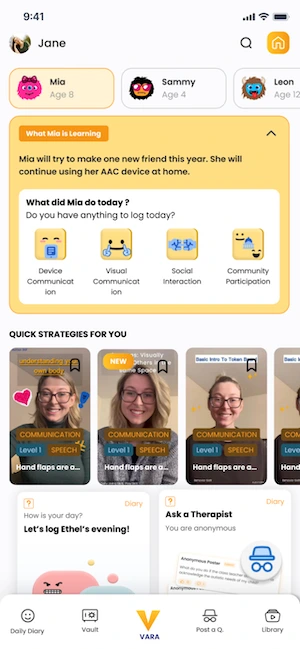
AI-guided Goals in the VARA app helps you pick one developmental goal to focus on, so practice has a clear direction instead of trying everything at once. AI parent coaching then offers guidance between appointments on applying a strategy in everyday moments. VARA supports you between appointments and alongside your child’s care team.
 AI-guided Goals
Frequently Asked Questions
What is global developmental delay?
Is global developmental delay a disability?
What causes global developmental delay?
Is global developmental delay permanent?
Is global developmental delay an intellectual disability?
Who can diagnose global developmental delay?
About this guide: Autism 360 is an independent organisation that provides paid supports for families. We are not a Thriving Kids provider and this is not a government website. This guide is general information, not medical, legal or funding advice. Facts were last checked on 13 October 2026. Always confirm details with the official source.
References
The trusted sources behind this guide
Sources we used
- Australian Government, Department of Health, Disability and Ageing (Government)Thriving Kids
- National Disability Insurance Scheme (Government)What are the early intervention eligibility requirements
- Mithyantha R, Kneen R, McCann E, Gladstone M. Archives of Disease in Childhood, 2017 (Peer-reviewed review)Current evidence-based recommendations on investigating children with global developmental delay

Ash Bhattacharya is the co-founder and CEO of Autism 360, a global autism brand pioneering parent-mediated intervention. Ash is an autistic adult who grew up in the 1980s with an older autistic brother with high support needs, at a time when there was barely any awareness of autism, let alone acceptance. He saw what his parents faced after his brother’s diagnosis, and how little has changed since for families trying to find support they can afford and access.
That lived experience drives his work. Ash built Autism 360 to put parents in the director’s seat, with the tools, strategies and clinical backing to lead their child’s progress at home. Autism 360 is a registered NDIS provider supporting families across Australia, the USA, Canada and the UK, with outcome-focused programs delivered by speech pathologists, occupational therapists, psychologists and behavior analysts. Ash is a leading advocate for parent empowerment and for making effective autism support affordable and accessible to every family.


