




Have you noticed that your child plays, communicates or responds differently from other kids their age? Maybe their preschool teacher has mentioned that your child prefers to play alone and doesn’t often join in with other children or teachers. Or perhaps your family doctor has suggested an assessment for autism. In any of these situations, the first question on your mind is probably “Does my child have autism?” Common early signs include less eye contact, not responding to their name, later speech, repeating words or movements and a strong preference for routines. If you notice several of these, talk to your GP or pediatrician about an assessment.
Key takeaways: does my child have autism
- Know the early signs. If you wonder whether your child has autism, look for less eye contact, not responding to their name and later speech.
- Use play to observe. A play based checklist helps you notice whether your child shares attention and responds when you join in.
- Try an online quiz. A quick quiz on whether your child is autistic gives you a starting point for your doctor but cannot diagnose.
- Start with a doctor. Your GP or pediatrician can arrange referrals and assessments for your child.
- Support while you wait. Keep a simple diary with examples and short videos, follow your child’s interests in play and use visuals for routines.
There is no quick answer to this question, but there are some simple observations, many of them used by professionals, including those trained in applied behavior analysis and play-based approaches, that can help you decide whether to seek an assessment.
Does My Child Have Autism?

Does My Child Have Autism?
If your child shows differences in communication, behavior or social interaction, they may be showing early signs of autism.
Autism (Autism Spectrum Disorder) shapes how children learn, connect and respond to the world around them. Some common signs include:
- Making less eye contact or not responding to their name
- Repeating words or actions
- Delayed speech or language development
- Preferring routines or having intense interests
- Finding it hard to understand feelings or social cues
These signs alone don’t confirm autism, but they are important clues. Talk to your GP, pediatrician or a developmental specialist about screening. Early understanding and support can make a real difference for your child.
Mary Alexa, Autism Therapist, and Columnist says, “These are key elements taught by Dr. Richard Solomon, founder of PLAY Project (Play & Language for Autistic Youngsters) for Children with Autism. While studying under Dr. Solomon at the University of Michigan and have found these simple, yet key clues can help in preliminarily diagnose ASD.”
Play is one of the best ways to connect with and support an autistic child, and it’s also a natural way to notice early signs before a formal autism diagnosis. Play-based approaches are part of many autism treatment and support programs too. The good news is that you can do this as part of your everyday routines while you play with your child.
Checklist to find out – Does My Child Have Autism
Is my child autistic? Use this checklist while you play together:
- Notice their attention. Do they look at you and share their interest with you, or is their attention mostly on the toy?
- Follow their lead. Play what they want to play and see whether they let you join in.
- Copy what your child is doing and see whether they notice and respond to you.
- “Check in” with your child while you play, to see whether they connect with you, for example, by looking, smiling or handing you something.
- Try taking a turn with their toy. Are they curious about what you’re doing with it, even briefly? Or do they become very upset straight away? Some children have tantrums or meltdowns when a toy is taken, so keep this short and give it back.
- See if you can build on their play. For example, your little one is rolling a fire engine back and forth. Try adding an idea: “Scot, there’s a fire! Can your fire truck put it out?” If your child keeps rolling the truck and doesn’t take up your idea, even after several tries on different days, it’s worth mentioning to a professional.
- If your child sometimes hits or lashes out, look for patterns. When does it happen, and what might they be trying to tell you? Try naming their feelings. For example, if your child hits a sibling, say, “Are you angry with Suzy?” and see whether, over time, they start to understand the emotion and use words, signs or gestures instead. If distress keeps coming out physically and naming feelings doesn’t seem to help, ask for an assessment.
- Watch a colorful animated movie together, such as Frozen, Shrek or How to Train Your Dragon. Does your child react strongly to the brightness, colors or sound? If so, try lowering the brightness and volume and see whether they’re more comfortable. Strong reactions can be a sign of sensory differences.
- Look back at videos of your child’s first or second birthday, or a family celebration. Can you see any of the patterns mentioned above? Also, compare them with the key signs of autism below.
- Talk to your child in your usual speaking voice and see whether they respond. If they rarely look up or respond, it’s worth asking about further assessment (and a hearing test).
Early Signs of Autism in Children
Below are some of the common characteristics of Autism. Please note that they vary from one child to another. Autism in boys can also look quite different from autism in girls, and girls are more likely to be missed because they mask their traits. Subtler presentations, often described as high functioning autism, can be easy to overlook too.

Some of the Key Signs of Autism
Next Step: Taking the Autism Quiz Online on our Website
If many of your answers to the checklist above suggest your child might be autistic, it’s a good idea to take the next step.
Visit our Autism Test Center to find the autism test that best fits your child’s age. An “is my child autistic” quiz or a “does my child have autism” quiz takes a few minutes and gives you a starting point to share with your doctor. Online tests can’t diagnose autism, but they can help you organize your observations before you see a professional.
Who Diagnoses Autism?
If an online test suggests your child may be autistic, start by seeing your GP or your child’s pediatrician. They can arrange referrals and assessments for your child.
Learn More : Who Can Diagnose Autism in a Child?
In Australia, your GP can refer you to a pediatrician, and autism is usually diagnosed by a pediatrician, psychiatrist or psychologist, often working with a speech pathologist. You don’t need to wait for a diagnosis to get help. Children under 9 with developmental concerns can access support through the NDIS early childhood approach.
Getting Prepared for what your Pediatrician may ask for
To diagnose autism, doctors usually gather information from several sources and also check for other possible explanations. This may include:
- Full medical and developmental history: now is the time to share what you’ve noticed about your child’s play, emotions and behavior. Your doctor will use recognized diagnostic criteria (DSM-5) and guidelines, such as those from the American Academy of Child and Adolescent Psychiatry or, in Australia, the National Guideline for the assessment and diagnosis of autism.
- Clinical observation: your child will be observed in different play and social situations, and you may be asked whether their reactions are typical for them.
- Developmental and cognitive assessments.
- A physical examination, including checking your child’s growth.
- A hearing test, to rule out hearing loss.
- A lead test in some cases. Some children, including some autistic children, keep putting non-food items in their mouths for longer (this is called pica), which can increase the risk of lead exposure.
- Possible genetic (chromosomal) testing, especially if there is intellectual disability or developmental delay.
- An electroencephalogram (EEG) if your child has had seizures or episodes that could be seizures.
- Possibly an MRI scan if there are signs of differences in brain development.
Developmental Signs Your Doctor Will Ask About
Your GP or pediatrician will look for medical reasons to rule out and help answer whether your son or daughter is an autistic child. Your observations are invaluable.
Your doctor will want to know the following, based on your child’s age (see our article on what age is autism usually diagnosed):
- No babbling, sound-making or pointing by 12 months
- No single words by 16 months
- No 2-word phrases by 24 months
- Any loss of language or social skills at any age
- Echolalia, i.e. repeating words or phrases, sometimes out of context (this is still a form of communication)
- Finding it hard to use words or gestures to ask for things
- Less eye contact while talking
- Not pointing at things or using many gestures
- Finding back-and-forth conversation hard
- Mixing up pronouns, i.e. saying “you” instead of “I”
- Less facial expression or tone of voice when speaking
- Finding it hard to read emotions and facial expressions
What other Autism Resources May your Doctor Employ
If any of the signs above are present, your doctor may use developmental screening tools such as the Ages and Stages Questionnaire or the Modified Checklist for Autism in Toddlers (M-CHAT). These questionnaires are simple and quick, and they help spot children who would benefit from a full assessment for Autism Spectrum Disorder.
What You Can Do While You Wait
Waiting lists for assessments can be long. In the meantime, you can:
- Keep a simple diary of what you notice, with examples and short videos.
- Follow your child’s interests in play and join in on their terms.
- Use visuals (pictures, simple schedules) to help with routines.
- Accept all communication, including gestures, pointing, signs and sounds.
- Notice sensory needs (noise, light, textures) and adjust the environment where you can.
- Look after yourself, and reach out to other parents or a parent support program.
We hope this article helps answer your question, “Does my child have autism?” If you found it useful, you may want to share it with other parents. Autism early intervention can make a real difference, and the sooner you understand your child’s needs, the sooner you can find the right research-based supports and therapies.
Conclusion
Recognizing the early signs of autism can feel overwhelming, but it’s also the first step towards helping your child thrive. Every child is unique, and early awareness means earlier support and better understanding. If your observations or the checklist raise concerns, don’t panic. Take practical steps: speak with your GP or pediatrician, explore early screening options, and use trusted tools like the autism test for children to gain clarity.
Remember, autism is not a limitation but a different way of experiencing the world. With early intervention, consistent support and patience, your child can build meaningful connections and grow into who they are.

Ash Bhattacharya is the co-founder and CEO of Autism 360, a global autism brand pioneering parent-mediated intervention. Ash is an autistic adult who grew up in the 1980s with an older autistic brother with high support needs, at a time when there was barely any awareness of autism, let alone acceptance. He saw what his parents faced after his brother’s diagnosis, and how little has changed since for families trying to find support they can afford and access.
That lived experience drives his work. Ash built Autism 360 to put parents in the director’s seat, with the tools, strategies and clinical backing to lead their child’s progress at home. Autism 360 is a registered NDIS provider supporting families across Australia, the USA, Canada and the UK, with outcome-focused programs delivered by speech pathologists, occupational therapists, psychologists and behavior analysts. Ash is a leading advocate for parent empowerment and for making effective autism support affordable and accessible to every family.


I have autistic child but unfortunately here in Pakistan we have no such therapies and tests to make these children better. I have reached out to many doctors but all of them ask me to wait for an year or two to get evaluated. She turned 2 but I’m so much concerned as I have researched alot about it and every other therapist on YouTube told that it should be treated as soon as possible.
What to do? I am hell worried for my baby.
I am sorry about your situation, the Therapists are right, Early Intervention for your child is the key!
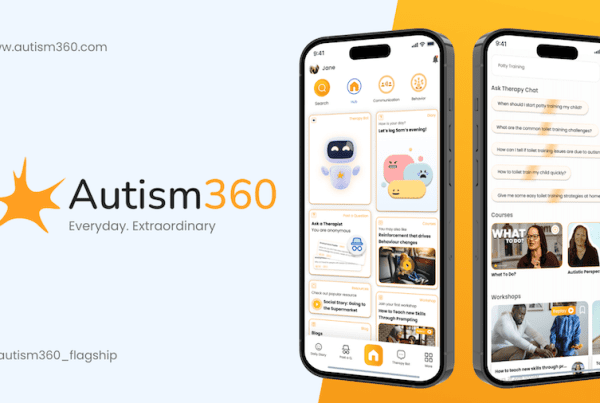
Thankfully, now there is a way for you to receive support directly from Clinicians in US and Australia. Check out this App below – there is a free trial.
https://www.autism360.com/