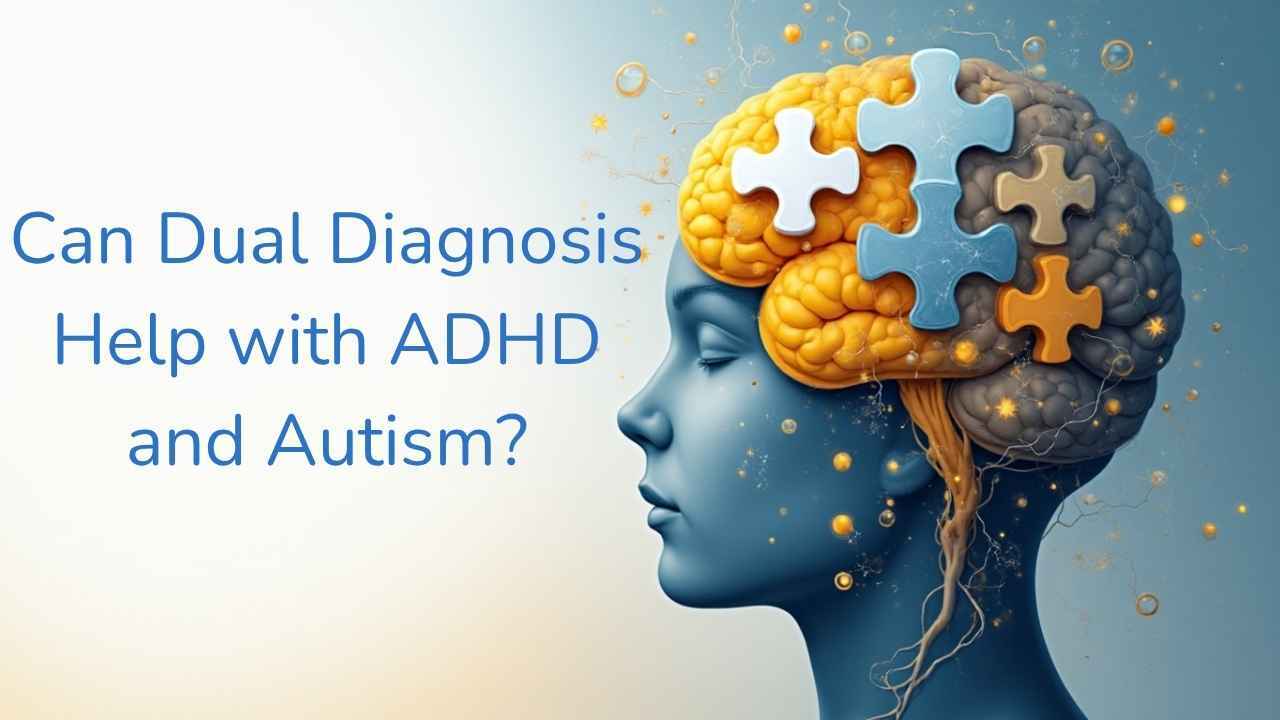
Yes, a dual diagnosis can help people who are both autistic and have ADHD, by making sure each is recognized and properly supported. Many people with autism also experience ADHD symptoms, but the two call for different kinds of support, which is why getting an ADHD and autism diagnosis together matters.
Key takeaways: ADHD and autism diagnosis
- Yes, both. An ADHD and autism diagnosis can be made together, because the DSM-5 removed the earlier rule that prevented it.
- Different support. The two can overlap in traits such as attention differences, but they need different approaches and a personalized plan.
- Spotting both. Without recognizing both, one condition can overshadow the other, which can lead to incomplete support.
- Support at home. Try a predictable visual schedule with movement breaks, less sensory load and tasks broken into small steps.
- Ask professionals. If your child has one diagnosis and you still see signs of the other, raise it with your pediatrician or psychologist.
A proper dual diagnosis helps doctors and therapists create a personalized support plan, balancing therapies, social and emotional support, medication (if needed) and learning support. Without a dual diagnosis, one condition can overshadow the other, leading to incomplete support or misdiagnosis. In practice, ADHD can delay an autism diagnosis by years. Recognizing both can lead to better emotional regulation, improved focus and an easier day-to-day life.
👉 If you suspect signs of autism or ADHD, you can start with a quick self-assessment on our autism test portal to understand your traits better before seeking a professional assessment.
What is Dual Diagnosis?
Dual diagnosis refers to having two or more co-occurring conditions at the same time. The term is often used for a mental health condition alongside a substance use disorder, but it is also used for two neurodevelopmental conditions. If you are new to the topic, start with what ADHD is and how it is diagnosed. In the context of ADHD and autism, a dual diagnosis means a person is recognized as having both at the same time. This is important because ADHD and autism can overlap in traits (such as attention differences or social challenges), but they need different support approaches. A proper dual diagnosis allows healthcare professionals to:
- Understand how the two conditions interact
- Create personalized support plans
- Provide balanced therapies (behavioral, educational or medical) for each condition
Understanding the Link Between ADHD and Autism
A study by the Kennedy Krieger Institute found that one-third of children diagnosed with autism also showed significant ADHD traits, sometimes described as audhd symptoms, a term often used when both conditions occur together.
The research focused on children aged four to seven years, marking an important step toward understanding how these two neurodevelopmental conditions co-occur.
A Breakthrough in Identifying Co-Occurrence
This study identified how autism and ADHD traits often overlap. Researchers found that autistic children who also showed ADHD traits were more likely to have:
- More social challenges
- Lower scores on cognitive (thinking and learning) assessments
- More difficulty with adaptive behaviors (everyday living skills)
These findings show that being both autistic and having ADHD can bring extra challenges compared with autism alone, and that these children may need more tailored support.
Behavioral and Social Implications
Earlier studies have also explored the social challenges faced by children with both ADHD and autism. Some evidence suggests that children with both conditions are four times more likely to be involved in bullying behavior than their peers. This is a sign that these children need extra support with friendships, emotional regulation and understanding social situations, not a reflection of who they are.
What Makes This Study Different?
Unlike earlier research that only established the link between ADHD and Autism Spectrum Disorder (ASD), this study looked more deeply at how the two interact, following children from early in life, before any ADHD diagnosis.
Expert Insights: Dr. Rebecca Landa
Dr. Rebecca Landa, Director of the Center for Autism and Related Disorders at the Kennedy Krieger Institute, explained that understanding how these conditions co-occur could lead to better outcomes and improved quality of life. She emphasizes that tailored early support can make a significant difference for children showing signs of both.
DSM-5: Can You Get an ADHD and Autism Diagnosis Together?
Yes. The DSM-5 (published in 2013) removed the earlier rule that prevented ADHD and autism from being diagnosed together. This allows for more accurate diagnosis and more complete support planning.
Can Adults Get an ADHD and Autism Diagnosis?
Yes. Many adults, especially women, are diagnosed with one or both later in life, often after years of feeling overwhelmed or misunderstood. A psychologist or psychiatrist experienced in adult neurodevelopmental assessment can assess for both at once. A late diagnosis can bring relief, self-understanding and access to workplace adjustments and support.
Study Design and Key Findings
A total of 162 children took part in this longitudinal developmental study. They were divided into two groups:
- With ASD
- Without ASD
Among the 63 children diagnosed with ASD, 18 showed significant ADHD symptoms. This younger and more focused sample gave clearer insights into early developmental differences.
Why Early Diagnosis Matters
Dr. Landa noted that studying younger children helped researchers identify different subgroups and design more specialized support programs. These personalized programs showed promise in improving developmental outcomes.
Children with both autism and ADHD were more likely to have cognitive delays and more severe autism symptoms (like repetitive behaviors) than those with autism alone. This is why recognizing both early matters, so support can be planned for the whole child.
How to Support a Child with Both ADHD and Autism
Living with both ADHD and autism can feel like having two sets of needs that sometimes pull in different directions. For example, an autistic need for routine and predictability can sit alongside an ADHD need for novelty and movement. These ideas can help:
- Ask about both in any assessment. If your child has one diagnosis and you still see signs of the other, raise it with your pediatrician or psychologist (our guide to the signs of ADHD in kids can help).
- Build routine with room to move. Keep a predictable visual schedule, but build in movement breaks and a little choice within it.
- Look at the environment first. Reduce noise, clutter and other sensory load so your child has more energy left for attention and learning.
- Break tasks into small steps. Short, clear steps with visual reminders help with both focus and processing.
- Use their interests. Deep interests can hold attention far longer than other tasks, so use them as a doorway to learning.
- Review medication carefully. If ADHD medication is considered, ask how it may affect sleep, appetite, anxiety and sensory sensitivities, and review it regularly.
- Get school on board. Share the dual diagnosis with your child’s school so adjustments cover both attention and sensory or social needs.
📌 MUST READ:
- Is it Worth Getting an Autism Diagnosis?
- Can Software Algorithms be the New Way in Predicting Autism?
Conclusion
The study underscores the importance of recognizing a dual diagnosis early. By identifying both ADHD and autism together, clinicians can develop better-targeted support plans, making sure each child receives the support they truly need.

Ash Bhattacharya is the co-founder and CEO of Autism 360, a global autism brand pioneering parent-mediated intervention. Ash is an autistic adult who grew up in the 1980s with an older autistic brother with high support needs, at a time when there was barely any awareness of autism, let alone acceptance. He saw what his parents faced after his brother’s diagnosis, and how little has changed since for families trying to find support they can afford and access.
That lived experience drives his work. Ash built Autism 360 to put parents in the director’s seat, with the tools, strategies and clinical backing to lead their child’s progress at home. Autism 360 is a registered NDIS provider supporting families across Australia, the USA, Canada and the UK, with outcome-focused programs delivered by speech pathologists, occupational therapists, psychologists and behavior analysts. Ash is a leading advocate for parent empowerment and for making effective autism support affordable and accessible to every family.