
Common autism stereotypes include lacking empathy, being savants or having poor social skills. These autistic stereotypes ignore the individuality of autistic people and lead to misunderstanding and stigma.
Key takeaways: autism stereotypes
- Autism stereotypes such as lacking empathy, being savants or having poor social skills ignore individuality and lead to misunderstanding and stigma.
- On the spectrum simply means autistic, not ‘a little bit autistic’, and two autistic people can have very different strengths and support needs.
- Autistic stereotypes about empathy and aggression are wrong: autistic people care about others’ feelings, and a meltdown is an involuntary response to overwhelm.
- Stereotypes of autism also say it can be cured or outgrown, but autism is lifelong and part of many autistic people’s identity.
- Girls are autistic too: diagnostic criteria came mostly from studies of boys, so many autistic girls and women who mask are missed.
For a long time, the media has portrayed autistic people as savants, mostly white boys with rather awkward communication skills.
Many people believe this picture is true. In fact, it has become tied up with how people see autism.
But this is only one of many stereotypes about autism.
In an interview, Prof. Meryl Alper said, “Seeing a kid as only on the spectrum, only defined by their autism, to me, that’s really not useful.”
Dr. Alper gave this interview while working on her book, “Kids Across the Spectrum”.
Autistic people are of all ages, genders, socioeconomic backgrounds and races. This article is a guide to clearing up some common stereotypes people hold about autism. For a broader introduction, see our guide to what living with autism is like.
What Does “On the Spectrum” Mean?
“On the spectrum” is short for “on the autism spectrum”. It means a person is autistic. The word spectrum reflects how differently autism shows up from person to person: two autistic people can have very different strengths, interests and support needs. The on the spectrum meaning is not “a little bit autistic” or “mildly autistic”. It simply means autistic, in that person’s own way. Many of the stereotypes below come from forgetting just how wide that spectrum is.
Autism Stereotypes List: 12 Common Stereotypes of Autism
1. Autistic People Are Aggressive or Violent
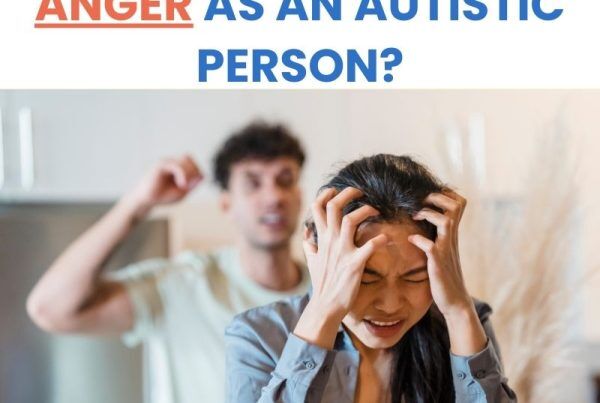
There is no scientific evidence that autistic people are more prone to violence than neurotypical people. Autistic people may have meltdowns, and some people wrongly see these as aggression. A meltdown is an involuntary response to overwhelm, not a choice to hurt someone.
An autistic person may have a meltdown when:
- They receive too much sensory input (for example, loud noises).
- They’re frustrated because they feel misunderstood.
- Bullies target them.
- They feel stressed and anxious.
In fact, autistic people are much more likely to be the victims of bullying and violence than the people causing it.
2. Autistic People Are Geniuses
In the 1940s, Austrian pediatrician Hans Asperger described some of the autistic children he observed as having remarkable abilities in particular areas. Later, films and TV embraced this idea and made it the main trait of many autistic characters.
Many movies portray autistic people as having special, highly developed skills.
It’s true that some people on the spectrum have exceptional skills in art, music, mathematics, statistics or languages.
But their skill levels vary just as much as they do among neurotypical people.
3. Autistic People Are Unintelligent
It’s surprising how many people still believe that autistic people sit at one of two extremes: either highly gifted or entirely dependent, with nothing in between.
In reality, autistic people have the full range of intellectual abilities, and many have average or above-average intelligence.
Many autistic people go to school, learn skills, hold jobs, pay their bills and live full lives. Others need more support, and their lives are just as valuable.
4. People with Autism Lack Empathy
This belief is not true. Autistic people do understand and care about other people’s feelings, but they may express empathy in different ways.
For example, some autistic people rely more on cognitive empathy. This is when a person works out emotions through reasoning, by analyzing facial expressions, hand gestures and posture.
Many autistic people have strong affective empathy, which means they deeply feel the emotions of the person they’re with, sometimes so strongly that it becomes overwhelming.
Researchers also describe the double empathy problem: autistic and non-autistic people often misread each other, so misunderstandings run both ways. We look at this in more depth in our guide to the autism empathy myth.
5. People with Autism Are the Same
People who hold this stereotype are often the same people who ask, “Is there an autistic look I can use to identify who is autistic?”
Autism is a neurodevelopmental difference, and it doesn’t have a physical appearance. Some autistic people also have other conditions, such as Down syndrome, which may affect how they look, but that is due to the other condition, not autism.
How autism affects the brain also varies from one autistic person to another.
As a result, every autistic person has their own strengths, challenges and needs.
6. Bad Parenting and Traumatic Experiences Cause Autism
This stereotype wrongly assumes that autism comes from poor parenting or traumatic experiences early in a child’s life.
Parenting style does not cause autism in any way. However, parents play a very important role in helping autistic children feel understood and supported in the world around them.
Research shows that autism is largely genetic, with some environmental factors before birth also playing a part. You can read more about what autism is caused by.
7. Autistic People are Aloof
This stereotype generalizes from the fact that some autistic people enjoy time alone, and find social interactions tiring or overwhelming.
That’s true for some people on the spectrum. But many autistic people want friendships and relationships, and end up isolated because others don’t understand their way of communicating.
For example, Sam is a 30-year-old autistic man in the UK. He finds social signals like winking, smiling and blushing hard to read. Sometimes, when his colleagues smile at him, he tells them to stop faking their smiles, because he is watching closely to see whether they smile with their eyes as well. He misses the friendly intent, and his colleagues feel uncomfortable, so a simple misunderstanding pushes them apart.
Many autistic people find it harder to make friends in a world built around non-autistic social rules. With understanding on both sides and a supportive environment, autistic people can and do build close, meaningful relationships, often with people who share their interests.
8. Autism Is a Childhood Condition People Outgrow
This stereotype comes partly from the fact that most research has focused on autistic children, with far less attention on autism in adults. But autism is lifelong. It is usually present from early childhood (even if it isn’t diagnosed until later) and continues into adulthood.
Autistic adults may have developed their own strategies for daily life, or may have learned to mask their autistic traits, which can make autism less visible but often comes at a cost to their wellbeing. Masking and unmet support needs are also linked to poorer health, which is one reason the life expectancy of autistic people is a growing area of research.
9. Vaccines Cause Autism
Another myth is that vaccines cause autism. This began in 1998, when a now-retracted study suggested a link between autism and the MMR (measles, mumps and rubella) vaccine.
Since then, large studies involving millions of children have looked for a link between autism and vaccines, and none has found one.
10. Autism Can Be Cured
No, autism cannot be cured, because it isn’t an illness. Autism is a lifelong neurodevelopmental difference that is present from birth and continues into adulthood, and many autistic people see autism as an important part of their identity. This view is central to the neurodiversity movement.
There are, however, many supports that help autistic people thrive and make their environment work better for them.
These supports include:
- Speech therapy
- Occupational therapy
- Applied behavior analysis
- Educational support
11. Autism is a Mental Illness
Autism isn’t a mental illness. It is a well-recognized neurodevelopmental difference that affects how a person communicates, socializes and learns. It is different from mental illnesses such as schizophrenia, anxiety, bipolar disorder and depression.
Autistic people do have higher rates of some mental health conditions, like anxiety, often because of stress, sensory overload and the effort of fitting in. But autism itself is not a mental illness. Our article on whether autism is a mental disorder explains the difference.
12. Autism is a Male Characteristic
This stereotype assumes that autism only affects males, and that women, girls and gender-diverse people can’t be autistic.
More males are diagnosed than females, but this is partly because diagnostic criteria were developed mainly from studies of boys. Many autistic girls and women learn to mask their autistic traits and copy social behavior, so their autism is often missed or diagnosed much later. If you are wondering whether your child might be autistic, our online autism test is a low-pressure first step.
FAQs
1. What are the Stereotypical Behaviors of Autism?
In clinical language, “stereotypical behavior” (or stereotypy) means repetitive movements or interests that are common among people on the spectrum, such as:
- Hand flapping
- Rocking
- Spinning objects
- Toe walking
- Lining up toys in a specific way
Today these are usually called stimming. They help many autistic people regulate their senses and emotions, and they don’t need to be stopped unless they cause harm.
2. What is the Impact of Societal Stigmas Associated with Autism?
Autistic people have described how others wrongly assume some stimming is aggressive or threatening, and how this makes them feel undervalued.
Parents of autistic children can feel immense pressure to make their child fit in with social expectations, and often feel judged or inadequate. That’s why it matters so much to recognize and accept autistic people as individuals, with their own abilities and quirks, rather than forcing them to fit a one-size-fits-all mold.
3. How Does the Media Spread Stereotypes about Autism?
The media has played a big role in creating and reinforcing harmful stereotypes, often presenting autistic people as having special skills and awkward social skills at the same time.
Many stories put so much emphasis on an autistic character’s special abilities that the character matters only because of those skills.
This reinforces the idea that autistic people must be savants, or they are nothing at all.
Another common portrayal is of an autistic person who is violent and unpredictable.
Comedy can add to the harm too, as when a stand-up comedian mocked his autistic child’s behavior on stage. The media should portray autistic people with more care and accuracy, ideally with autistic writers and actors involved, and create content that challenges, rather than reinforces, these stereotypes.
Conclusion
Most stereotypes about autism are misinformed beliefs that harm autistic people and the society they live in.
We should remember the common saying, “When you’ve met one autistic person, you’ve met one autistic person.” It’s true.
Each autistic person has their own abilities, preferences and opinions.
As part of society, we can all help create a more understanding and supportive environment for the autistic people around us.

Stephanie Collins is Head of Program Delivery and a founding member of Autism 360, and the company’s US spokesperson. Based in Colorado, she is a parent of two autistic children, so she brings both professional and lived experience to her work. Stephanie is a behavior support practitioner and developmental educator with more than 15 years in special education, and she is certified in American Sign Language. She is a well-known community advocate for the needs of autistic girls, and has been interviewed on the topic by news channels including Fox, Channel 9 and Channel 5. Stephanie writes about sensory differences, communication, schooling and ADHD.