 Good shows for autistic kids can be more than entertainment. The right TV shows can model communication, emotions and friendships in a way that feels predictable and easy to follow, and some show autistic characters that kids can see themselves in. Like any parent, though, you’ll want to choose shows that suit your child’s age, interests and sensory needs.
Key takeaways: shows for autistic kids
- The best shows for autistic kids have a predictable structure, a calm pace, clear emotions and characters or topics that match your child’s interests.
- Positive autism representation shows up in Pablo, Heartbreak High and Everything’s Gonna Be Okay, where autistic actors play autistic characters.
- For autistic toddlers, choose slow, gentle shows like Daniel Tiger’s Neighborhood, Sesame Street or Bluey, and watch together when you can.
- Watching and talking together helps TV support communication, emotions and social skills, and scripting lines from shows is a valid way to communicate.
- Skip loud, flashy shows with fast cuts or flashing lights if your child seems overwhelmed, since they can cause sensory overload.
The best TV shows for autism are fun and educational, and they celebrate the strengths of children with autism. Below are some of the best TV shows with positive autism representation, many of which your child may love, followed by tips on picking shows for autistic kids and toddlers.
The Best TV Shows with Positive Autism Representation
1. Everything’s Gonna Be Okay
This comedy series was created by Australian comedian and actor Josh Thomas, who also stars as Nicholas (Nick), a twenty-something Australian entomologist.
While visiting his American father in Los Angeles, Nick learns his father has a terminal illness and wants Nick to become guardian of his teenage half-sisters. As the series goes on, the family explores what being autistic means for them.
Everything’s Gonna Be Okay has been widely praised for its positive autism representation and its diverse characters and storylines. Alongside Josh Thomas, the show stars autistic actress Kayla Cromer as Matilda, Nick’s autistic sister. It’s best for older teens and adults.
2. The Bridge
In the TV drama The Bridge, a body is found on a bridge on the Mexico and United States border, and two detectives team up to find a killer working across the border.
One of the detectives, Sonya Cross, is autistic, and her focus and eye for detail make her an excellent investigator. Her autism isn’t always named on screen, which reflects how many autistic adults go through life without others understanding why they do things differently. This one is for adult viewers.
3. Pablo
Pablo follows a five-year-old autistic boy who uses his imagination and his drawings to make sense of the world around him.
What makes this show stand out is that it uses animation to bring Pablo’s creativity to life, showing how he works through feelings and everyday experiences. Pablo’s characters are voiced by autistic actors, and the show includes a range of characters that encourage empathy, understanding and acceptance. It’s one of the best shows for autistic kids aged around 4 to 7.
4. Daniel Tiger’s Neighborhood
Daniel Tiger’s Neighborhood tells simple social and emotional stories that many children on the spectrum relate to easily, through a diverse cast of characters. The show also features Max, an autistic character.
Its gentle pace, catchy repeated songs and predictable structure suit many autistic children, especially those who find changes to routine hard. Many families use the songs (“When something seems bad, turn it around…”) as scripts in real life.
5. Community
The TV comedy Community ran from 17 September 2009 to 2 June 2015, over six seasons, with a cast that included Jim Rash, Chevy Chase, Ken Jeong, Donald Glover, Alison Brie, Danny Pudi and Joel McHale. It follows a lawyer with a fake degree who has to enroll at a community college, where he meets an unconventional group of students and staff.
Abed Nadir is widely seen as autistic. He has an encyclopedic knowledge of films and TV shows and often makes sense of what’s happening at school by comparing it to his favorite shows. He is one of the sharpest students at the college, and his different perspective often helps his friends see things they’d missed. Community is for teens and adults.
6. Bluey
Bluey follows the adventures of an Australian family of Blue Heeler dogs. Bluey is a puppy full of energy, creativity and curiosity, who lives with her sister Bingo, her mom Chilli and her dad Bandit. Her parents often join in her imaginative games.
The show is about everyday family life, and the parents are as interested in the adventures as the kids. The fun is easy to share, and many autistic families find it a realistic picture of family life. It models emotional regulation and problem solving through play, with storylines families can relate to.
7. Heartbreak High
Heartbreak High follows a diverse group of high school students, including Quinni Gallagher-Jones. Quinni is autistic, and so is the actress who plays her, Chloé Hayden.
Autistic teens watching her handle heartbreak and high school life can relate to many of her experiences. Quinni shows autism symptoms like stimming, sensory avoidance and sensory seeking.
The show is also honest about how tiring it can be to live in a world built for neurotypical people, including the exhaustion of masking autism to fit in. Quinni uses strategies that help her feel safe and regulated. For example, she sits in a bathtub to plan how to respond to the unexpected. Heartbreak High has mature themes, so it suits older teens.
8. Parenthood
Parenthood is a multigenerational drama about the Braverman family. It explores different parenting situations, from single parents juggling work and home to job loss and unexpected career changes.
Parenthood has earned praise for its autism representation, mainly through Max. Max finds eye contact uncomfortable and shares honest, direct opinions about the world around him. Many scenes with him are moving for parents of children with autism.
9. The Good Doctor
The popular TV show The Good Doctor follows Shaun Murphy, an autistic surgical resident with savant syndrome.
Dr Murphy can picture a patient’s anatomy in remarkable detail and often finds solutions others miss. Although the role is played by Freddie Highmore, who is not autistic, many viewers have praised the care taken with it.
10. Sesame Street
No list of the best TV shows about autism would be complete without Sesame Street, one of the oldest and best-loved shows for children, including children with special needs. Since 2017 it has also included Julia, an autistic Muppet.
Sesame Street has aired over 4,500 episodes since its debut in 1969, with Muppets and human characters teaching young children about the world around them. Many children on the autism spectrum enjoy it as a way to practice early speaking and reading skills. It also covers social skills, empathy and early counting for all children, with or without special needs or learning disabilities.
Best TV Shows for Autistic Toddlers
For toddlers, slower, calmer shows tend to work best. Look for shows with a gentle pace, simple storylines, clear facial expressions, repeated songs and not too much flashing or loud noise. Good shows for autistic toddlers from this list include Daniel Tiger’s Neighborhood, Sesame Street and Bluey, and Pablo for slightly older preschoolers.
A few tips for toddlers:
- Watch together. Sitting with your toddler, pointing things out and copying songs and actions turns screen time into connection time.
- Follow their interests. If your toddler loves trains, animals or numbers, a show built around that interest will hold their attention far better.
- Repeating episodes is fine. Many autistic toddlers love watching the same episode again and again. Predictability feels safe, and repetition helps learning.
- Keep an eye on time. Australian guidelines suggest no screen time for children under 2, and no more than an hour a day for children aged 2 to 5.
What Shows Do Autistic Kids Like?
Every child is different, but shows autistic kids like often have a few things in common: a predictable structure, a calm pace, clear emotions, music and repetition, and characters with strong interests. Many autistic kids also love shows about a passion, such as dinosaurs, trains, space or letters and numbers, and shows with autistic characters they can relate to, like Pablo, Daniel Tiger’s Neighborhood (Max) and Sesame Street (Julia).
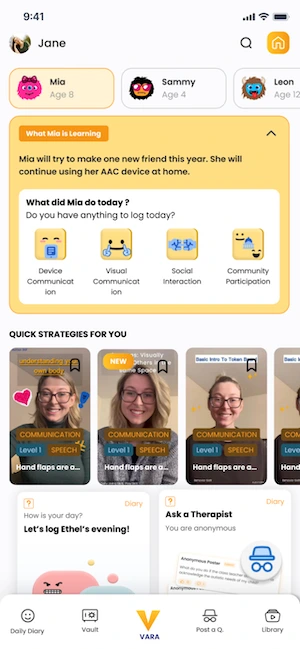
If your child keeps coming back to one show, that’s useful information. It tells you what they find calming or interesting, and you can use the characters or songs to talk about feelings, routines and new situations. For more ways to turn everyday moments like these into learning, the VARA app gives parents step-by-step strategies and a way to ask an autism therapist questions.
The Role of TV Shows in Skill Development
Some research suggests that well-chosen, educational TV can support learning in communication, social understanding and thinking skills for children, teens and adults on the autism spectrum, especially when an adult watches and talks about it with them. For books, apps and other ideas beyond TV, see our guide to autism in the media.
1. Communication Skills
TV shows offer visual cues that support learning and understanding. Children with autism can pick up new words and phrases from shows and use them in everyday conversation. Some children use lines from favorite shows (scripting or echolalia) to communicate, which is a real and valid form of communication. TV can also show how people use gestures and facial expressions.
2. Social Skills and Connection
TV shows for autism can show children how people interact with each other in a way that’s easy to watch from a safe distance. Autistic children can see how characters solve problems, share and make friends, and talk with you about it afterwards.
3. Cognitive Skills
TV shows can support thinking skills such as problem solving, memory and attention. Many cover numbers, colors and shapes, or include puzzles, riddles and brainteasers that encourage critical thinking. Games can do something similar, as our guide to video games and autism explains.
4. Understanding Emotions
Television shows can help children name and understand emotions. They give children with autism clear examples of emotions and moods in characters, such as happiness, delight and sadness. You can see this in Sesame Street, where the Muppets talk openly about their feelings.
Children with autism can learn to recognize these emotions in themselves and in their autistic and non-autistic peers. Talking about how a character feels, and why, is a gentle way to build emotional understanding.
5. Readiness for School
Curriculum-focused TV shows support social and academic learning. Sesame Street, for example, focuses on community and education, and gives children with autism a chance to practice skills they’ll use at home and at school.
Used in moderation, TV shows can help autistic children build skills that support relationships and help them reach their potential. Keep an eye on screen time, and choose shows that suit your child’s age, needs and your family’s values.
Picking The Right TV Shows for Kids with Autism
When trying out TV shows for an autistic child, keep a few things in mind to make sure the show is appropriate, engaging and educational.
1. Appropriate and Beneficial Content
The content of a TV show can have a big effect on children with autism, so it pays to know what your child is watching.
Shows with violent or aggressive themes, or lots of fast cuts, loud noise or flashing lights, can cause sensory overload and distress for some autistic kids. Shows with simple themes, calming visuals and gentle humor are often a better fit. Choose engaging, educational shows that match your child’s interests and needs for a more rewarding experience.
2. Educational Content
Look for TV shows that are both educational and appropriate. A mix of programs can support social, communication and thinking skills in children on the autism spectrum.
3. Engaging Content
Attention works differently for many autistic children. Some can focus for a very long time on something they love, and lose interest quickly in things they don’t. Programs built around your child’s interests, with music, riddles and interactive moments, tend to hold attention best.
There’s a lot to think about when choosing TV shows for kids with autism. Go for engaging, educational and age-appropriate shows, and you’ll have something that’s enjoyable for the whole family.
FAQs About TV Shows for Autistic Kids
What are good shows for autistic kids?
Good shows for autistic kids usually have a predictable structure, a calm pace and clear emotions. From this list, Pablo, Daniel Tiger’s Neighborhood, Sesame Street and Bluey are popular with younger children, while Heartbreak High and Everything’s Gonna Be Okay suit older teens. The best TV shows for an autistic child are the ones that match their interests and sensory needs, so it’s worth trying a few and watching how your child responds.
What are the best shows for autistic toddlers?
The best shows for autistic toddlers are slow, gentle and repetitive, with songs, simple storylines and little flashing or loud noise. Daniel Tiger’s Neighborhood and Sesame Street are good starting points, and Bluey works well for many families. Watching together and talking about what’s happening on screen makes any show more useful.
Are there TV shows with autistic characters?
Yes. TV shows with autistic characters include Pablo, Sesame Street (Julia), Daniel Tiger’s Neighborhood (Max), Heartbreak High (Quinni), Everything’s Gonna Be Okay (Matilda), The Good Doctor (Shaun Murphy), Parenthood (Max) and The Bridge (Sonya Cross). Shows where autistic actors play autistic characters, like Pablo, Heartbreak High and Everything’s Gonna Be Okay, are often praised for feeling more authentic. Our list of characters with autism covers many more from TV, film and cartoons.
How do I choose good shows for kids with autism?
Start with your child’s interests, then check the pace, volume and visuals. The best shows for kids with autism and the best TV shows for autistic kids aren’t the same for every child. If your child seems overwhelmed, that’s a sign the show isn’t the right fit right now, not that anything is wrong with them.
Conclusion
Autistic representation on TV has grown a lot in recent years. Look for shows that are sensory-friendly, educational and engaging, so your autistic child can build skills while having fun.
Think about your child’s needs and interests when choosing TV shows for children with autism. Some kids love shows with lots of visuals, while others prefer certain topics. Pick a show that suits your child’s needs, abilities and interests, and watch together when you can.
Must Read: Movies about Autism: The Best Representation

Stephanie Collins is Head of Program Delivery and a founding member of Autism 360, and the company’s US spokesperson. Based in Colorado, she is a parent of two autistic children, so she brings both professional and lived experience to her work. Stephanie is a behavior support practitioner and developmental educator with more than 15 years in special education, and she is certified in American Sign Language. She is a well-known community advocate for the needs of autistic girls, and has been interviewed on the topic by news channels including Fox, Channel 9 and Channel 5. Stephanie writes about sensory differences, communication, schooling and ADHD.